
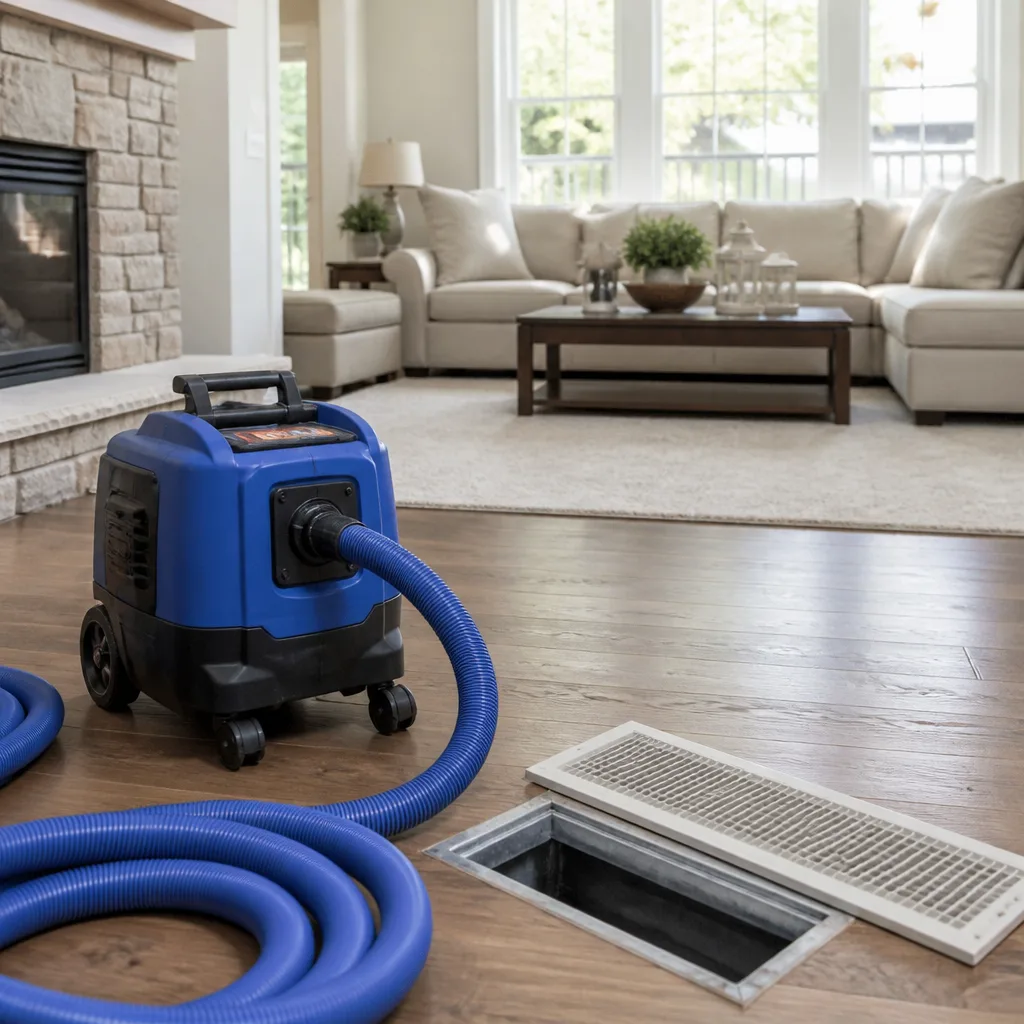
 Whole-home duct cleaning
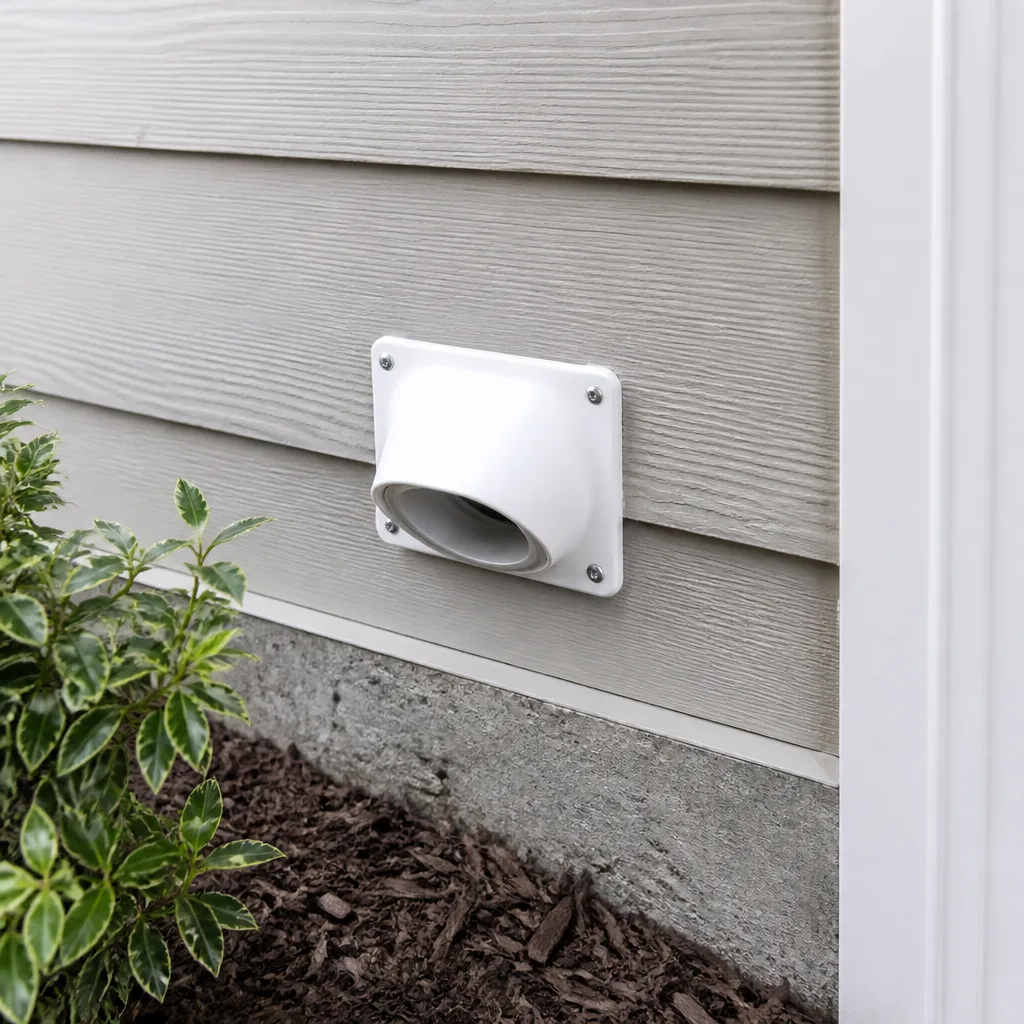 Dryer vent cleaning
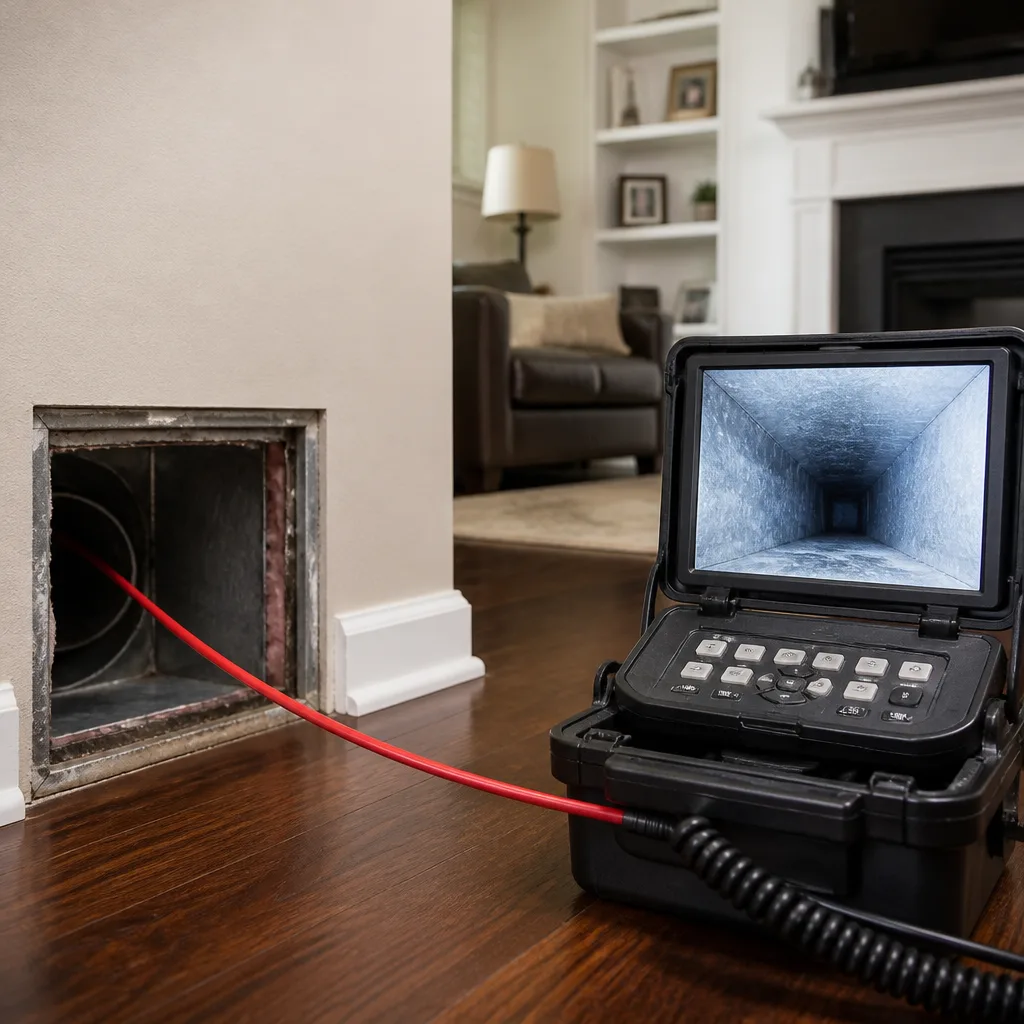 Camera inspection
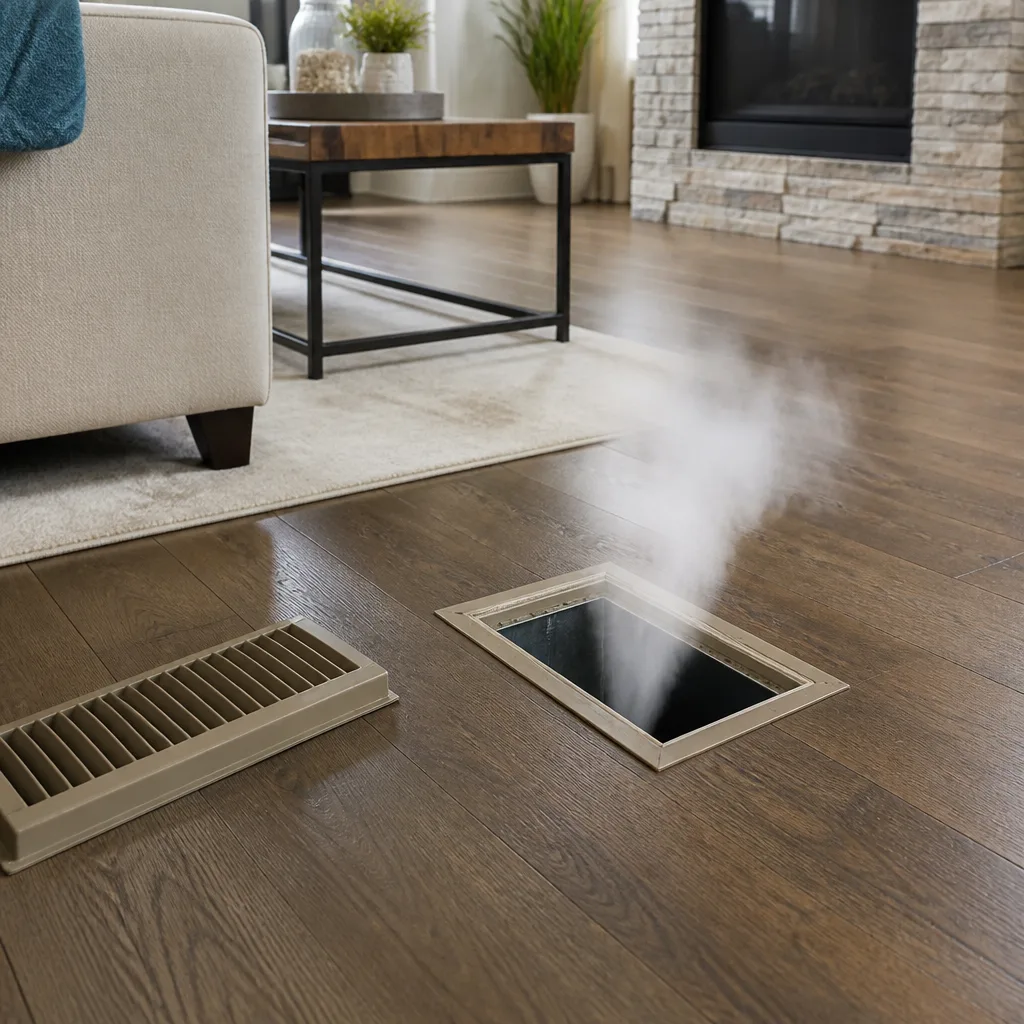 Sanitizing & deodorizing
Whole-system duct and dryer vent check with before-and-after photos - you see exactly what came out of your vents
That "$99 whole-house special" is a bait ad - the real number appears once they are in your hallway, or the "clean" is a shop-vac at the register. We photograph the inside of your ducts before and after instead.
Why Cupertino Homeowners Choose Trane Air Duct Cleaning
We provide independent Trane air duct cleaning, evaporator coil cleaning, and blower cleaning services across Cupertino, and our work is built around one simple fact: a Trane air handler moves air differently than other brands, so it has to be cleaned differently too. We’re an independent Trane service provider, not affiliated with or authorized by Trane, but our technicians have spent years working inside the XR, XL, XV, and S-Series units that fill Cupertino’s housing stock, and we know where those systems accumulate debris, where airflow gets choked, and how to restore them without voiding your warranty. If your Trane is circulating dust, running louder than it should, or cooling unevenly, call (877) 542-8668 for a straight assessment of what’s actually going on inside your ducts.
Cupertino’s mix of original 1950s and 1960s ranch homes in neighborhoods like Monta Vista and Rancho Rinconada, alongside newer custom builds, means Trane equipment here lives in two very different environments. The older homes often have galvanized ductwork that’s been in place for 50 or 60 years, paired with a Trane air handler that’s pulling air through joints that have long since separated. The newer homes are tighter, with multi-zone layouts, and that means the air handler sees more hours and finer particulate loading. Either way, the failure mode is predictable once you know what to look for, and that’s exactly the expertise we bring to every Trane in Los Altos Hills and Cupertino job.
Why Trust Duct Cleaning Cupertino for Your Trane Air Duct Cleaning?
Sal Macias, the owner of Duct Cleaning Cupertino, grew up in the Monta Vista neighborhood of Cupertino and studied HVAC/R at De Anza College, where he learned to think about airflow and static pressure as a system, not a collection of parts. That’s the lens we use on every Trane unit we open up. A Trane XV20i variable-speed air handler behaves very differently from a single-stage XR80, and cleaning it requires a different approach to the blower assembly, the coil cabinet, and the return plenum. We know those differences because we’ve worked on hundreds of them across the South Bay.
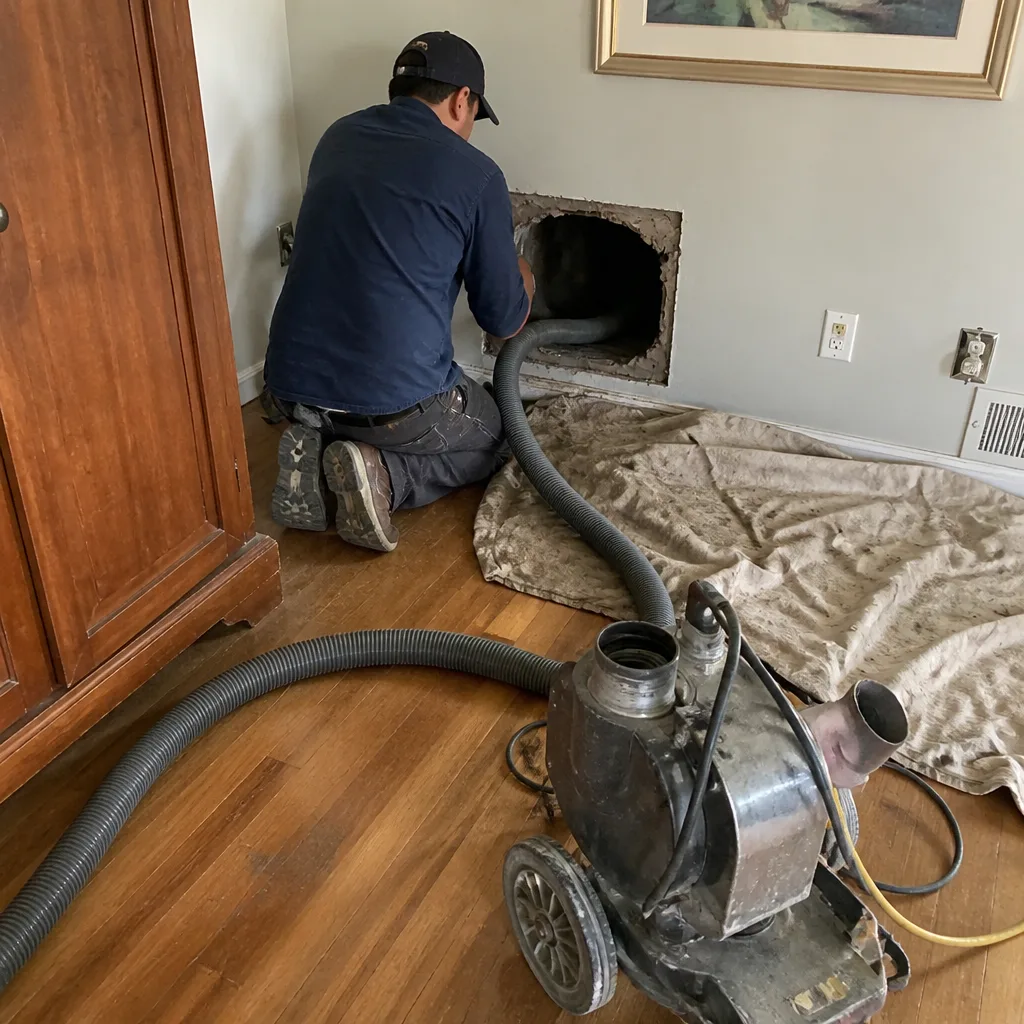
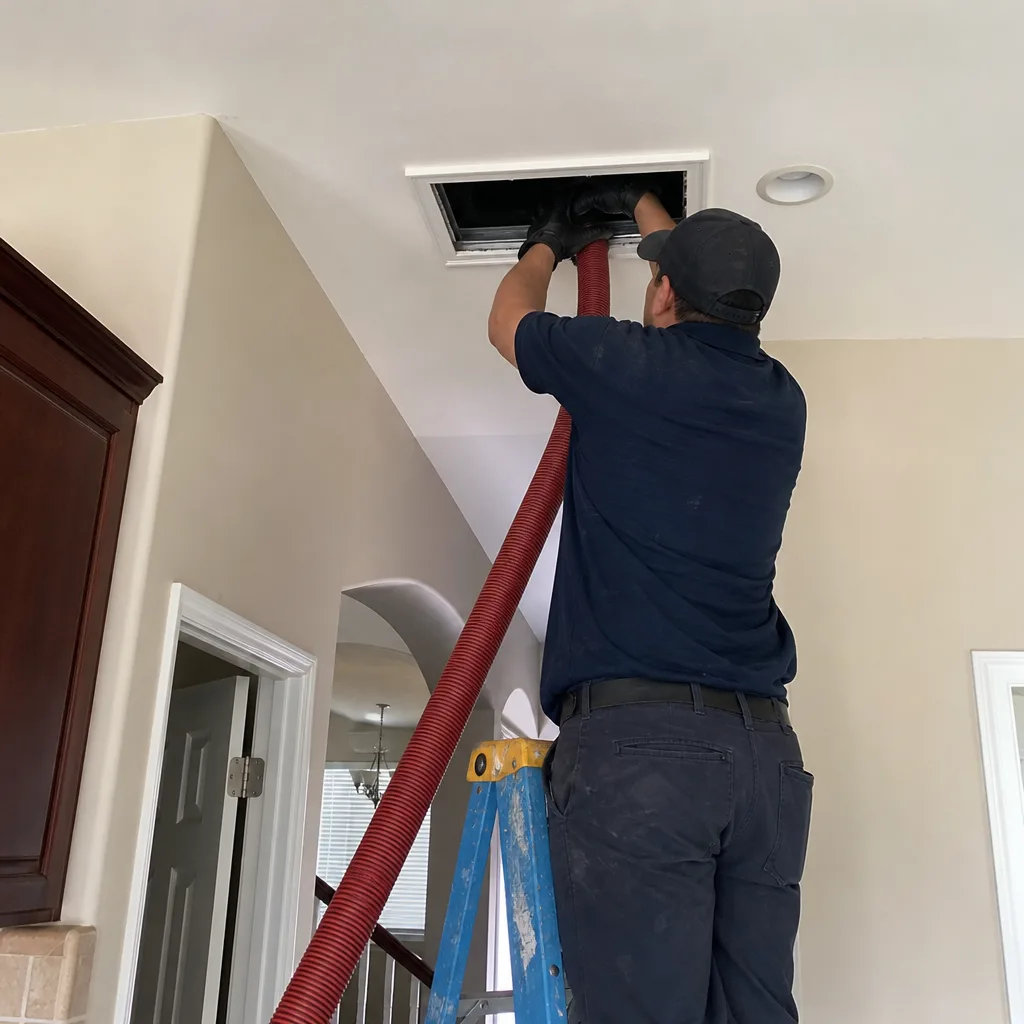
We run Rotobrush and Nikro extraction systems, the same professional-grade equipment restoration and remediation crews use, and we pair that with Abatement Technologies negative-pressure containment. What that means for your Trane is simple: when we loosen debris from the coil, the blower wheel, and the duct runs, that debris gets pulled out of your home, not recirculated through your living room. That matters especially for Trane’s all-aluminum cased coils, where dust loading sits directly on the coil fins and gets baked on by the heat of the refrigerant cycle. The duct doesn’t lie, as Sal puts it, and pulling enough negative pressure shows you exactly what your system has been circulating.
We also work daily with Honeywell and Aprilaire filtration and air quality systems, which means when we clean a Trane air handler in Cupertino, we can tell you whether your current filter setup is actually protecting the coil and blower, or whether it’s letting fines through that will re-load the system within a season. That’s the difference between a duct cleaning that lasts and one that’s a temporary fix.
Styles & brands we work with
- Whole-home duct cleaning
- Dryer vent cleaning
- Camera inspection
- Sanitizing & deodorizing
Common Trane Air Duct Cleaning Problems We Fix in Cupertino
- Evaporator coil dust loading on XR and XLi models. Trane’s all-aluminum cased coils are efficient, but their fin spacing and the way the coil sits in a horizontal attic installation make them magnets for fine dust that slips past standard one-inch filters. On XR13, XR14, and XLi15 units in Cupertino, we regularly find coils with a felt-like blanket of dust on the entering-air side. That dust layer raises static pressure, forces the blower to work harder, and reduces heat transfer across the coil. The symptom is usually weak airflow at the registers and longer run times, even when the thermostat setting hasn’t changed.
- Blower wheel imbalance on XV and S-Series variable-speed units. Trane XV18, XV20i, and S9V2 air handlers use variable-speed blower motors that are exceptionally sensitive to wheel imbalance. Dust accumulates unevenly on the blower wheel fins, and once a few grams build up on one side, the wheel starts to wobble at higher RPMs. You’ll hear it as a low rumble or a rhythmic vibration that changes with the blower speed. Left unaddressed, that vibration wears out the motor bearings and can trigger motor overload codes on the control board. We recently serviced a Trane XV20i in a Cupertino home where this exact condition had been misdiagnosed as a failing motor. A thorough blower wheel cleaning resolved the vibration entirely, saving the homeowner from a $1,200-plus motor replacement.
- Flexible duct collar detachment at the Trane air handler plenum. This is especially common in Cupertino’s older ranch homes in Rancho Rinconada, where decades of attic heat cycles have degraded the mastic sealant at the plenum connections. The flexible duct inner core collapses or the outer jacket separates, and conditioned air pours into the attic instead of the rooms. The telltale sign is a layer of dust sitting on the attic insulation near the air handler, and rooms that never seem to reach temperature. When we clean a Trane system, we inspect every plenum connection, because a clean duct run that’s still leaking at the connection is a half-done job.
- Condensate drain pan overflow and biological growth in the coil cabinet. Trane drain pans are designed with a slope, but that slope only works if the air handler is level. In Cupertino’s older homes, settling foundations frequently tilt the air handler just enough to let water pool in one corner of the pan. That standing water, combined with the dust that’s collected on the coil, creates exactly the environment where microbial growth takes off. The homeowner smells it before they see it: a musty, swampy odor that’s strongest when the blower first kicks on. We address this by cleaning the coil, treating the pan with an antimicrobial, and checking the level of the unit itself.
- Return air leakage pulling attic dust into the Trane system. In many Cupertino homes with attic-mounted Trane air handlers, the return duct connections and the air handler cabinet itself are not sealed properly. The negative pressure created by the blower pulls in attic air, full of insulation fibers, rodent dander, and dust, directly into the return side before it ever reaches the filter. This is why some Trane owners notice their filters turn black within weeks. We inspect and seal the return path as part of our full system cleaning, because cleaning the supply side while ignoring the return side is like changing the oil in a car that’s leaking gaskets.
Trane Parts & Our Repair-vs-Replace Approach
When a Trane air handler needs repairs beyond what cleaning can address, we take a parts-first approach that protects your equipment and your budget. For critical components like blower motors, coils, and control boards, we use genuine Trane OEM parts. These are engineered to match the exact electrical and airflow specifications of your unit, and they preserve your remaining Trane warranty. For non-critical items like duct fittings, sealants, and insulation, we use high-quality aftermarket equivalents that meet or exceed OEM performance specifications, because paying a premium for a branded piece of sheet metal doesn’t benefit anyone.
The repair-vs-replace decision is where honesty matters most. We’ve seen older Trane XR80 and XR95 units in Cupertino and Monte Sereno that are 20-plus years old, still running, but with coils that have been repeatedly overheated and blower wheels with pitting and corrosion. In those cases, cleaning alone won’t restore performance, and throwing parts at a dying system is just delaying an inevitable replacement. We’ll tell you straight: if a thorough cleaning and targeted repair will restore your Trane to proper static pressure and airflow, we’ll say so. If replacement is the better long-term call, we’ll explain why, with numbers, not sales pressure. Call (877) 542-8668 and we’ll give you the same assessment we’d give a neighbor.
Our Trane Service Process – Step by Step
- 1
Diagnosis and system mapping. Every Trane job starts with a full walkthrough of your equipment. We identify the specific air handler model, note whether it’s an XR, XL, XV, or S-Series unit, and check the static pressure across the blower and coil. We also map your duct runs, identifying any disconnected or collapsed sections before we start cleaning, so we know exactly what we’re working with.
- 2
Containment and protection. We set up Abatement Technologies negative-pressure containment before we open anything up. This creates a controlled airflow path that pulls loosened debris out of your home rather than letting it settle back into living spaces. We also lay down Guardsman-grade protective material at every access point to protect your floors and walls.
- 3
Coil, blower, and duct cleaning. Using our Rotobrush and Nikro systems, we clean the evaporator coil, blower wheel, blower housing, and the full duct run from the plenum to each register. The coil gets a specialized treatment that breaks down the adhered dust layer without damaging the aluminum fins. The blower wheel is cleaned wheel-by-wheel to restore balance and reduce vibration.
- 4
Sealing and verification. After cleaning, we reseal all plenum connections, check the air handler cabinet gaskets, and re-measure static pressure. If the numbers match Trane’s published specifications for your model, we know the job is done right. If they don’t, we dig deeper until we find why.
- 5
Final test and walkthrough. We run the system through a full heating and cooling cycle, check airflow at each register, and walk you through what we found and what we did. You’ll see before-and-after photos of your own coil and ducts, so you know exactly what was pulled out of your system.
See the difference
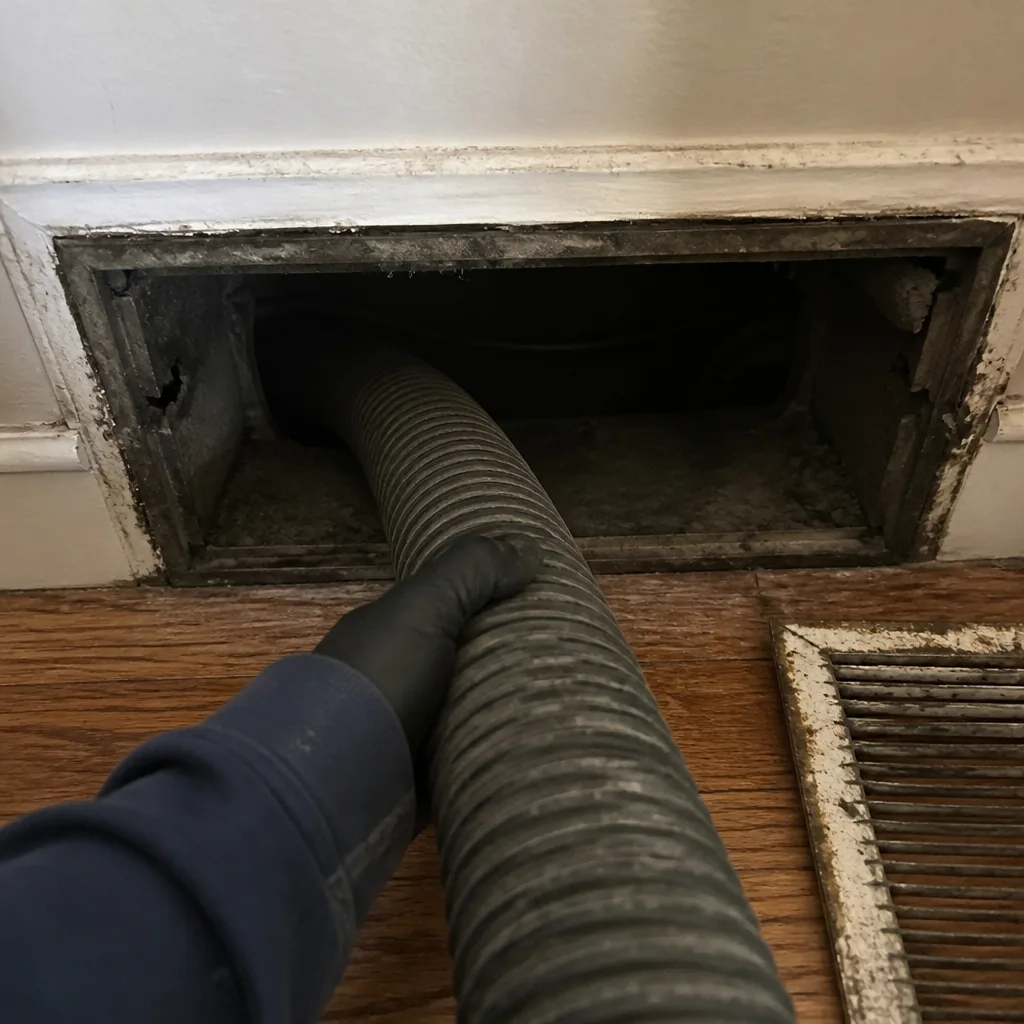 Before
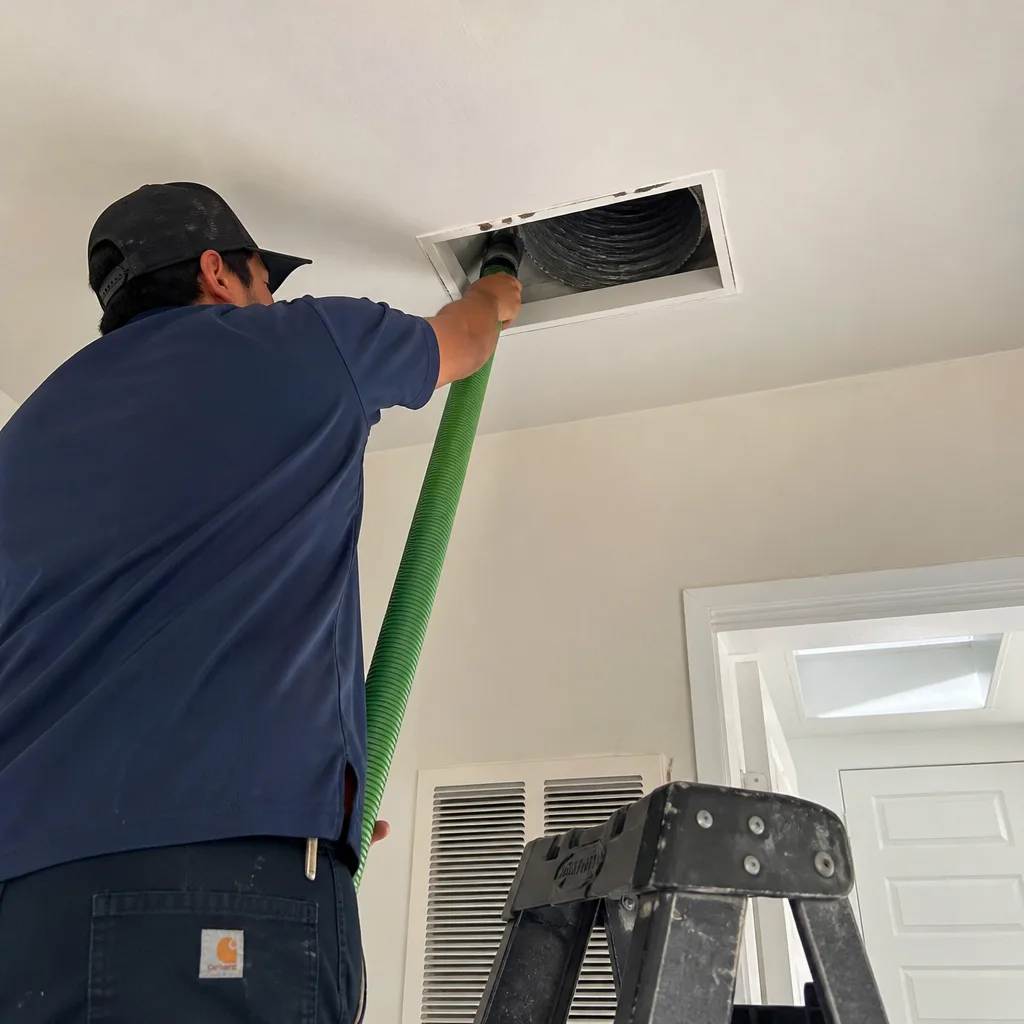 After
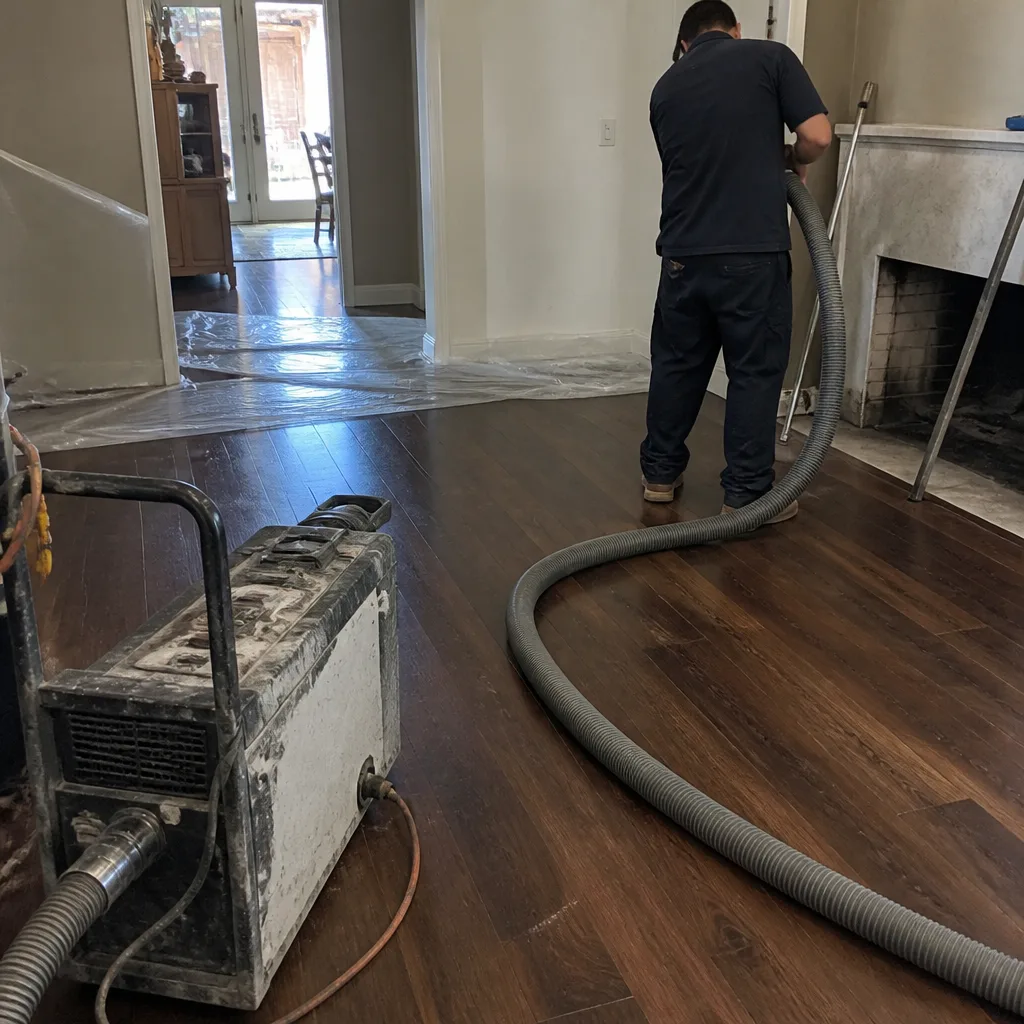 Before
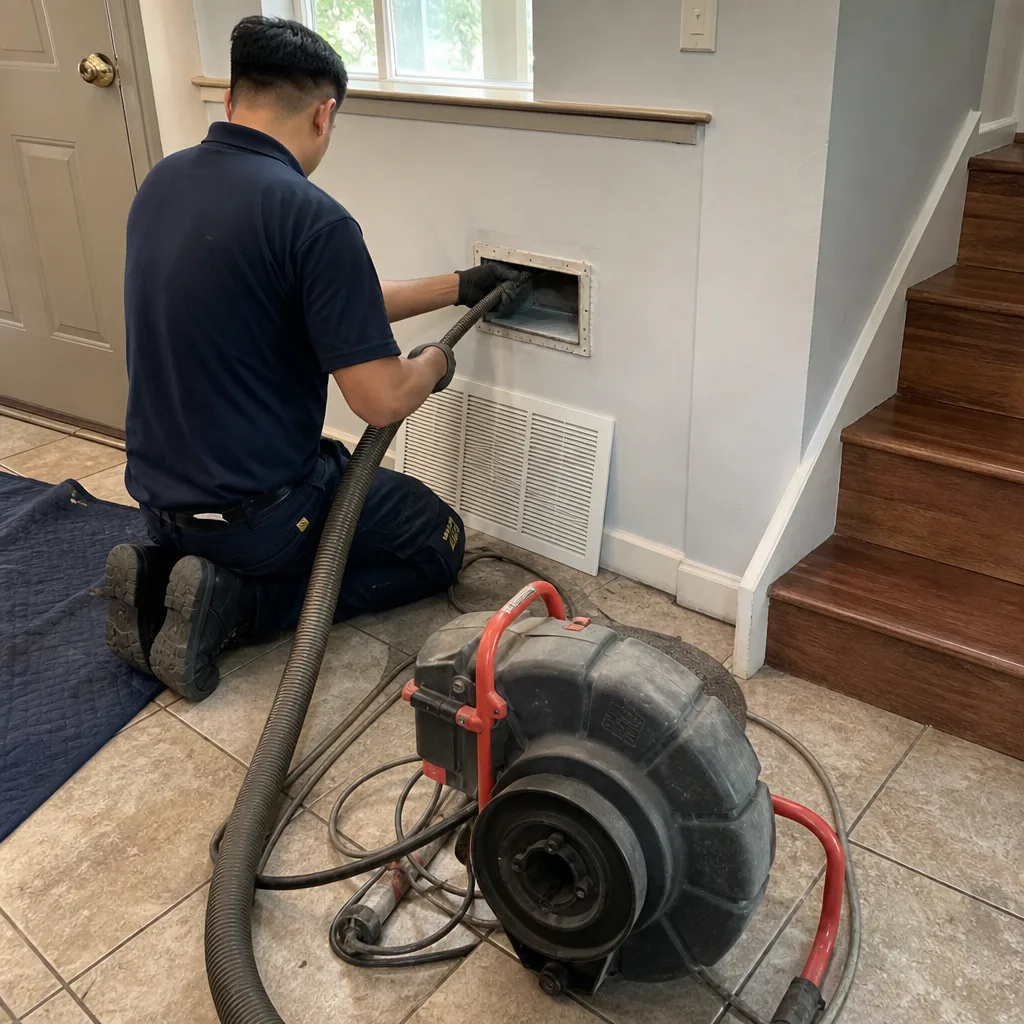 After
 Before
 After
Trane Products We Service & Install in Cupertino
Our team services the full range of Trane residential air handlers and their ductwork interfaces across Cupertino, including the XR Series (XR80, XR95, XR13, XR14, XR16), the XLi Series (XLi15, XLi16, XLi20), the XV Series (XV80, XV95, XV18, XV20i), and the S-Series (S8X1, S9V2, S9X1). Each series has its own common failure points, and our technicians know them by heart. We keep a local stock of the most commonly needed Trane OEM components, including blower motor capacitors, plenum gaskets, drain pan fittings, and coil access panel seals, which means faster turnaround on most repairs in Cupertino without waiting on shipping.
Our work on Trane systems centers on three services: evaporator coil cleaning, full system cleaning, and blower cleaning. Each one is performed with the extraction and containment equipment these systems require, never improvised with consumer-grade tools.
We Also Service These Brands
While this page focuses on Trane, our team is equally experienced with Lennox and Carrier residential air handlers and their duct systems. The same professional-grade extraction and containment approach applies across every brand, because the physics of airflow and particulate loading don’t change based on the nameplate. We’re duct and vent specialists, not a generalist HVAC shop, and that means we know the differences between brands and models that only hands-on time can teach.
FAQs – Trane Air Duct Cleaning Service in Cupertino
No, we are an independent Trane service provider and are not affiliated with or authorized by Trane. What we offer is hands-on experience with Trane equipment, gained through years of servicing XR, XL, XV, and S-Series units across Cupertino. That independence means we work for you, not for the manufacturer, and our recommendations are based on what your system actually needs, not on any corporate service directive.
Yes, for critical components like blower motors, coils, and control boards, we use genuine Trane OEM parts. These parts preserve your warranty and are engineered to the exact specifications of your unit. For non-critical components like duct fittings, sealants, and insulation, we use high-quality aftermarket equivalents that meet or exceed OEM specs, because those items don’t affect warranty status and paying a brand premium for them doesn’t make sense.
A typical full-system Trane cleaning, including the evaporator coil, blower wheel, and full duct runs, takes between 4 and 7 hours depending on the size of the home and the number of registers. Larger homes with multiple zones or heavily loaded coils may take a full day. We’ll give you an accurate time estimate during the diagnostic walkthrough, and we don’t leave until the static pressure readings confirm the job is done.
We service the complete range of Trane residential air handlers, including the XR Series (XR80, XR95, XR13, XR14, XR16), XLi Series (XLi15, XLi16, XLi20), XV Series (XV80, XV95, XV18, XV20i), and S-Series (S8X1, S9V2, S9X1). If you have a Trane unit that’s older or less common, call (877) 542-8668 and we’ll confirm coverage for your specific model.
Proper duct and coil cleaning performed according to Trane’s published service guidelines will not void your warranty. In fact, neglecting coil and blower maintenance can lead to overheating and premature component failure that Trane’s warranty won’t cover, since those failures result from lack of maintenance. We use cleaning methods and treatments that are compatible with Trane’s aluminum coil construction and variable-speed blower designs.
Trane air duct cleaning in Cupertino typically ranges from $400 to $900 for a full system cleaning, depending on the size of the home, the number of registers, and the condition of the coil and blower. Homes with heavily loaded coils, multiple zones, or significant duct leakage may run higher, and we always provide a firm per-system price before work begins, never a per-vent upsell. Call (877) 542-8668 for an exact quote, estimates are free.
Yes, and it’s one of the most common Trane failures we see in Cupertino during the cooling season. A dust-loaded XR15 coil restricts airflow across the coil surface, which causes the refrigerant temperature to drop below freezing. Ice forms on the coil, further restricting airflow, and the system enters a freeze cycle that can damage the compressor if it runs long enough. Cleaning the coil restores airflow and prevents the freeze-up, and it’s far cheaper than a compressor replacement.
This happens when a duct cleaning removes debris that was actually damping vibration in the blower wheel. The S9V2 uses a variable-speed blower, and if the wheel was coated with dust, that dust was adding mass and masking an underlying imbalance. Once the wheel is clean and balanced properly, the noise should drop below pre-cleaning levels. If it doesn’t, the blower wheel may need rebalancing or replacement, and we’ll diagnose that during the same visit.
The issue isn’t the Trane brand itself, it’s the installation details and the environment. In Cupertino’s older homes, particularly attic installations from the 1950s and 1960s, flexible duct runs may have been undersized for the system they’re connected to, and years of attic heat cycles can cause the inner core to detach from the collar or collapse inward. Trane’s air handlers, like those we service with our Trane service in Loyola, produce consistent static pressure, but if the duct is undersized or poorly supported, that pressure can pull a weakened flex core closed. We inspect every flex run as part of our Trane service.
In Cupertino’s mild, dry summers and wet winters, Trane air handlers should be cleaned every 3 to 5 years, with the coil inspected annually. Homes near Stevens Creek or other canyon areas with higher airborne particulate, or homes with pets and older ductwork, may need service more frequently. The winter rains here can also introduce moisture into attic ducts if roof or attic vents are compromised, which accelerates dust caking on the coil.
Yes, aftermarket mastic sealant is perfectly safe for Trane duct connections and is what we use on most resealing work. The key is using a UL-listed, code-compliant mastic that’s rated for the temperature range of your duct system, and applying it properly to the full circumference of every connection. Poor mastic application, not the brand of sealant, is what causes most duct leakage in Cupertino homes.
Book Your Trane Service in Cupertino, CA
If your Trane air handler is circulating dust, running with a rumble, or just not performing the way it used to, call Duct Cleaning Cupertino at (877) 542-8668 for a free estimate. We’ll diagnose what’s actually going on inside your system and give you a straight answer on what it takes to fix it.
Written by Sal Macias, Owner at Duct Cleaning Cupertino, serving Cupertino and the South Bay since 2015.