
Last updated November 3, 2026
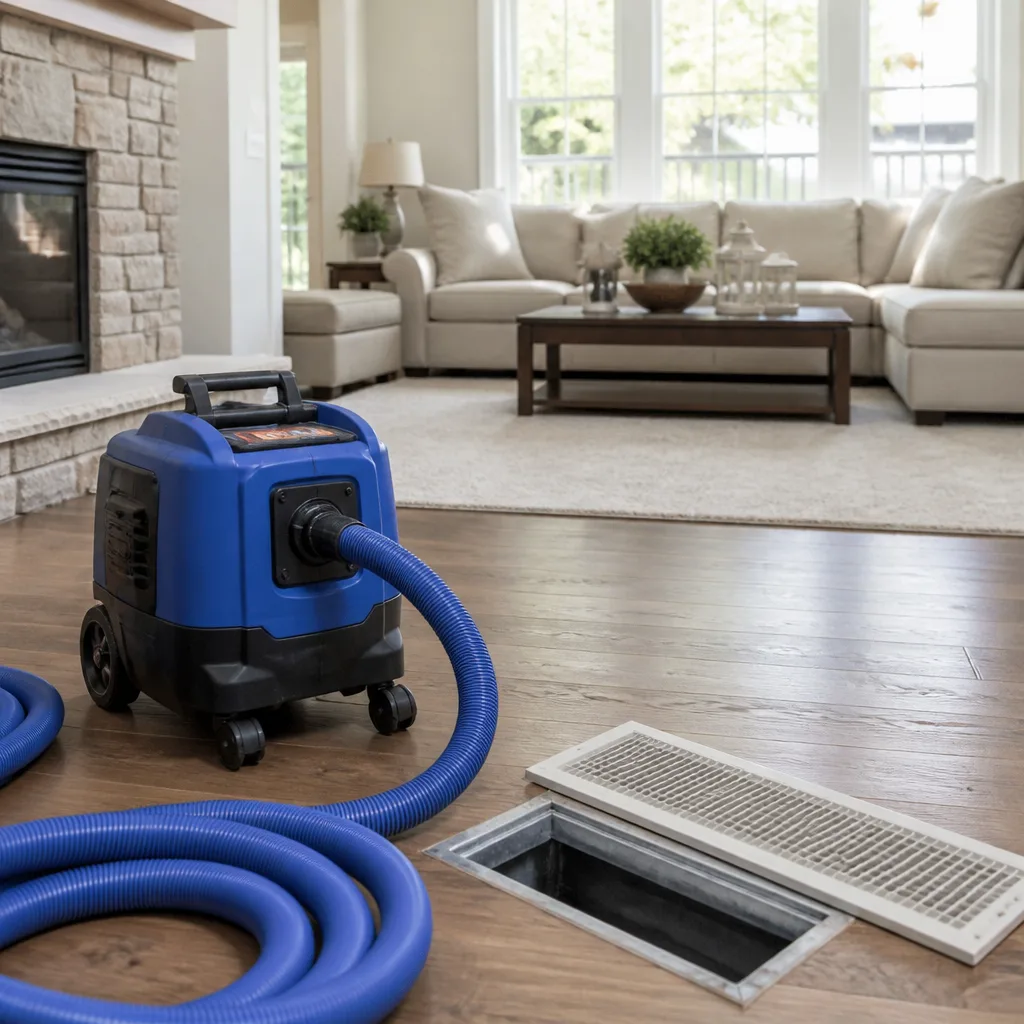 Whole-home duct cleaning
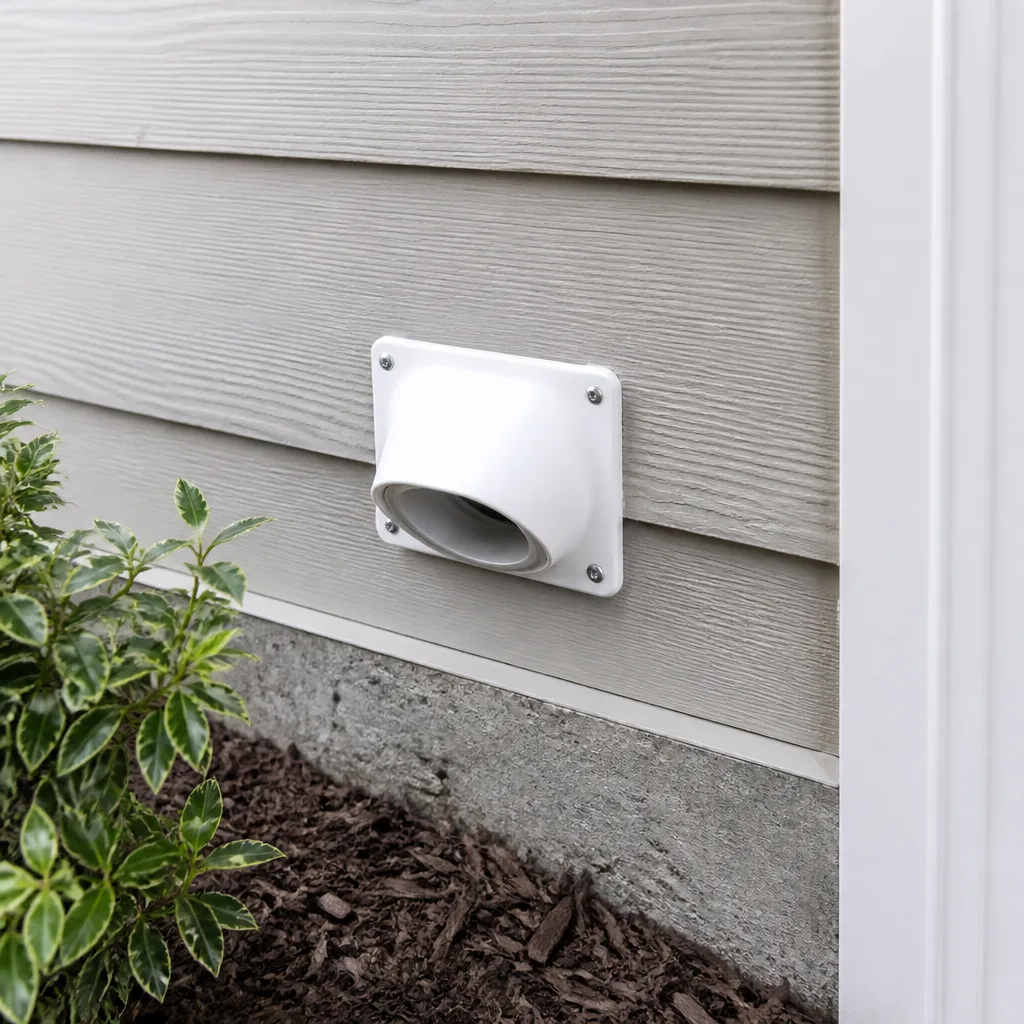 Dryer vent cleaning
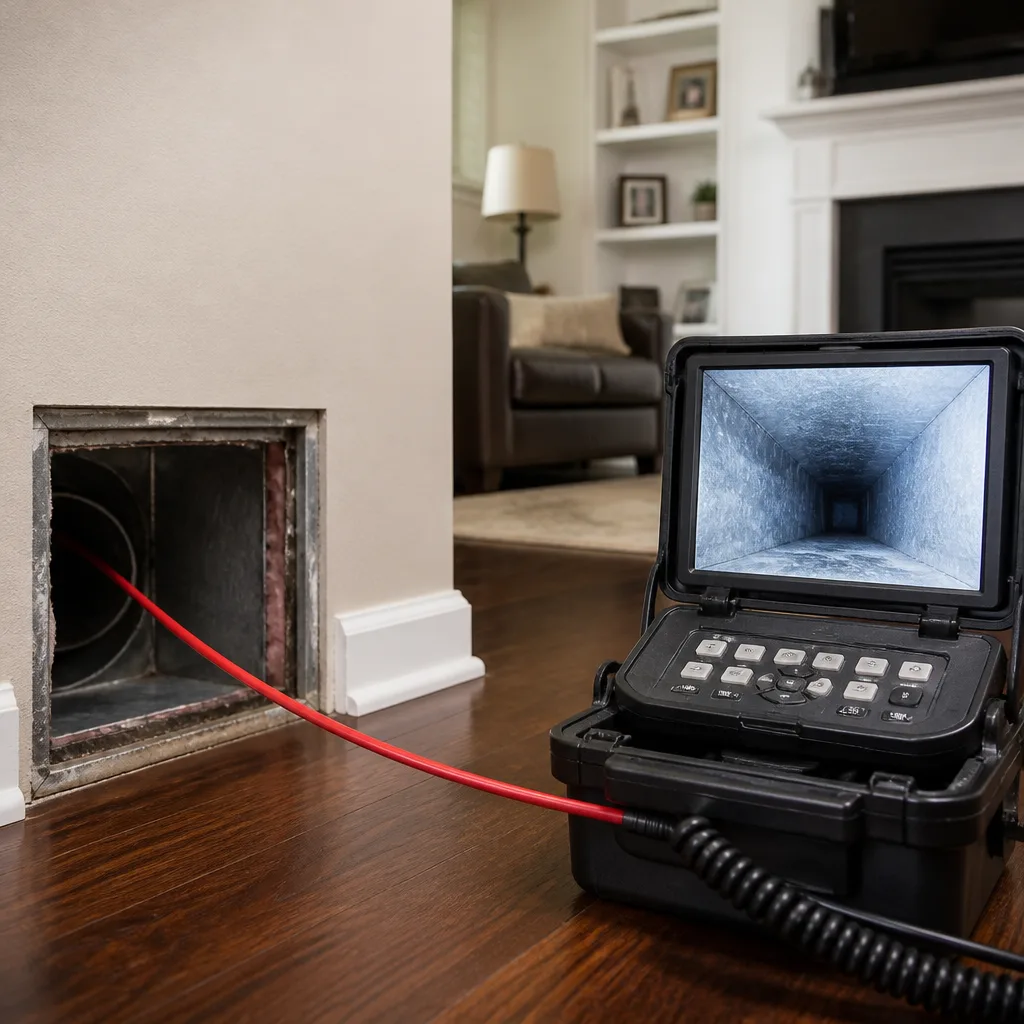 Camera inspection
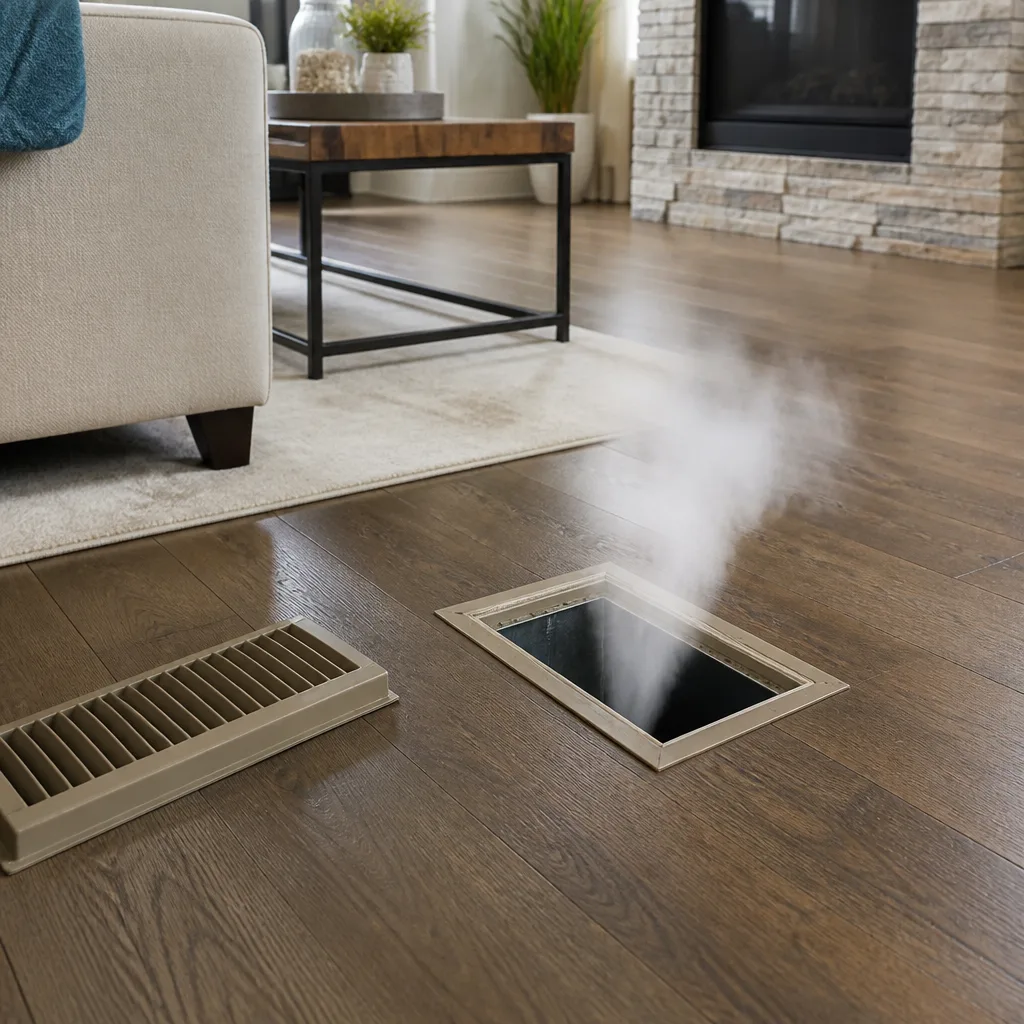 Sanitizing & deodorizing
Whole-system duct and dryer vent check with before-and-after photos - you see exactly what came out of your vents
That "$99 whole-house special" is a bait ad - the real number appears once they are in your hallway, or the "clean" is a shop-vac at the register. We photograph the inside of your ducts before and after instead.
The Complete Air Duct Cleaning Guide for Cupertino Homeowners
Cupertino’s air quality regularly ranks among the worst in Santa Clara County on high-wind days, when particulate matter from the Diablo Range funnels through the passes and settles across the valley floor. Yet most duct cleaning guides online were written for humid Midwest climates where mold and moisture are the primary concern. That’s not what’s happening inside your ducts. What’s accumulating in a Cupertino home is fine, dry, wind-driven particulate – and it behaves differently, settles differently, and requires different equipment to remove properly than the biological growth that dominates national how-to articles. Our Complete Guide to Air Duct Cleaning in Cupertino maps the actual variables you need to understand before scheduling a cleaning, from your home’s specific construction era to what the NADCA standard actually requires versus what most companies deliver.
Styles & brands we work with
- Whole-home duct cleaning
- Dryer vent cleaning
- Camera inspection
- Sanitizing & deodorizing
Quick Answer
Air duct cleaning in Cupertino typically costs between $450 and $900 for a full system, depending on home size, access points, and how long it’s been since the last cleaning. A legitimate cleaning uses negative-pressure equipment that captures dislodged debris rather than recirculating it through your living space, and the entire job usually takes 3 to 5 hours. For homeowners in Cupertino’s 1960s-1980s tract homes or newer Rancho Rinconada builds, the decision isn’t whether air duct cleaning matters – it’s understanding what your specific duct conditions require so you can verify the work was actually done.
Table of Contents
- How Cupertino’s Climate Creates a Different Kind of Duct Contamination
- Negative-Pressure Truck-Mounted Systems vs. Portable Units
- What the NADCA ACR Standard Actually Requires
- Why Newer High-Efficiency Homes May Need Cleaning Sooner
- Room-by-Room Inspection Checklist for Bay Area Home Layouts
- How to Choose a Duct Cleaning Company in Cupertino
- What Drives the Cost of Duct Cleaning in Cupertino
- Common Mistakes to Avoid
- When to Call a Professional
- Frequently Asked Questions
- The Bottom Line
How Cupertino’s Climate Creates a Different Kind of Duct Contamination
Walk through any Cupertino neighborhood during a Santa Ana wind event and you’ll feel it: fine dust in the air, haze over the foothills, grit on your car windshield by morning. That same particulate is entering your home through every window gap, door seal, and ventilation intake – and a significant portion of it ends up inside your ductwork. Unlike humid regions where duct contamination is dominated by mold spores and moisture-driven biological growth, Cupertino’s dry Mediterranean climate produces what we call fine particulate loading. The particles are smaller, drier, and more abrasive than the damp debris common in other parts of the country.
Why does this matter for your ducts specifically? Fine, dry particles don’t clump the way humid-region debris does. They distribute themselves thinly across duct surfaces, sometimes coating the entire system rather than pooling in low spots. They also travel deeper into the system, reaching your supply registers and even entering your living space between cleanings. In older homes near Vallco or along Stevens Creek Boulevard, we regularly find that decades of wind-driven particulate have created a fine silt layer in duct runs that looks almost like dust on a dirt road. That’s not something a standard consumer vacuum can touch.
Wildfire smoke adds another layer. When smoke events hit Santa Clara County, the particulate concentration in outdoor air spikes dramatically, and homes that run their HVAC systems during smoke events pull that fine ash into the ductwork. Ash particles are exceptionally small – often under 2.5 microns – and they embed themselves in duct surfaces in ways larger household dust does not. Homes near the Rancho Rinconada area, with their newer construction and tighter envelopes, can actually experience higher indoor particulate retention during smoke seasons because there’s less natural air exchange to dilute what gets in.
This is the core reason a Cupertino-specific approach matters. National guides tell you to look for mold, moisture stains, and damp accumulation. A Cupertino homeowner needs to be looking for fine silt, ash residue, and the specific type of dry particulate that only a negative-pressure system with proper agitation can dislodge and capture.
Negative-Pressure Truck-Mounted Systems vs. Portable Units
Here’s a truth most duct cleaning companies won’t volunteer: not all cleaning systems are equal, and the difference is visible in the equipment before a single vent is touched. See our DIY vs Professional Air Duct Cleaning: The Cupertino Homeowner’s Decision Guide for more on what to look for. The industry splits into two primary approaches – negative-pressure systems, which can be truck-mounted or portable, and positive-pressure or agitation-only methods that push air and debris around without proper containment. For Cupertino’s specific housing stock, this distinction matters more than almost any other factor.
Negative-Pressure Systems: The Professional Standard
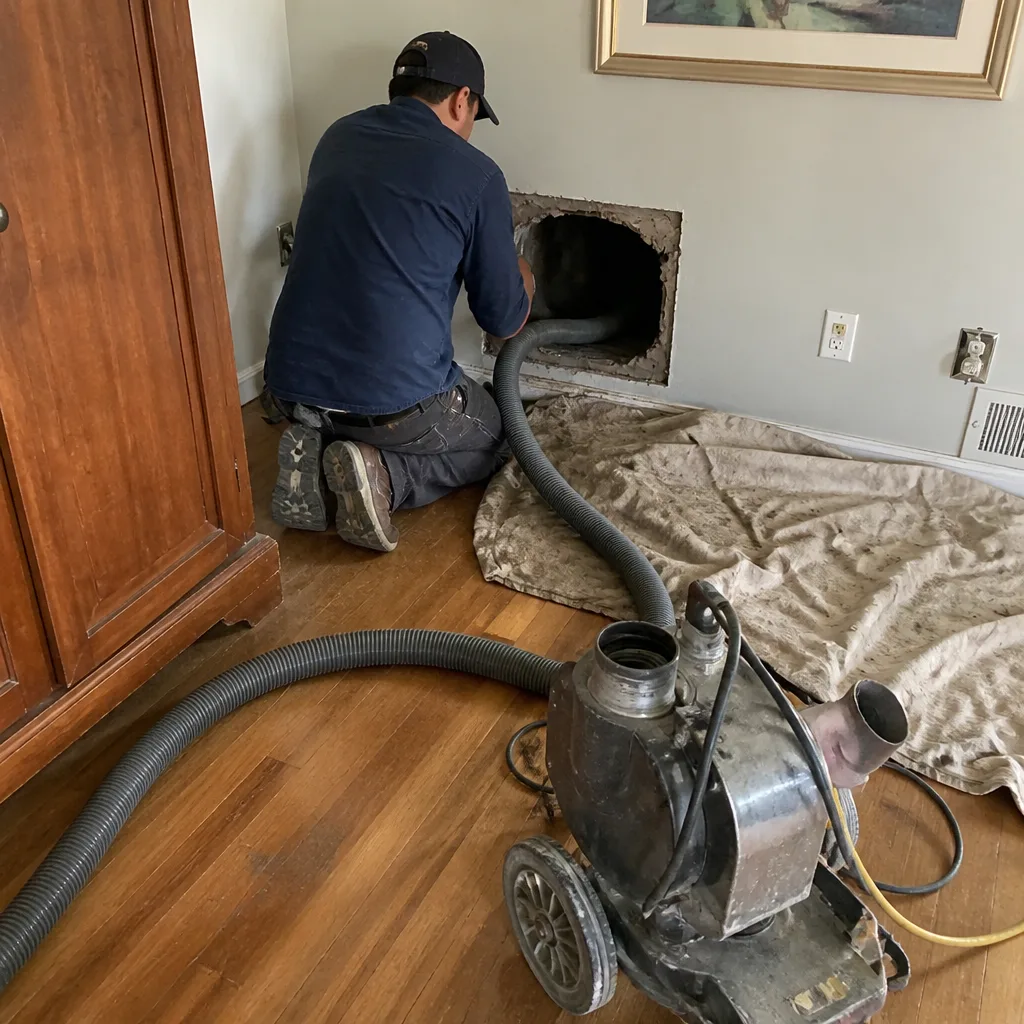
A negative-pressure system works by creating vacuum suction throughout the duct network while agitation tools dislodge debris from the duct walls. The vacuum pulls loosened particles out of the system and into a containment unit – not back into your living space. This is the approach used by restoration and remediation crews, and it’s the only method recognized by NADCA (the National Air Duct Cleaners Association) as effective for full-system cleaning. Professional-grade equipment from manufacturers like Rotobrush and Nikro is designed specifically for this application, and the difference between these systems and consumer-grade vacuums is substantial. A professional negative-pressure unit can generate the sustained airflow needed to pull debris through long duct runs – critical for the 40-60 foot duct runs common in Cupertino’s single-story tract homes.
Why “long duct runs” matters: In a single-story home, supply ducts may travel from a central furnace in the garage through the entire length of the house to reach the furthest bedroom. That’s 50 or 60 feet of duct with multiple bends. A portable consumer vacuum simply doesn’t have the static pressure to pull debris through that distance. The debris gets dislodged by the agitation brush but falls back into the duct instead of being extracted. The result is a “cleaning” that moves dirt around rather than removing it.
Truck-Mounted vs. Portable Negative-Pressure Units
Truck-mounted systems house the vacuum unit outside the home, connected to the duct system through a large-diameter hose run through a window or access point. These units generate substantial suction power and keep the noisy vacuum motor outside. Portable negative-pressure units do the same job from inside the home, typically positioned near the furnace or air handler. Both approaches can work effectively when the equipment is professional-grade. The key difference for a Cupertino homeowner is access: homes with long driveways, narrow side yards, or HOA restrictions on street parking may be better served by a portable unit. Homes with easy driveway access may prefer truck-mounted systems for their raw suction power.
What to Avoid: Agitation-Only and Positive-Pressure Methods
Some companies advertise “air duct cleaning” but use what amounts to a high-powered blower or brush system without true negative-pressure containment. This approach dislodges debris from duct walls but doesn’t reliably extract it – the loosened particulate can recirculate into the home, or settle back into the ducts once the system stops running. Positive-pressure methods (sometimes called the “push” method) can also drive dirt further into hard-to-reach sections of the duct system. If a company can’t clearly tell you what type of system they use and how it captures dislodged debris, that’s a red flag. In our experience, homes in Cupertino with long duct runs and heavy fine-particle loading get dramatically better results from true negative-pressure extraction.
What the NADCA ACR Standard Actually Requires
NADCA (the National Air Duct Cleaners Association) publishes the ACR Standard – the Assessment, Cleaning, and Restoration of HVAC Systems – which is the only recognized industry standard for duct cleaning in the United States. Most homeowners have never heard of it. Most companies don’t follow it. Here’s what the standard actually requires, translated into language a Cupertino homeowner can verify during and after service.
The Four Core Components of the ACR Standard
- Complete System Cleaning: The standard requires cleaning of all system components, not just the visible duct runs. This includes supply and return ducts, the air handler, coils, blower motor, drain pan, registers, and grilles. A company that “cleans the ducts” but skips the air handler isn’t performing a NADCA-compliant cleaning.
- Source Removal: The process must physically remove contaminants from the system through negative-pressure extraction or contact vacuuming. Brushing alone doesn’t meet the standard. The debris has to leave the system.
- Containment During Service: The standard requires that loosened debris be contained during the cleaning process so it doesn’t escape into the living space. This is where equipment like Abatement Technologies containment systems come into play – they provide negative-pressure containment that captures dislodged contaminants at the point of extraction.
- Verifiable Results: The standard requires that results be verifiable, typically through visual inspection of the cleaned components. Homeowners have the right to see the inside of their ducts after cleaning and confirm the debris was actually removed.
Checkpoints You Can Verify During Service
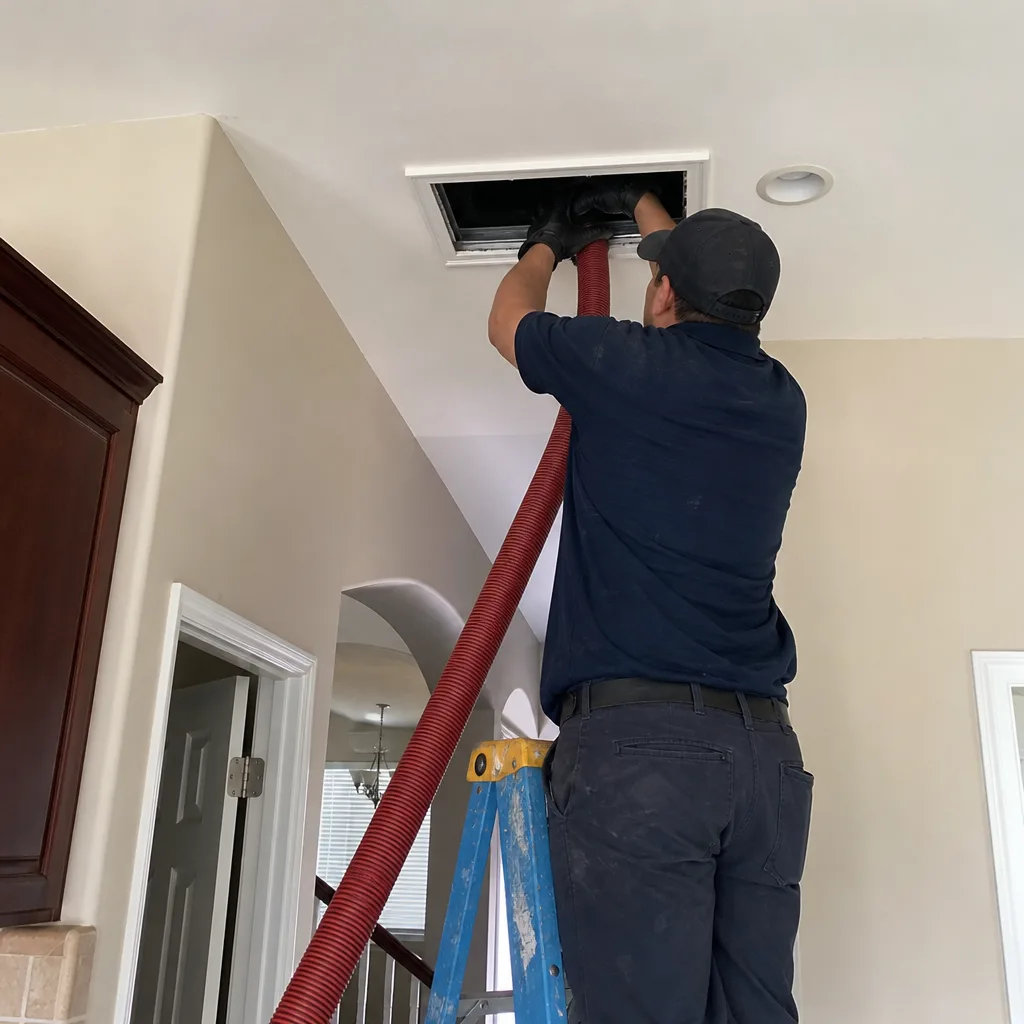
- Access points are cut or opened: Professional cleaning requires access to the duct interior. This may mean removing registers, opening the air handler, or in some cases cutting small access holes that are then re-sealed. If the technician never opens the system, they can’t actually clean it.
- Agitation and extraction happen together: You should see both a brushing or agitation tool and a vacuum running simultaneously. If you only see one or the other, the process isn’t standard-compliant.
- All registers are addressed: Every supply register and return grille should be opened and cleaned, not just the ones that are easy to reach.
- The air handler is opened: The blower, coil, and drain pan should be cleaned as part of the service. If the technician never opens the air handler cabinet, ask why.
- Post-cleaning inspection is offered: A legitimate company will show you the interior of the ducts after cleaning, either through the access points or with a camera. If they can’t show you the result, the debris may still be there.
Most companies that charge $99 for a whole-house duct cleaning are not following this standard. The math doesn’t work. Proper equipment, training, and the time required for a NADCA-compliant cleaning simply can’t be delivered for that price. We’re direct about this with Cupertino homeowners because the alternative – a partial clean that leaves the most contaminated sections untouched – is worse than no cleaning at all, because it can loosen debris that then recirculates into the home.
Why Newer High-Efficiency Homes May Need Cleaning Sooner
Here’s a counterintuitive finding from years of working in Cupertino’s newer developments: the homes with the tightest building envelopes and highest-efficiency filtration systems often need duct cleaning more frequently than older, draftier homes. The Rancho Rinconada neighborhood, with its newer high-efficiency construction, illustrates this perfectly. Here’s why.
The Compaction Effect
High-efficiency homes are built to minimize air leakage. That’s good for energy costs, but it means the HVAC system recirculates a higher percentage of indoor air. When filtration systems like Honeywell or Aprilaire media filters capture fine particulate, what they don’t capture can settle in the supply ducts. Over time, this fine material compacts against duct surfaces, particularly in the first 10-15 feet of supply runs nearest the air handler. The tighter the home, the more the system recirculates that same air, and the more opportunity for fine particulate to embed itself in the duct work. In an older drafty home, some of that particulate would be diluted by natural air exchange. In a tight home, it just keeps circulating.
What This Means for Cleaning Cycles
A standard recommendation is to clean ducts every 3-5 years. For Cupertino homeowners in newer high-efficiency construction, particularly those running their systems year-round during wildfire smoke events and the hot summer months, we’ve seen systems that benefit from cleaning every 2-3 years. The telltale sign is visible dust accumulation at supply registers even when the home is clean, or a fine film of dust that reappears on surfaces shortly after cleaning the house. That’s not a housekeeping problem – it’s a duct system issue.
The reverse is also true: some older Cupertino tract homes with leaky duct systems may not accumulate debris as quickly because much of the particulate never makes it through the entire system. But those homes have their own issues – duct leakage pulling attic air into the system, which brings insulation particles and other contaminants into the living space. Different housing eras, different contamination profiles, different cleaning approaches. This is why a one-size-fits-all national guide misses the mark for Cupertino specifically.
Room-by-Room Inspection Checklist for Bay Area Home Layouts
Before you call any duct cleaning company, document your home’s baseline condition. This does two things: it helps you identify whether you actually have a duct problem, and it gives you a reference point to verify work was done after the cleaning is complete. Here’s the checklist we recommend for Cupertino’s typical floor plans – whether you’re in a 1960s rancher near Vallco, a 1980s two-story near Stevens Creek, or a newer build in Rancho Rinconada.
Step 1: The Registers
Walk to every supply register and return grille in the house. Remove each one (most lift straight out or have two simple screws) and look inside with a flashlight. What you’re looking for: visible dust accumulation on the duct walls, debris sitting on the floor of the duct, or any discoloration on the register itself. Take a photo of the interior of each duct for your records.
Step 2: The Return Side
Return ducts often show the most dramatic contamination because they pull air from the living space without filtration. Check return grilles in hallways and common areas – these typically have the heaviest visible accumulation. Note whether the filter slot is clean, whether there’s a filter installed properly, and whether the return air cavity has visible dust or debris.
Step 3: The Air Handler
Locate your air handler (usually in the garage, a hall closet, or the attic). Open the access panel if you can do so safely. Look at the blower motor, the evaporator coil, and the drain pan. If you see dust accumulation on the blower blades or a dirty coil, that’s a sign the system needs service. This is also a good time to note your filter type and condition.
Step 4: The Filter
Note what filter you’re using. If you have a Honeywell or Aprilaire media-style filter housing with a 4-5 inch filter, you’re in good shape on filtration, but you should still check for bypass – dust around the filter edges indicates air is flowing around the filter, not through it. If you’re using a 1-inch fiberglass filter, your duct system is receiving minimal filtration and will accumulate debris faster.
Step 5: The Living Space
Look for dust accumulation patterns in the rooms. Persistent dust on surfaces within 24-48 hours of cleaning the house, visible dust streaks near supply registers on walls or ceilings, and dust accumulation on blinds or curtains near supply vents are all indicators that the duct system is distributing particulate into the living space. Note which rooms show these patterns most strongly – that maps to which duct runs are most contaminated.
Step 6: Document Everything
Photograph each register interior, the filter, the air handler interior, and any visible dust patterns. These baseline photos serve as your verification reference after cleaning. A legitimate company will be happy to have you compare. A company that seems uncomfortable with your documentation habit is a company to avoid.
How to Choose a Duct Cleaning Company in Cupertino
Cupertino has no shortage of companies offering duct cleaning. The challenge is separating specialists from generalists. A specialist brings purpose-built equipment and a focused service menu. A generalist HVAC company offering duct cleaning as an add-on service may or may not have invested in proper extraction equipment. Here’s what to ask before you hire anyone.
Question 1: “What equipment do you use?”
Listen for specific brand names. Rotobrush and Nikro systems are recognized professional-grade duct cleaning platforms used by restoration and remediation professionals. If the answer is vague – “industrial strength” or “professional-grade” without specificity – probe deeper. If the answer references consumer equipment or a truck with a large vacuum, that’s not a dedicated duct cleaning system. Ask specifically about containment: how does the equipment prevent dislodged debris from re-entering the living space? Equipment designed for containment, like Abatement Technologies systems, provides negative-pressure capture at the point of extraction – a meaningful difference from systems that simply blow and brush.
Question 2: “What exactly is included in the service?”
Get a written list. A proper whole-system cleaning includes the supply ducts, return ducts, air handler, blower, coil, and all registers and grilles. If the company only cleans “the ducts” without specifying the air handler or coils, that’s a partial service. Ask whether they’ll show you before and after photos of your specific system. This isn’t an unreasonable request – cameras capable of documenting duct interiors are standard equipment for reputable companies.
Question 3: “How long will the cleaning take?”
A legitimate full-system cleaning of an average Cupertino home takes 3 to 5 hours. If a company quotes 45 minutes or an hour, they’re not doing a full NADCA-compliant cleaning. There’s simply not enough time to access and clean all system components properly. The math is the math.
Question 4: “Are you licensed and insured?”
Confirm the company carries the appropriate licensing and insurance for work in Santa Clara County. A professional company will have no hesitation providing this information. Anyone who can’t produce it doesn’t belong in your home.
Our position at Duct Cleaning Cupertino is simple: we offer Duct Cleaning Cupertino home services with a deliberately narrow service menu – Air Duct Cleaning in Cupertino, Dryer Vent Cleaning in Cupertino, and Air Duct Repair in Cupertino. That’s it. We don’t do general HVAC service, we don’t install furnaces, and we don’t dilute our focus with a dozen unrelated services. Every job we take is within our core expertise, and our equipment – Rotobrush and Nikro systems, with Abatement Technologies containment capacity – is chosen specifically for that work.
What Drives the Cost of Duct Cleaning in Cupertino
Duct cleaning prices in Cupertino vary widely, and the variance isn’t random. Here’s what actually drives the cost, so you can evaluate quotes intelligently.
System Size and Access
Cupertino’s housing stock spans several eras, and each presents different access challenges. Older tract homes from the 1960s and 70s often have duct systems accessible from crawlspaces, which adds labor time. Newer homes in Rancho Rinconada typically have attic-mounted systems with better access but more supply runs to clean. The number of supply and return registers directly affects the time required – each register must be removed, cleaned, replaced, and the duct behind it accessed for cleaning.
Pricing Table: Typical Cupertino Ranges
- Small single-story home (up to 1,200 sq ft, 6-8 registers): $450 – $550
- Average single-story home (1,200 – 2,000 sq ft, 9-12 registers): $550 – $700
- Larger single-story or two-story home (2,000 – 3,000 sq ft, 13-16 registers): $700 – $900
- Large two-story or multi-unit (3,000+ sq ft, 17+ registers): $900 – $1,200
- Additional services (dryer vent, air handler deep clean, repair work): Priced separately based on scope
These ranges reflect NADCA-compliant cleanings with professional-grade equipment. If you’re getting quotes dramatically lower than this, something is being excluded from the service. Common exclusions include the air handler, coil cleaning, or access work. Always ask for a line-item breakdown of what’s included.
The “One Flat Price” Model
The duct cleaning industry has a well-earned reputation for bait-and-switch pricing: a low upfront number that becomes a much larger invoice once work begins. We don’t do that. Every job we quote includes a single flat price for the entire system, agreed before work starts. No per-vent pricing, no surprise add-ons, no mysterious fees that appear on the invoice. The price you approve is the price you pay. If a company can’t or won’t give you a single flat price for your specific system, that’s a signal about how the rest of the service will go.
Common Mistakes to Avoid
- Hiring on coupon price alone: A $99 duct cleaning is not a duct cleaning – it’s a sales call in disguise. The economics of NADCA-compliant cleaning make that price impossible without cutting corners or using the visit to upsell. Cupertino homeowners who’ve been burned by this typically end up paying for a second, legitimate cleaning within a year.
- Skipping the air handler: Duct cleaning that ignores the air handler leaves the most contaminated component untouched. The blower, coil, and drain pan are where mold and particulate concentrate. If your service doesn’t include them, it’s not a complete cleaning.
- Using the wrong filter after cleaning: A freshly cleaned duct system will re-contaminate quickly with inadequate filtration. A quality media filter – Honeywell and Aprilaire both make excellent options – extends the life of your cleaning significantly. A 1-inch fiberglass filter does almost nothing.
- Ignoring dryer vents: Dryer vent cleaning is a separate service from duct cleaning, and it’s a fire-safety issue. Many homeowners assume duct cleaning includes the dryer vent – it typically doesn’t, and assuming it does can mean the vent goes years without service. In Cupertino’s older homes, long dryer vent runs are common, and lint accumulation in those runs is a leading cause of residential dryer fires.
- Not documenting before and after: Without before photos, you can’t verify the after. A reputable company will welcome your documentation practice. Anyone who seems annoyed by it has a reason.
- Waiting for visible signs: By the time you can clearly see dust blowing from your registers or brown streaks on your walls, the contamination has been ongoing for months. Regular inspection of register interiors and filter condition catches problems earlier, when they’re cheaper and easier to address.
- Treating all homes the same: A Rancho Rinconada high-efficiency build and a 1960s tract home near Vallco have different contamination profiles and different cleaning needs. Apply the right approach to the right house – not a cookie-cutter process.
When to Call a Professional
Some situations don’t merit a full duct cleaning. Others absolutely do. Call a professional when: you’ve had recent construction or renovation that generated drywall or wood dust; you’ve purchased a home and have no records of prior duct service; you’ve experienced multiple wildfire smoke events while running your HVAC system; you see visible dust accumulation at registers despite regular filter changes; allergy symptoms persist despite cleaning and filtration upgrades; or you’ve noticed a musty or dusty smell when the system starts up. Any of these conditions warrants a professional assessment. Visit our blog for more guides & resources, or call Duct Cleaning Cupertino at (877) 542-8668 to schedule a free inspection – we’ll tell you honestly whether cleaning is warranted or whether a different approach is better for your situation.
Frequently Asked Questions
Air duct cleaning in Cupertino typically costs between $450 and $900 for a full system cleaning of an average single-family home, with larger homes running up to $1,200. The price depends on system size, number of registers, access difficulty, and how long it’s been since the last cleaning. Call (877) 542-8668 for an exact quote on your specific home – estimates are free.
You should be able to verify the work through visual inspection of the duct interior, either through the access points used during cleaning or with photographic documentation before and after. A legitimate company will show you the cleaned ducts and answer questions about what was removed. If you can’t see the result, you can’t verify the work.
Quotes dramatically below market rate almost always exclude something: the air handler, coil cleaning, access work, or the actual extraction equipment. A $99 “whole home” cleaning is typically a lead-generation tactic designed to get a technician inside your home to upsell more expensive services. Professional-grade equipment, insurance, and properly trained technicians have real costs, and those costs are reflected in legitimate pricing.
For most Cupertino homes, every 3 to 5 years is appropriate. Newer high-efficiency homes with tight building envelopes may benefit from cleaning every 2 to 3 years due to the compaction effect of recirculated fine particulate. Older homes with leakier ducts may not need cleaning as frequently, but should be inspected for duct leakage and attic contamination. Call (877) 542-8668 for a professional assessment of your specific system.
Air duct cleaning can help with allergies by removing accumulated particulate that circulates through the living space whenever the system runs. The effect is most noticeable in homes with heavy particulate loading, pets, or recent construction. However, cleaning alone won’t solve allergy problems – quality filtration, like a Honeywell or Aprilaire media filter, is the other half of the equation.
No, dryer vent cleaning is a separate service from air duct cleaning, and it addresses a different system entirely. Dryer vents are a fire-safety issue – lint accumulation is a leading cause of residential dryer fires, particularly in older Cupertino homes with long vent runs. If you haven’t had your dryer vent cleaned recently, it should be addressed separately from your HVAC ducts.
The Bottom Line
Cupertino’s specific climate, housing stock, and air quality conditions mean that air duct cleaning here requires a more informed approach than a generic national guide suggests. The right cleaning uses professional-grade negative-pressure equipment capable of extracting fine, dry particulate from long duct runs. The right company follows the NADCA standard and gives you a single flat price before work starts. And the right timing depends on your home’s specific construction era, filtration setup, and exposure to wildfire smoke events. If you’re in Cupertino and want an honest assessment of your duct system, call Duct Cleaning Cupertino at (877) 542-8668 – we’ll inspect your system, explain what we find, and quote you a flat price for a complete cleaning, with no surprises.
Written by the team at Duct Cleaning Cupertino, serving Cupertino since 2015.
See the difference
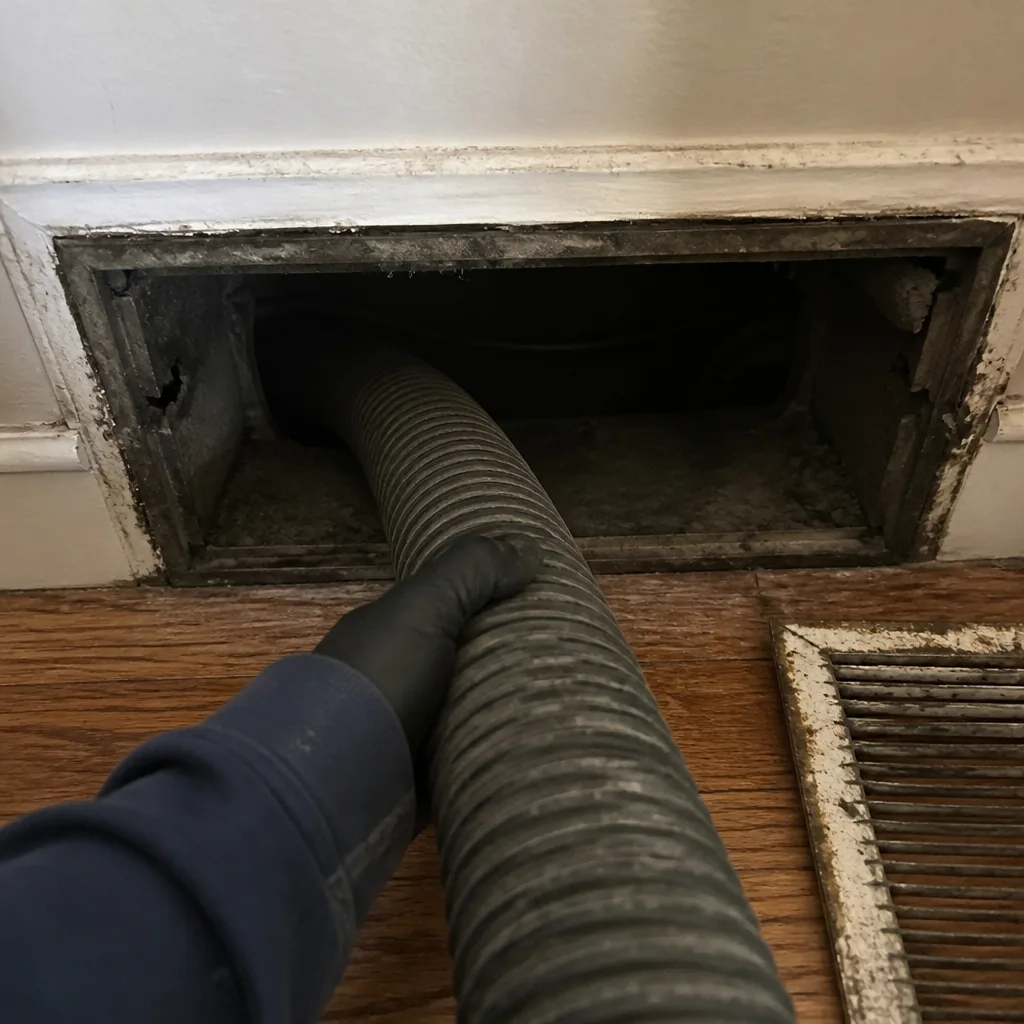 Before
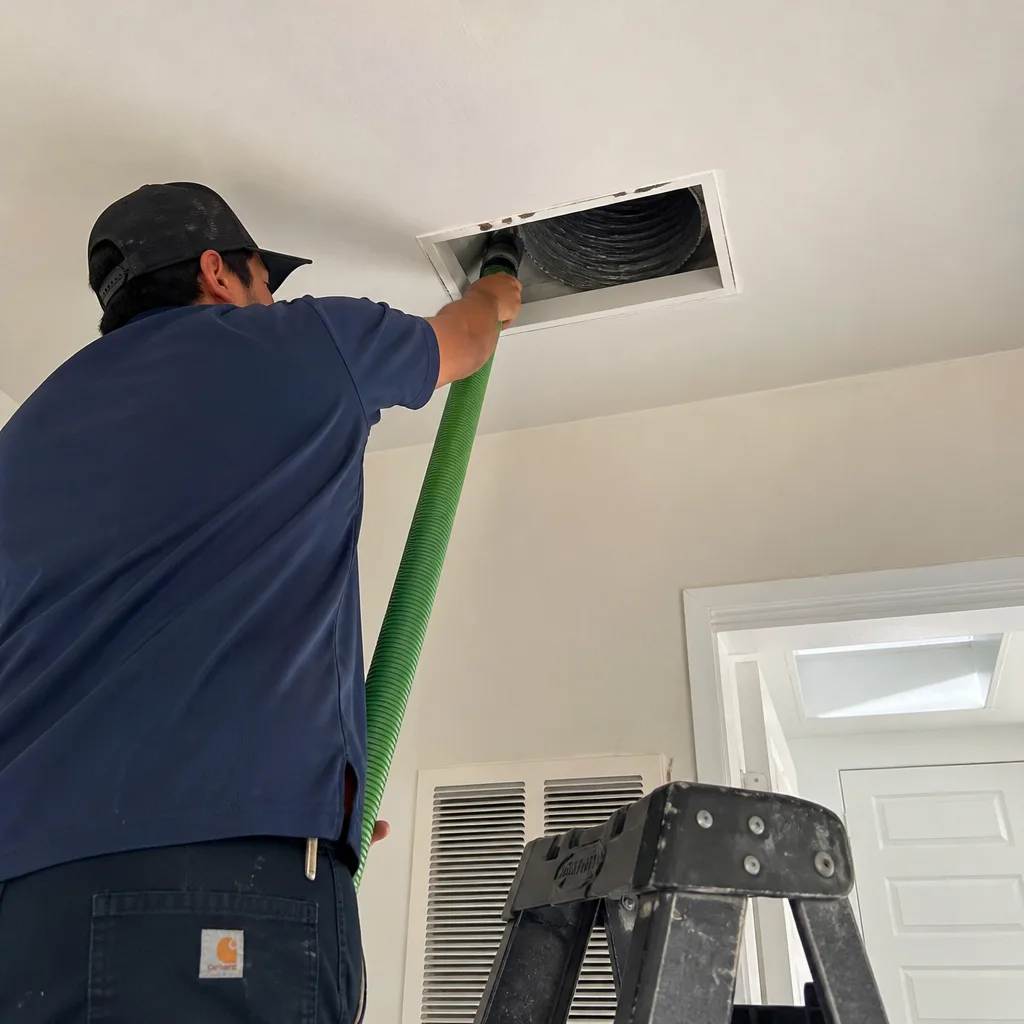 After
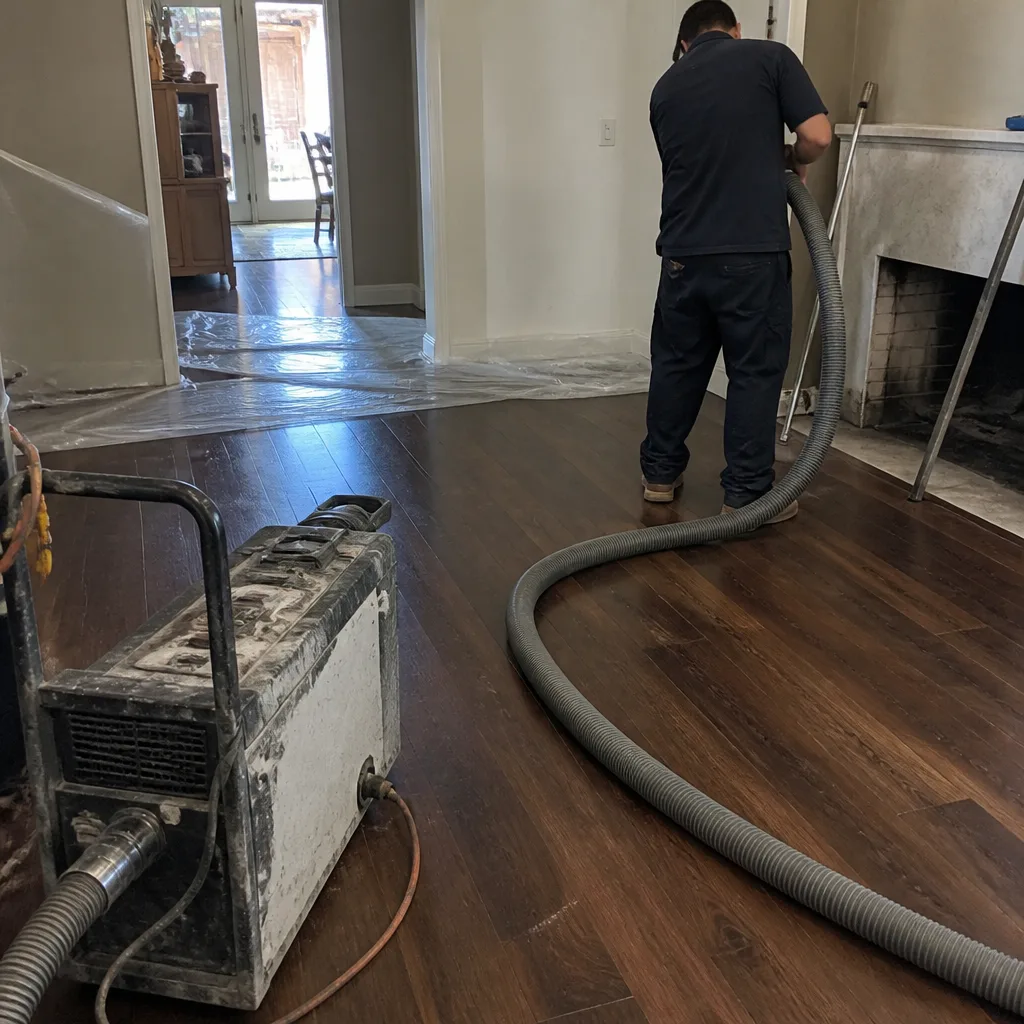 Before
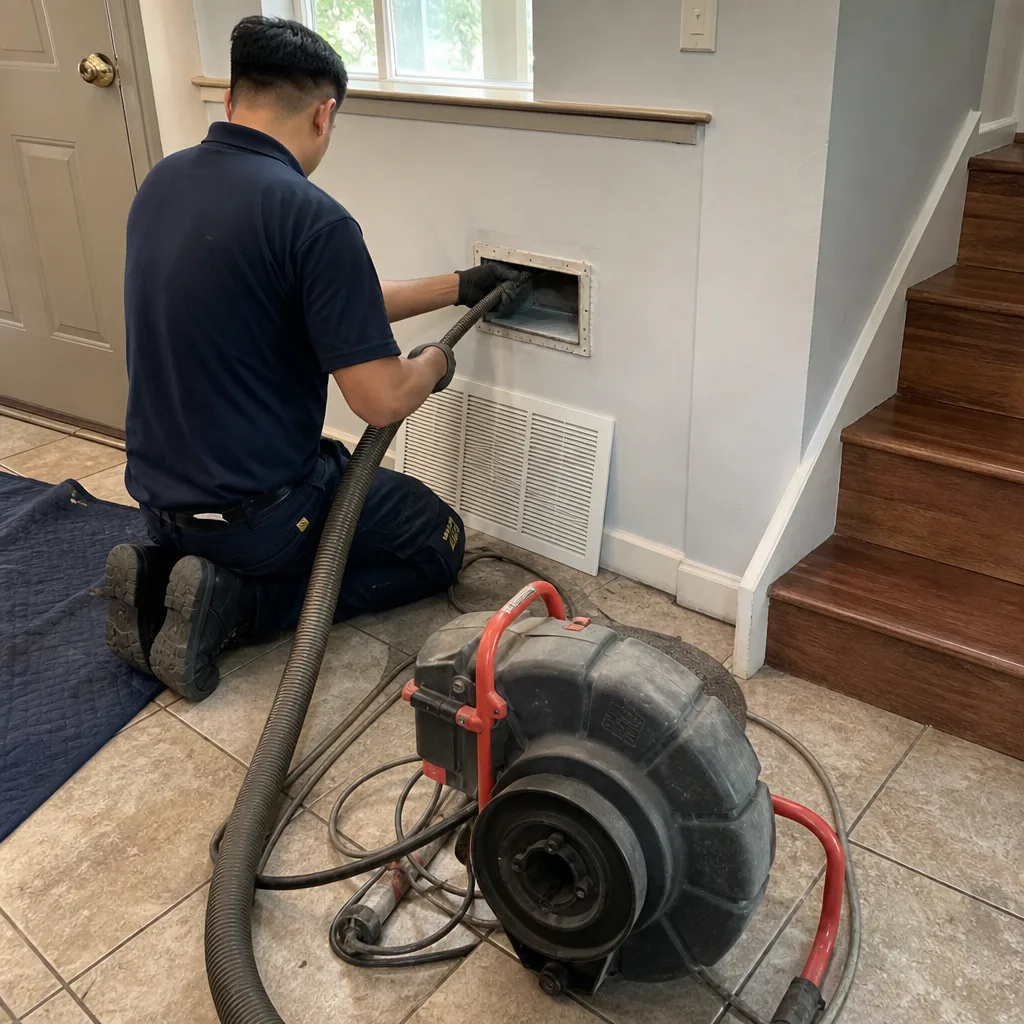 After
 Before
 After