
Last updated November 2, 2026
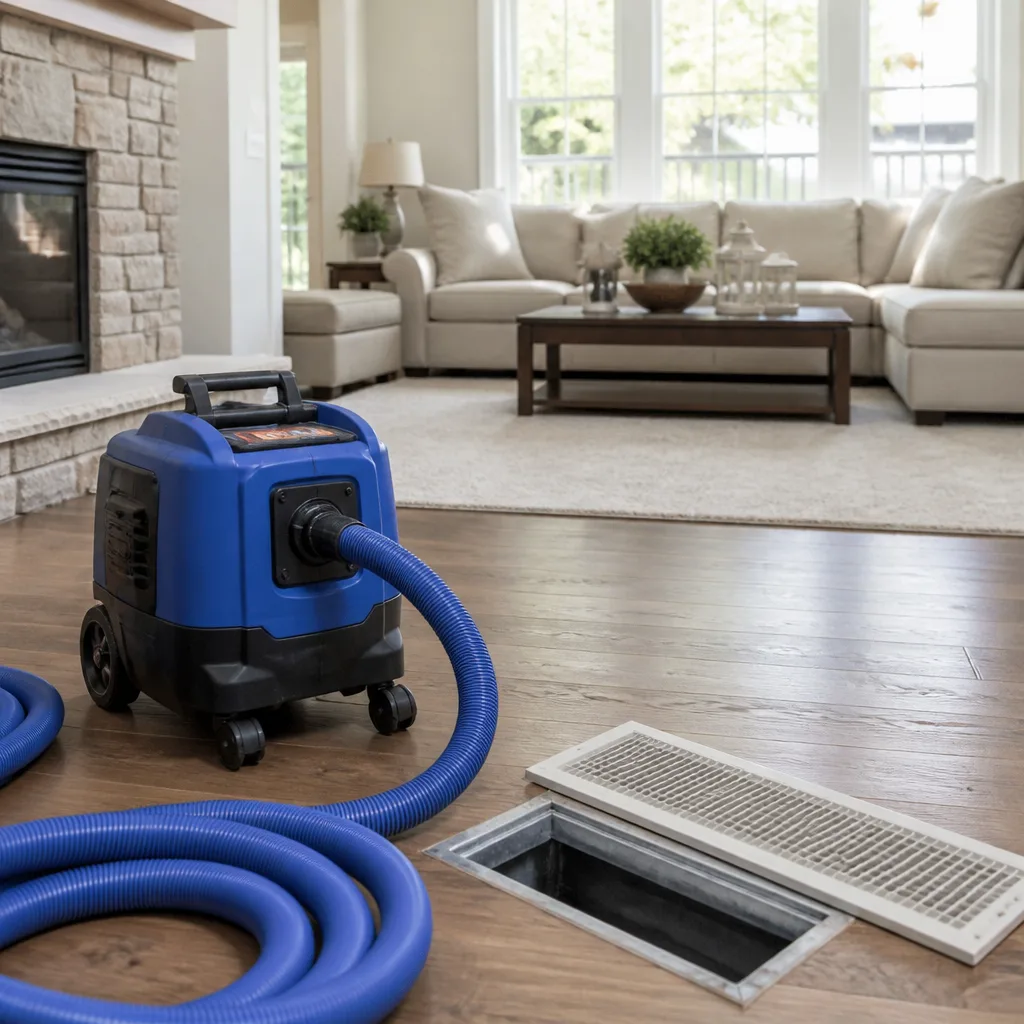 Whole-home duct cleaning
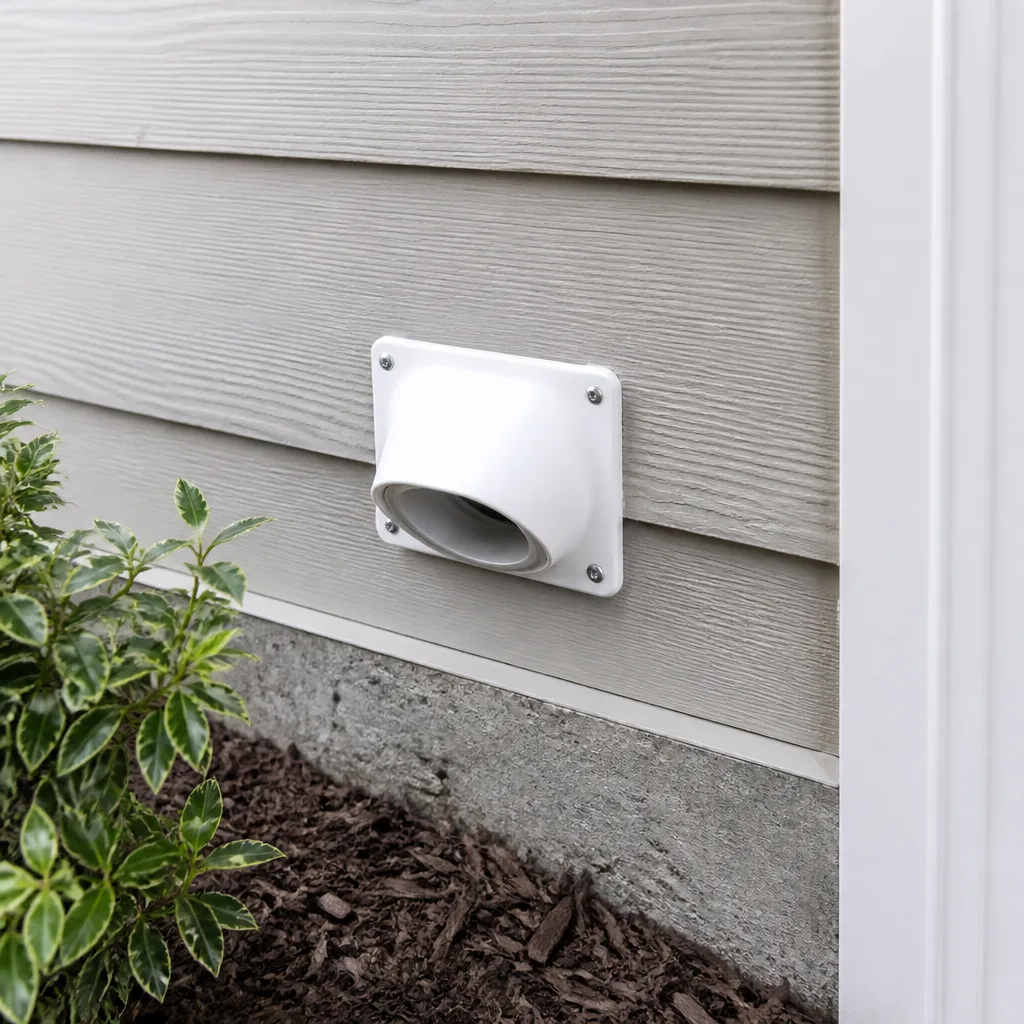 Dryer vent cleaning
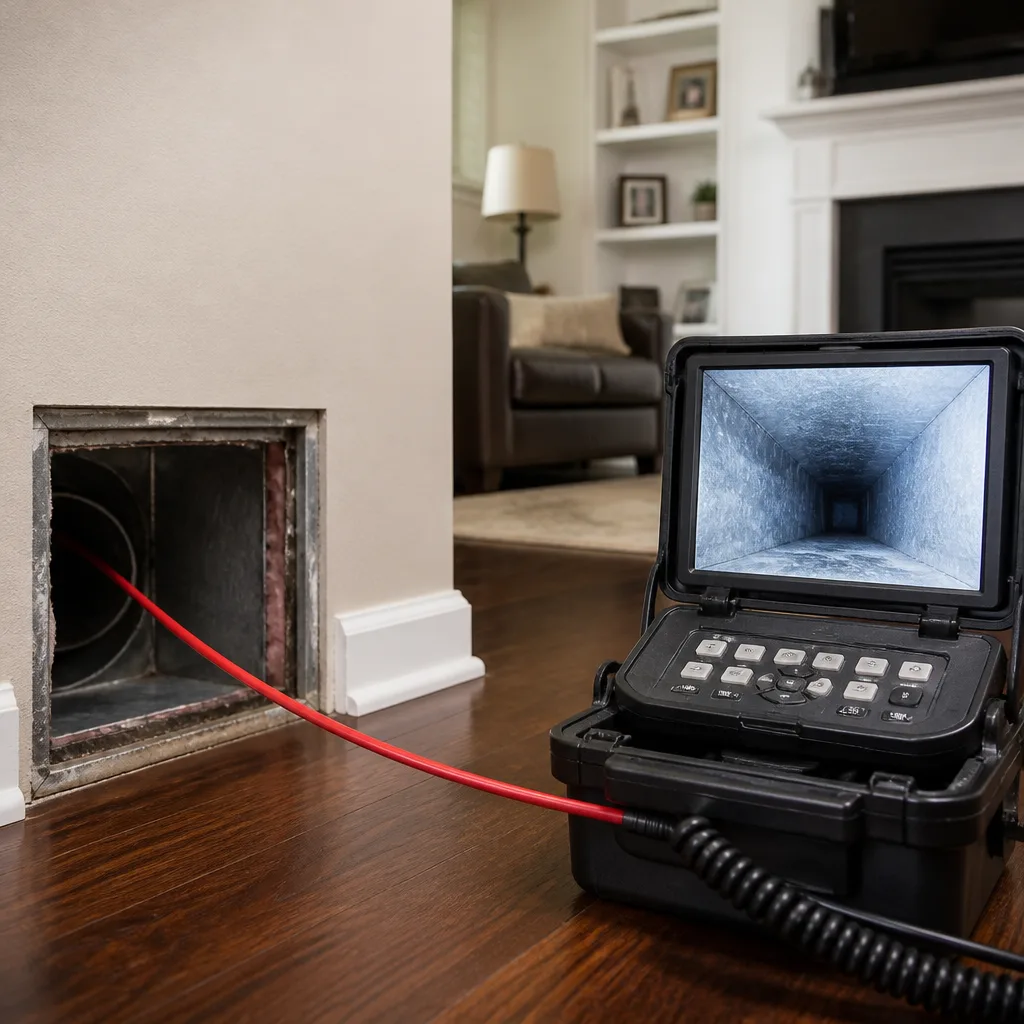 Camera inspection
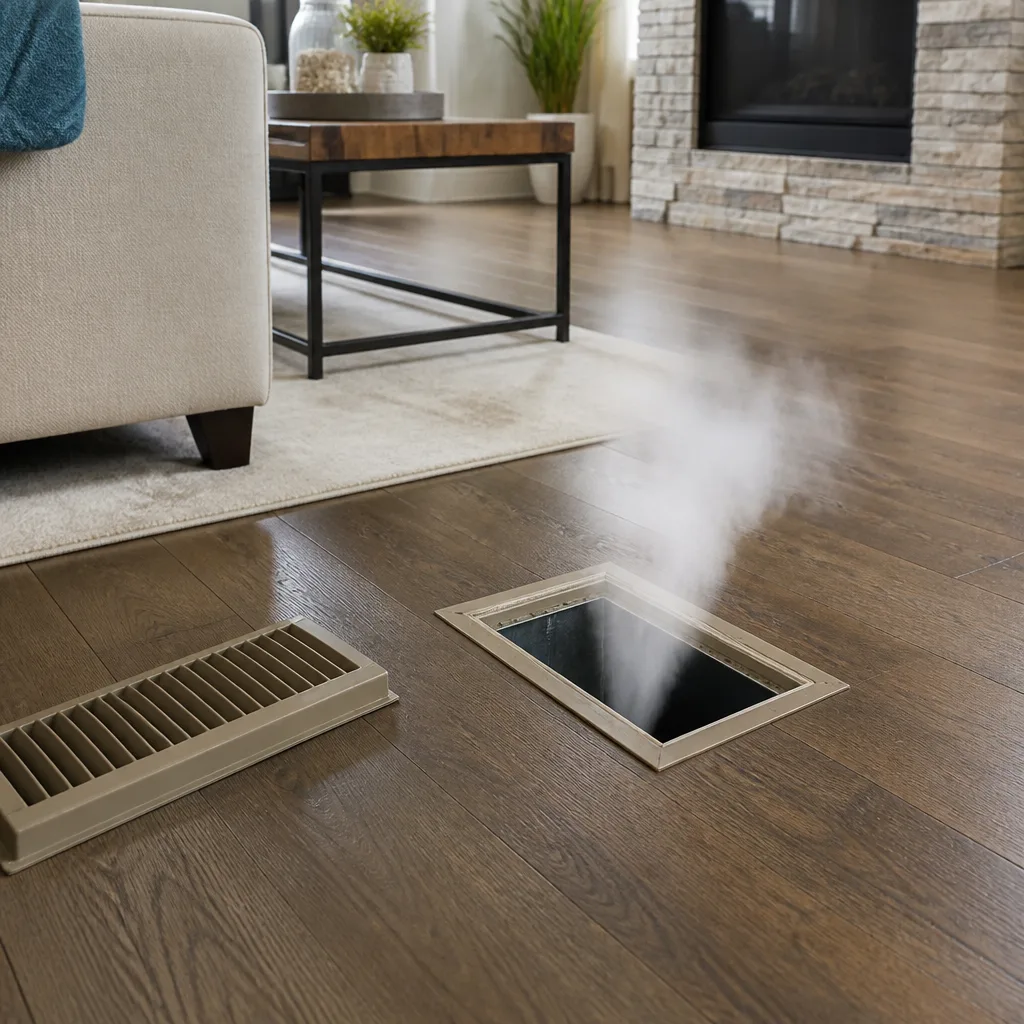 Sanitizing & deodorizing
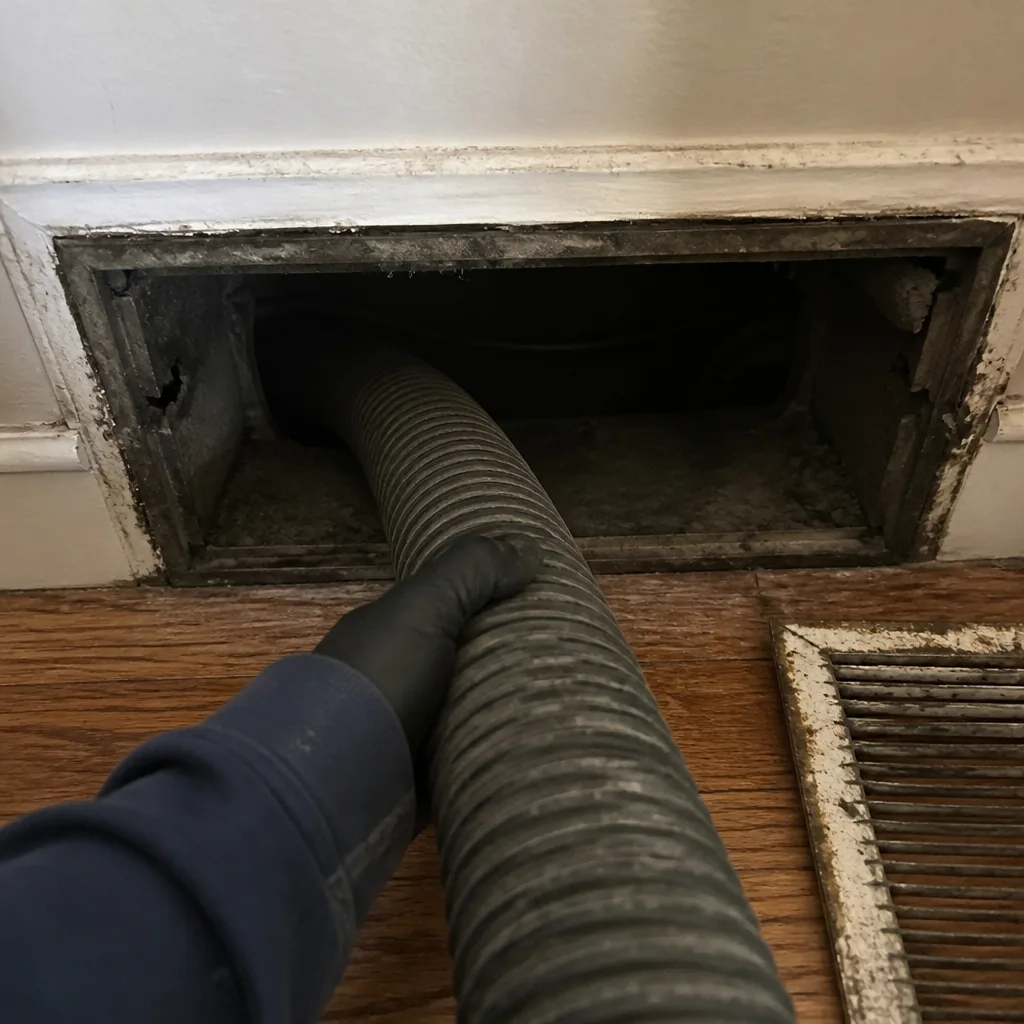
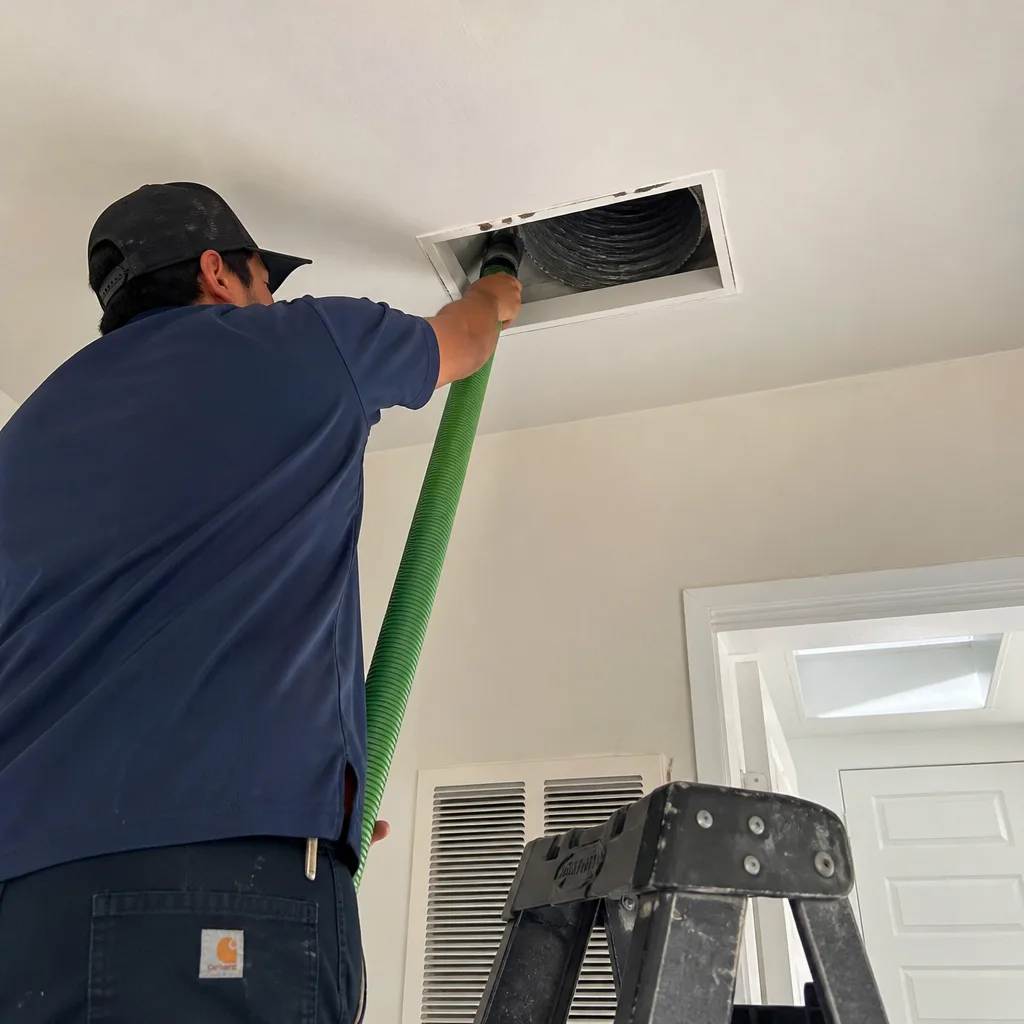
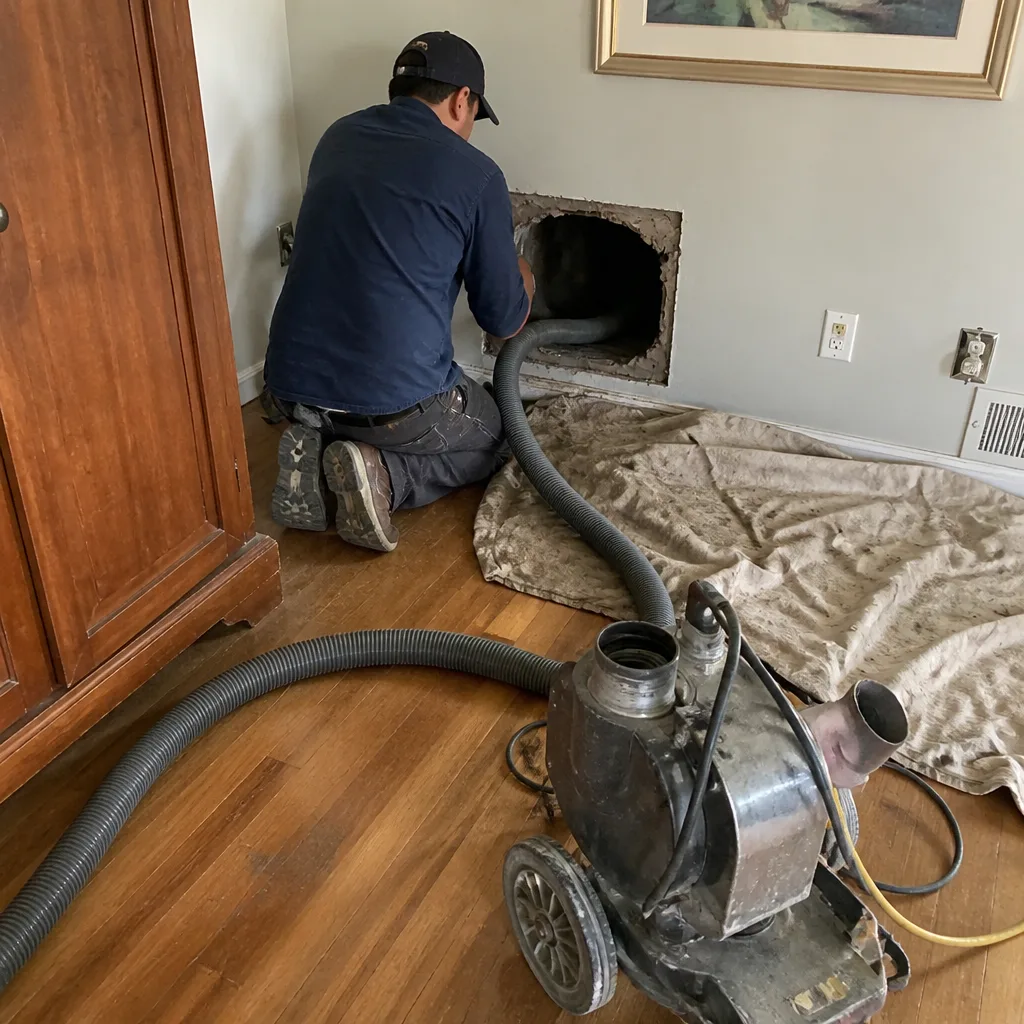
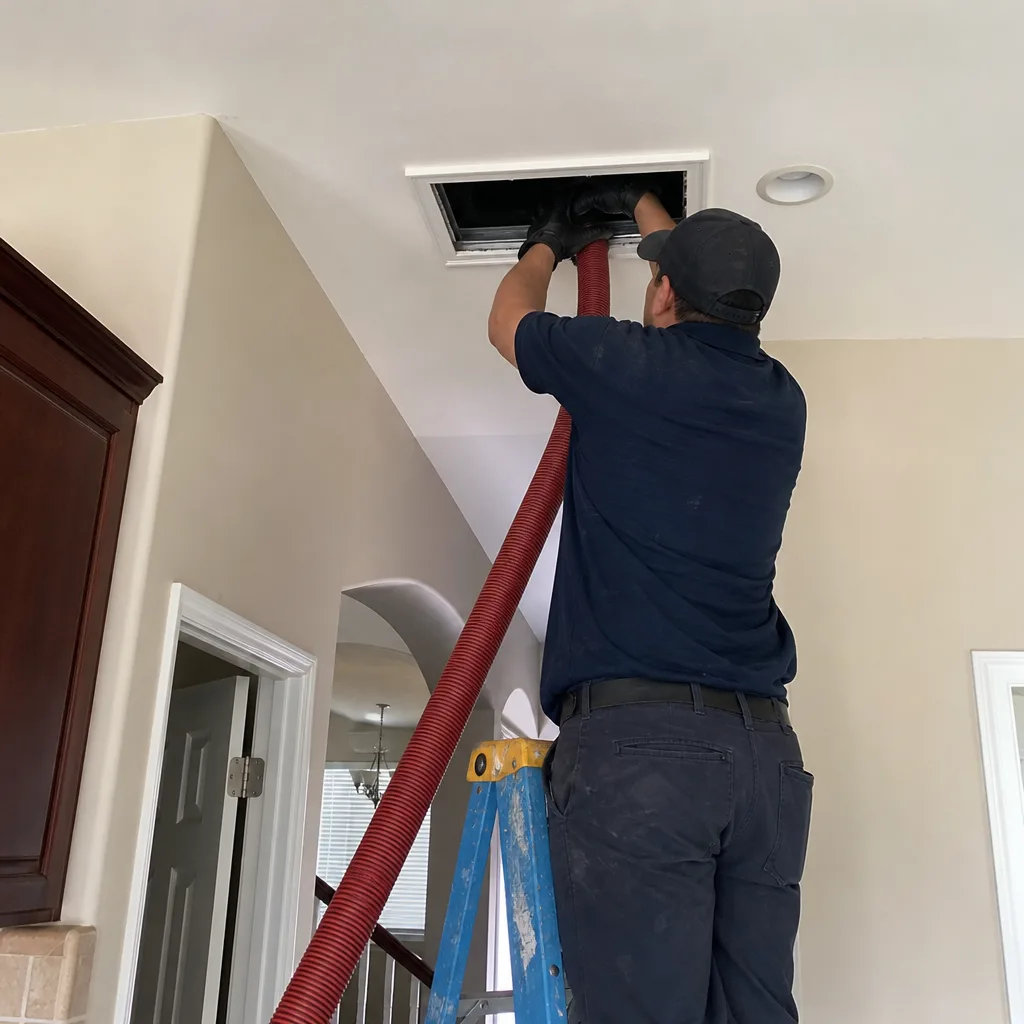
Whole-system duct and dryer vent check with before-and-after photos - you see exactly what came out of your vents
That "$99 whole-house special" is a bait ad - the real number appears once they are in your hallway, or the "clean" is a shop-vac at the register. We photograph the inside of your ducts before and after instead.
How to Hire an Air Duct Cleaning Contractor in Cupertino: A Step-by-Step Guide
California doesn’t require a duct-cleaning-specific license. Anyone with a Shop-Vac and a website can take your call and many do. That single regulatory gap explains why Cupertino homeowners see such wildly different prices for what sounds like the same job, and why one company’s “complete cleaning” is another company’s thirty-minute walkthrough. This guide gives you a repeatable vetting method: the documents to request, the equipment questions to ask, the red flags that kill a quote, and the scope-of-work language that separates a legitimate contractor from a van with a vacuum. By the end, you’ll know exactly how to filter the Cupertino market without luck, guesswork, or trusting a deal site’s rating algorithm.
Styles & brands we work with
- Whole-home duct cleaning
- Dryer vent cleaning
- Camera inspection
- Sanitizing & deodorizing
Quick Answer
To hire a contractor for our Air Duct Cleaning services in Cupertino, request three documents before booking: proof of liability insurance, a NADCA membership or equivalent credential, and a written scope of work that specifies which duct sections, access points, and HVAC components are included. Then verify the contractor uses negative-pressure equipment with a CFM rating appropriate for residential systems. Expect to pay $450 to $900 for a whole-house cleaning on a typical Cupertino home, which reflects the cost of professional equipment and containment, not a per-vent upsell.
Table of Contents
- Why California’s Licensing Gap Makes Your Vetting Process the Only Real Filter
- The Three Documents to Request Before You Book Anything
- Equipment Questions to Ask on the Phone: CFM, Negative Pressure, and Brush Systems
- Red Flags in the Quote: Per-Vent Pricing, Sanitizer Upsells, and Missing Walkthroughs
- What a Legitimate Scope of Work Looks Like vs. a Vague Invoice
- How to Compare Bids Apples-to-Apples When Contractors Define “Complete Cleaning” Differently
- Cupertino-Specific Factors: Housing Stock, Climate, and What’s Actually in Your Ducts
- Common Mistakes to Avoid
- When to Call a Professional
- Frequently Asked Questions
- The Bottom Line
Why California’s Licensing Gap Makes Your Vetting Process the Only Real Filter
Here’s the uncomfortable truth about the air duct cleaning industry in Cupertino: the State of California does not issue a specific license for this trade. A general contractor’s license exists. An HVAC contractor’s license exists. But neither is required to clean air ducts. A person can register a business name, rent a cargo van, buy a consumer-grade vacuum, and start booking appointments by Friday. No state exam. No mandatory equipment standard. No inspection of their process. That means the burden of qualification falls entirely on you, the homeowner, before you ever let a crew into your crawlspace or attic.
This isn’t a theoretical problem. In Cupertino, a housing market where the median home sits well above $2 million, the financial incentive to upsell, underdeliver, or rush a job is enormous. A homeowner who doesn’t know what to ask is a revenue opportunity for the wrong operator. The good news is that the vetting method is learnable. It comes down to three documents, five equipment questions, and a clear-eyed read of the quote itself. What follows is the exact process we recommend to every Cupertino homeowner who calls us, whether or not they end up hiring us.
The Three Documents to Request Before You Book Anything
Before you schedule a single appointment, ask for three pieces of paper. A legitimate contractor will produce all three without hesitation. A contractor who stalls, deflects, or says “we’ll bring it on the day of the job” is telling you something.
- Proof of liability insurance. This is non-negotiable. The contractor should be able to email you a certificate of insurance (COI) showing general liability coverage. If their equipment damages your drywall, your carpet, or your HVAC system, this is what protects you. Ask for the certificate, not a verbal assurance. In our experience, Cupertino homeowners who skip this step end up absorbing the cost of a scratched hardwood floor or a broken access panel with no recourse.
- NACDA membership or equivalent credential. The National Air Duct Cleaners Association (NADCA) publishes technical standards for source-removal duct cleaning. Membership alone doesn’t guarantee quality, but it signals that the company has committed to an industry standard beyond “we own a vacuum.” Ask directly: “Are you NADCA members?” If they don’t know what NADCA is, end the conversation. An equivalent credential could include Air Systems Cleaning Specialist (ASCS) certification, which is issued by NADCA to individuals who pass a written exam on cleaning methodology and safety.
- A written scope of work. This is the document that distinguishes a professional from a person with a van. The scope should be a written itemization of what will be cleaned, how access will be created, and what is explicitly excluded. If the quote is just a dollar figure on an invoice template with “duct cleaning” written next to it, that’s not a scope. That’s a prayer. A real scope names the duct sections, the number of access points, the inclusion or exclusion of the blower compartment, and the cleaning method. We’ll break down what a legitimate scope looks like in detail below.
Request all three before booking. If a contractor pushes back on any of them, treat that as a strong signal to move on. There is no shortage of legitimate operators serving Cupertino, and the professionals want to show you their paperwork because it’s how they differentiate themselves from the Shop-Vac crowd.
Equipment Questions to Ask on the Phone: CFM, Negative Pressure, and Brush Systems
Once the paperwork checks out, the next filter is the equipment. You don’t need to become an air duct engineer to evaluate this. Three questions will tell you whether the contractor has invested in professional gear or is improvising. Ask these on the phone, before the crew ever shows up.
Question 1: “What’s the CFM rating on your vacuum system?” CFM stands for cubic feet per minute, and it measures the airflow volume of the vacuum. A consumer-grade shop vacuum pulls perhaps 150 to 300 CFM. A professional truck-mounted or portable negative-pressure unit pulls 2,000 to 5,000 CFM or more. That difference is not incremental; it’s the difference between loosening debris and actually extracting it from the duct system. If the contractor can’t answer this question or doesn’t know what CFM means, you’re talking to the wrong person. Professional-grade systems like those from Rotobrush and Nikro equipment are built around high-CFM airflow for a reason: the volume is what carries dislodged debris out of the ductwork and into the containment system.
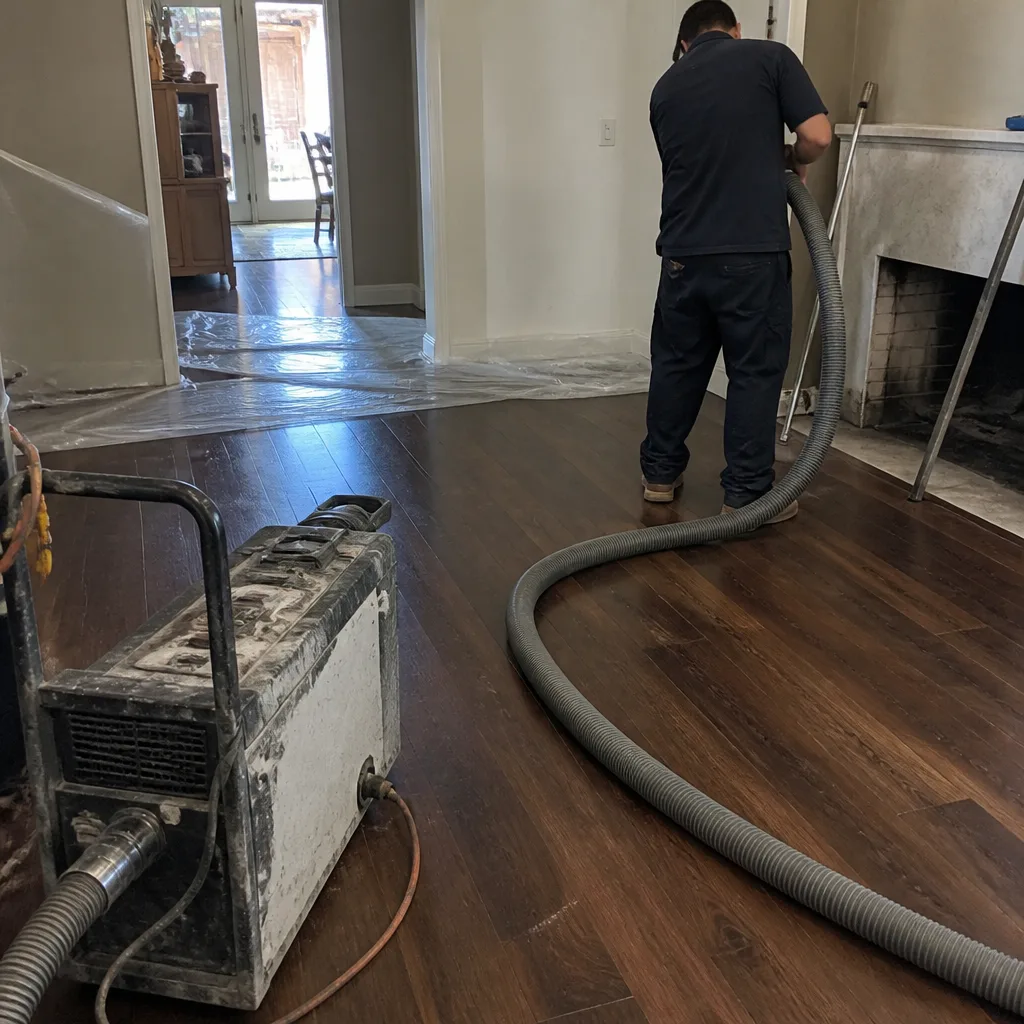
Question 2: “Do you use negative pressure containment during cleaning?” Negative pressure means the vacuum system creates suction inside the ductwork while the cleaning agitation happens, so that dust and debris are pulled toward the collection system rather than blowing out through your vents into the living space. This is how restoration professionals work when dealing with mold, asbestos, or fire-damage debris, using Abatement Technologies equipment to ensure contaminants don’t escape the work area. A contractor who says “we just vacuum from each vent” is not doing source removal; they’re doing surface work and calling it cleaning. In Cupertino homes where ducts run through attics and crawlspaces, negative pressure is not a luxury. It’s the mechanism that keeps dislodged dust from settling back into your carpet and lungs.
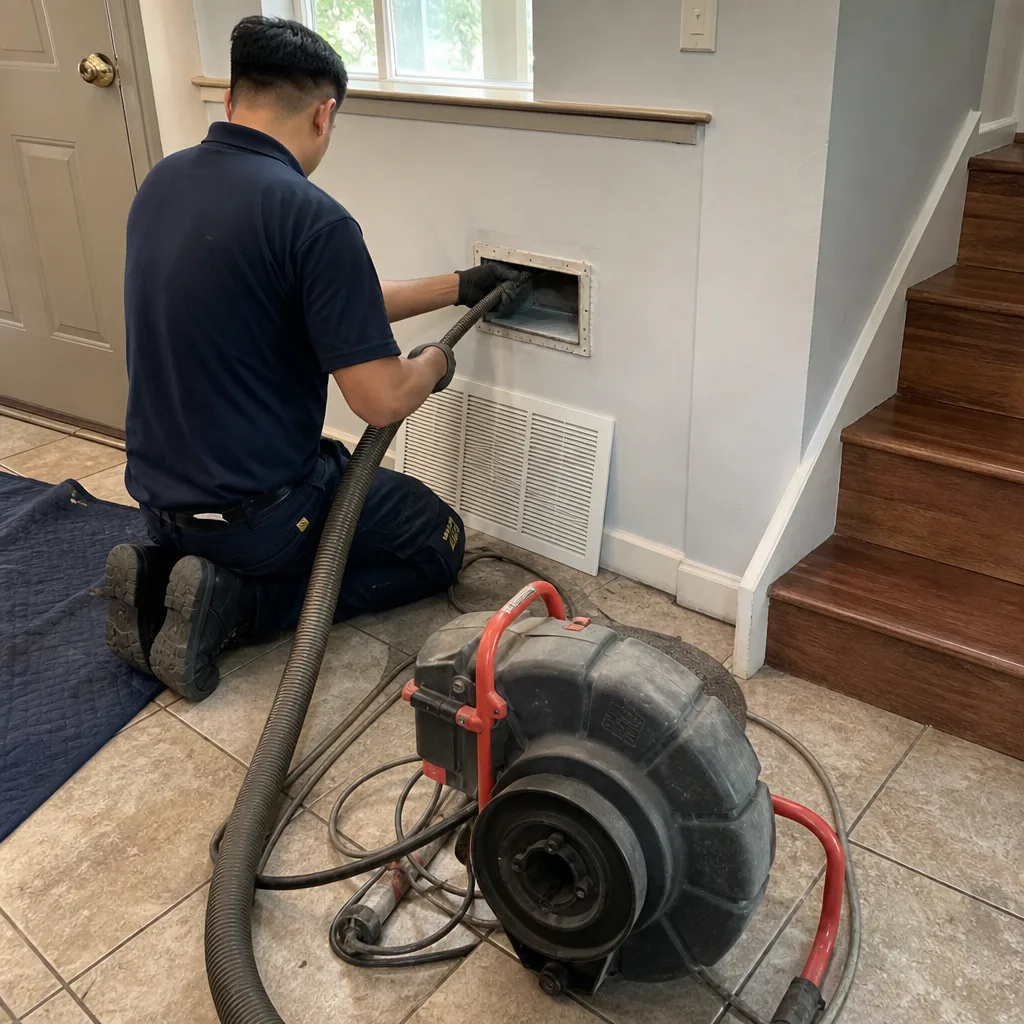
Question 3: “What kind of agitation system do you use: rotating brush, air whip, or manual?” Source removal requires mechanical agitation to break the bond between debris and the duct wall. The two professional methods are rotating brush systems and compressed-air whips. Both have their place depending on duct material and condition. The point is that the contractor should be able to name their method and explain why they use it. For flexible ductwork common in Cupertino tract homes built in the 1970s through 1990s, an air whip is often gentler and less likely to tear the liner. For rigid sheet metal ducts in older Eichler homes, a rotating brush does a more thorough job. If the contractor’s answer is “we have a really strong vacuum,” that’s not an agitation method. That’s a description of a vacuum.
Red Flags in the Quote: Per-Vent Pricing, Sanitizer Upsells, and Missing Walkthroughs
The quote itself is a diagnostic tool. Read it like a contract, because it is one. Three patterns in particular will tell you whether the contractor’s business model is built on honest work or on extracting maximum dollars from under-informed homeowners.
Red flag 1: Per-vent pricing that balloons. A quote that says “$49 per vent” sounds reasonable until you realize a typical Cupertino home has 15 to 25 vents, and the “per-vent” price refers only to the supply vents, with return drops, trunk lines, and the plenum listed as add-ons. Suddenly a $49 number becomes a $1,200 invoice. Professional duct cleaners price the whole system as a single job because the system is a connected whole. A legitimate quote gives you one flat price for the entire system, agreed upon before work starts, with no arithmetic surprises on the day of service.
Red flag 2: The sanitizer upsell on every job. Some contractors push a “sanitizing fog” or “antimicrobial treatment” as a standard add-on, implying that cleaning without it is incomplete. Here’s the reality: sanitizers have a legitimate place in specific situations, such as after mold remediation or when a medical condition demands extra microbial control. They are not a routine requirement for a standard cleaning. If the contractor insists the sanitizer is necessary on a routine job, ask what contaminant they’re targeting and why cleaning alone won’t address it. In our experience, the pushiest upsell pitches come from the same companies that quote the lowest base price. The sanitizer is where they make the margin back.
Red flag 3: No pre-job walkthrough offered. A professional should want to see the job before quoting a firm price. That means walking the home, looking at the furnace location, checking the return drops, counting access points, and assessing the duct material. A contractor who quotes over the phone without ever seeing the house is selling you a number, not a service. The pre-job walkthrough is also when a professional discusses access: how they’ll reach the trunk line, whether they’ll cut access panels in inconspicuous locations, and how they’ll seal them afterward. If that conversation never happens, the scope of work is a guess.
What a Legitimate Scope of Work Looks Like vs. a Vague Invoice
A legitimate scope of work is specific. It names the components. It defines the access. It states what’s included and what isn’t. Here’s the structure of a proper duct cleaning scope, and here’s how to read one so you know what you’re buying.
A legitimate scope of work includes:
- Specific duct sections: Supply trunk line, return trunk line, all supply branches, all return drops. If the scope says “all ductwork,” ask for the breakdown. A professional identifies the sections because they plan the job around access points. If the scope doesn’t name sections, the contractor hasn’t thought about how they’ll actually clean your system.
- Access point count and method: The scope should specify how many access points will be created, where they’ll be located, and how they’ll be sealed after the work. Cutting access into sheet metal ductwork is standard practice. Leaving open holes is not. The scope should state that access panels will be sealed with aluminum tape or gasketed covers.
- Blower compartment included or excluded: This is a common point of dispute. The blower compartment sits between the return side and the supply side of your furnace. Cleaning it requires care and sometimes removing the blower assembly. Some contractors include it; some charge extra. The scope should state clearly whether the blower compartment is included. If it’s missing from the document, you can assume it’s not included, and you should ask why.
- Cleaning method stated: “Source removal” is the industry term for physically removing debris from the duct interior through agitation plus negative-pressure collection. The scope should state that source removal will be performed. If it says “air washing” or “vent vacuuming,” those are not the same thing and the price should reflect that.
A vague invoice looks like this: “Duct cleaning – $499.” No sections. No access details. No method. No mention of the blower compartment. That invoice tells you everything you need to know about the level of planning behind the bid. Walk away from it. A professional who insists on a written scope is also protecting themselves, because it means both parties agree on what “done” looks like before the van shows up.
How to Compare Bids Apples-to-Apples When Contractors Define “Complete Cleaning” Differently
One Cupertino homeowner gets a quote for $389. Another gets a quote for $795. Both say “complete duct cleaning.” The difference is not profit margin; it’s scope, equipment, and method. Comparing those two bids directly is comparing apples to a photograph of an apple. Here’s how to run an honest comparison across three, four, or five quotes.
Step 1: Normalize the scope. Create a checklist: supply trunk, return trunk, all supply branches, all return drops, blower compartment, access point creation, access point sealing. Go through each quote and mark which items are explicitly included. A quote that includes the blower compartment at $650 is often cheaper than a quote that excludes it at $550, because the blower compartment is where a significant amount of debris accumulates and cleaning it properly adds 45 minutes to an hour of labor.
Step 2: Compare equipment class, not just brand names. Ask each contractor what CFM their system pulls and whether they use negative pressure. A contractor using a 3,000 CFM truck-mounted system with HEPA-level containment is delivering a different service than one using a portable 400 CFM unit. The equipment class matters because it directly determines how much debris is actually removed from your system, versus how much is loosened and partially vacuumed. This is where companies using Rotobrush or Nikro systems separate from operators using consumer equipment.
Step 3: Compare method risks. If your ducts are flexible, an aggressive rotating brush can tear the inner liner, especially in older Cupertino homes where the flex duct has been in place since the 1980s. Ask each contractor how they’ll handle flex duct and what they’ll do if a tear occurs. The answer reveals whether they’ve thought about your specific system or are applying a one-size-fits-all approach.
Step 4: Compare total price, not the headline number. Add up the base price plus any stated add-ons, then compare against the normalized scope. A $389 quote that requires a $250 blower compartment add-on and a $180 sanitizer package is a $819 quote in disguise. The $795 quote that includes everything in a single flat price is not the worse deal. One flat price per system, agreed before work starts, is the model to look for.
Cupertino-Specific Factors: Housing Stock, Climate, and What’s Actually in Your Ducts
Cupertino isn’t a generic suburb, and the conditions inside your ducts aren’t generic either. Three local factors shape what a duct cleaning contractor will find when they open your system, and understanding them helps you evaluate the work. For Seasonal Air Duct Cleaning Care for Cupertino: Year-Round Homeowner’s Guide, see our dedicated resource.
The housing stock. Cupertino’s residential neighborhoods break into roughly three eras. The Eichler homes, concentrated in the Fairgrove tract and built in the 1950s and 1960s, feature radiant flooring in many cases with no ductwork at all, while the ones that do have ducts typically have rigid sheet metal running through the attic. The tract developments from the 1970s through 1990s, like those off Blaney Avenue and Stevens Creek Boulevard, predominantly use flexible ductwork in attics and crawlspaces. The newer construction and remodels skew toward higher-efficiency HVAC with smaller, tighter duct runs. Each presents different cleaning challenges and different equipment requirements. A contractor who asks about your home’s era and duct material during the walkthrough is a contractor who understands the local market.
The climate and the dust. Cupertino sits in a valley that traps particulate. The marine layer burns off by mid-morning, leaving dry air and fine dust from the Santa Cruz Mountains and the surrounding orchards that linger in the basin. That dust gets pulled into return ducts, especially in homes that run air conditioning consistently from June through October. The result is a fine, powdery accumulation that bonds to duct walls and requires genuine mechanical agitation to remove. This is not the heavy, greasy buildup you’d see in a humid coastal climate; it’s fine particulate that needs the right agitation method and proper containment to remove without reintroduction into the living space.
Construction activity. The constant remodeling across Cupertino, from kitchen gut renovations in Monta Vista to full tear-downs further south, generates construction dust that drifts. Homes near active job sites accumulate drywall dust in their ducts at an accelerated rate. If you’ve had remodeling work done on your own home, the drywall dust from that job is almost certainly in your duct system unless the ducts were professionally cleaned afterward. That dust is extremely fine pass-through from the construction phase, and it’s one of the most common reasons a Cupertino homeowner calls us in the first place.
Common Mistakes to Avoid
- Hiring on price alone. The cheapest bid in Cupertino is often the most expensive by the time the add-ons land. A contractor quoting a low per-vent price is building a sales funnel, not a scope of work. Compare normalized scopes, not headline numbers.
- Assuming a general HVAC license covers duct cleaning. California’s HVAC contractor license (C-20) covers installation and repair of heating and cooling systems. It does not certify competence in source-removal duct cleaning. A C-20 license tells you the contractor knows HVAC; it doesn’t tell you they know how to clean ducts properly.
- Skipping the insurance check. If the crew damages a ceiling, severs a thermostat wire, or scratches a hardwood floor, the repair is on you unless the contractor carries liability insurance and you’ve verified it. Always ask for the certificate of insurance before the job, not after the damage.
- Falling for the “duct cleaning costs $99” ad. A whole-system source-removal cleaning on a typical 2,000-square-foot Cupertino home involves professional equipment, an hour or more of setup and containment, and 3 to 5 hours of work. Anyone offering the whole system for $99 is planning to upsell you the moment they’re in the door.
- Not asking about the blower compartment. The blower compartment is the heart of the air handler, and it accumulates dust that cycles through the entire system. If the scope doesn’t mention it, it’s not included, and you’re paying for a partial job.
- Booking a cleaning without a pre-job walkthrough. A phone quote without a home visit is a guess. Ductwork layouts vary significantly between an Eichler, a 1980s tract home, and a 2010s rebuild. A contractor who hasn’t seen the house hasn’t planned the job.
When to Call a Professional
Some situations are beyond the scope of even the most diligent DIY effort, and duct cleaning is professional work by default. If you’ve recently completed a remodel, the drywall dust in your system is fine enough to pass through standard filters and will continue circulating for months without source removal. If you’ve moved into a previously occupied Cupertino home and have no record of prior cleaning, the ducts are carrying the previous occupants’ dust, pet dander, and construction debris. If anyone in the household has persistent allergies or respiratory sensitivity, the particulate load in your ducts matters more. For dryer vents, if your laundry takes longer than one cycle to dry or the exterior vent flap doesn’t open fully when the dryer runs, you likely have a lint restriction that represents a fire hazard. Duct cleaning services from a Cupertino specialist who shows up with professional-grade equipment are worth the call in all of these cases. Duct Cleaning Cupertino offers free estimates in Cupertino. Call (877) 542-8668 to discuss your situation and get a scope of work before you book anything.
Frequently Asked Questions
A whole-system air duct cleaning in Cupertino typically costs between $450 and $900, depending on home size, number of duct runs, and system configuration. For a detailed breakdown, see our Air Duct Cleaning Cost Breakdown: The Cupertino Homeowner’s Reference for 2026. The price reflects professional source-removal cleaning with negative-pressure containment, not a per-vent rate. Be wary of quotes below $300; they almost always involve add-ons once the crew arrives. Call (877) 542-8668 for an exact quote on your system. Estimates are free.
Yes, especially if the previous owner had pets, completed renovations, or has no maintenance records. Duct cleaning gives you a known baseline for the air moving through the home you now own. In our experience, new Cupertino homeowners are consistently surprised by how much accumulated dust, pet hair, and construction debris comes out of systems that looked fine from the vent covers.
Ask for a certificate of insurance (COI) with your name listed as certificate holder. Any legitimate contractor can produce this within a day via email. The COI should show general liability coverage from a recognized carrier. Don’t accept a spoken assurance; the piece of paper is the whole point.
Source removal uses mechanical agitation (rotating brushes or air whips) to break debris free from the interior walls of the entire duct system, then negative-pressure airflow to extract it. Vacuuming the vents removes only the loose debris near each vent cover. The bulk of the system, the trunk lines and branches, remains untouched in a vent-only job.
Plan for 3 to 6 hours for a whole-system cleaning on a 2,000 to 3,000 square foot home. The time includes setup, containment, access point creation, agitation, extraction, and sealing. A company that promises to clean your entire system in under two hours is not doing source removal.
No. Dryer vent cleaning in Cupertino addresses the exhaust duct that runs from your dryer to the exterior of the home. It’s a fire-safety service focused on lint accumulation. Air duct cleaning addresses the HVAC distribution system. They are separate services requiring different equipment and different scopes. A specialist will treat them as distinct jobs.
The practical answer for most Cupertino homes is every 3 to 5 years, with shorter intervals if you have pets, allergies, active construction nearby, or recently completed remodeling. Homes near ongoing construction in Cupertino’s redevelopment areas may benefit from cleaning every 2 to 3 years due to accelerated dust infiltration. If your ducts were last cleaned before your kids started elementary school and they’re now in middle school, it’s time.
It can reduce the particulate load circulating through your home, which for allergy sufferers means fewer airborne triggers. The effect is most noticeable when the ducts haven’t been cleaned in years and have accumulated pet dander, pollen, and fine dust. Pairing a professional cleaning with a whole-home filtration assessment from systems like Aprilaire can extend the benefit. But approach any claim that duct cleaning “cures” allergies with skepticism; it’s one part of an indoor air quality strategy, not a medical treatment.
The Bottom Line
The hiring process for a duct cleaning contractor in Cupertino has to do the work that California’s licensing system doesn’t. Request the insurance certificate, the NADCA credential, and the written scope before you book. Ask about CFM, negative pressure, and agitation method on the phone. Read the quote for per-vent games, sanitizer pressure, and missing walkthroughs. Then compare bids with a normalized scope so you’re measuring the same work. A specialist using professional-grade air duct equipment designed for source removal will always quote a realistic flat price for the whole system. That’s the contractor worth hiring, and the one whose work you’ll be able to verify when you see before-and-after photos of your own ducts.
Written by the team at Duct Cleaning Cupertino, serving Cupertino since 2015. Explore more guides & resources from our team.
See the difference
 Before
 After
 Before
 After
 Before
 After