
Last updated November 2, 2026
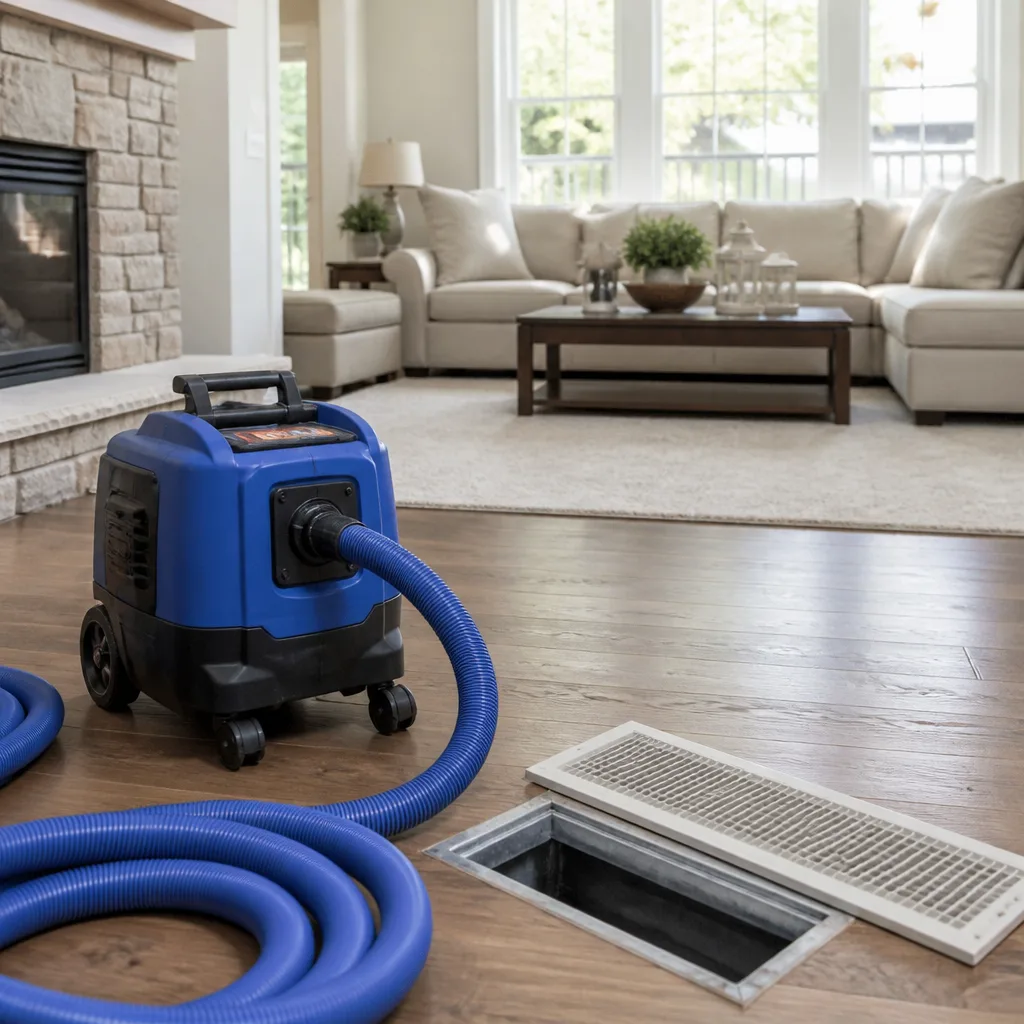 Whole-home duct cleaning
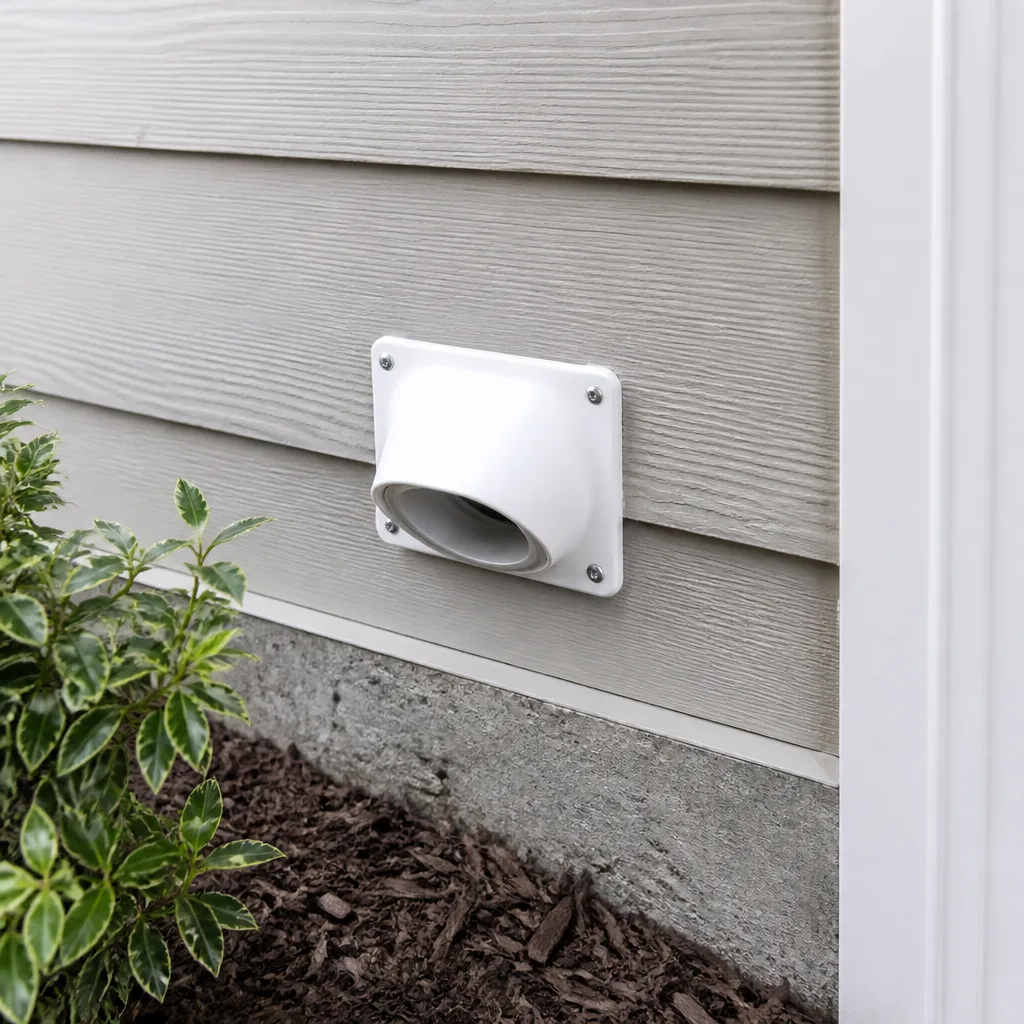 Dryer vent cleaning
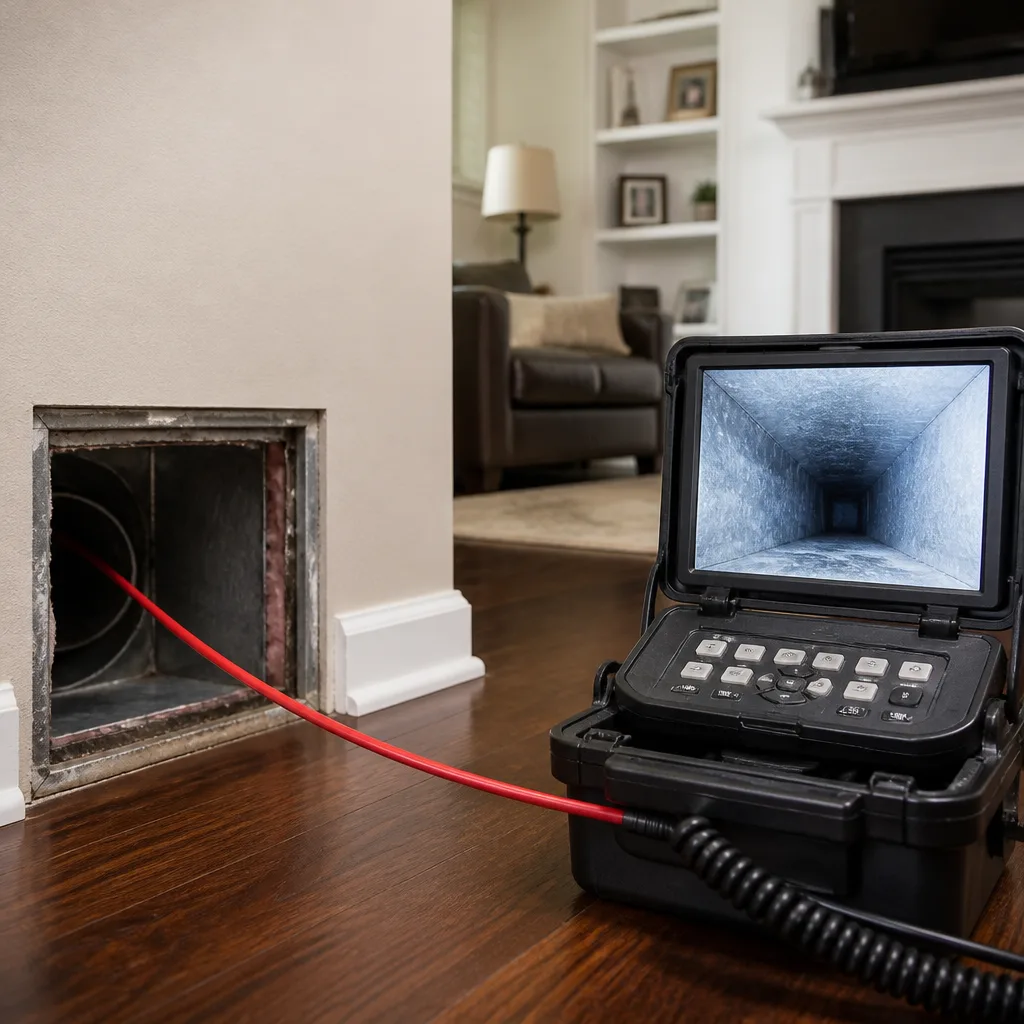 Camera inspection
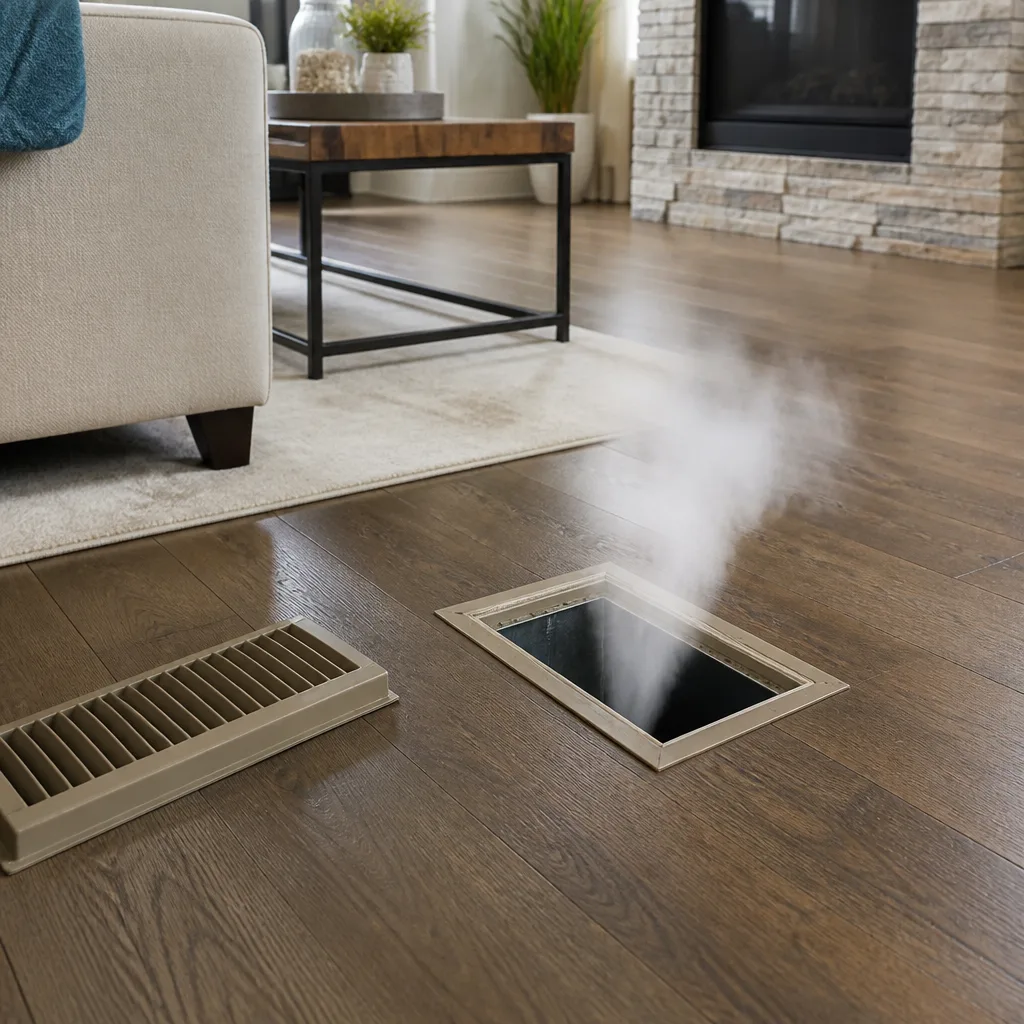 Sanitizing & deodorizing
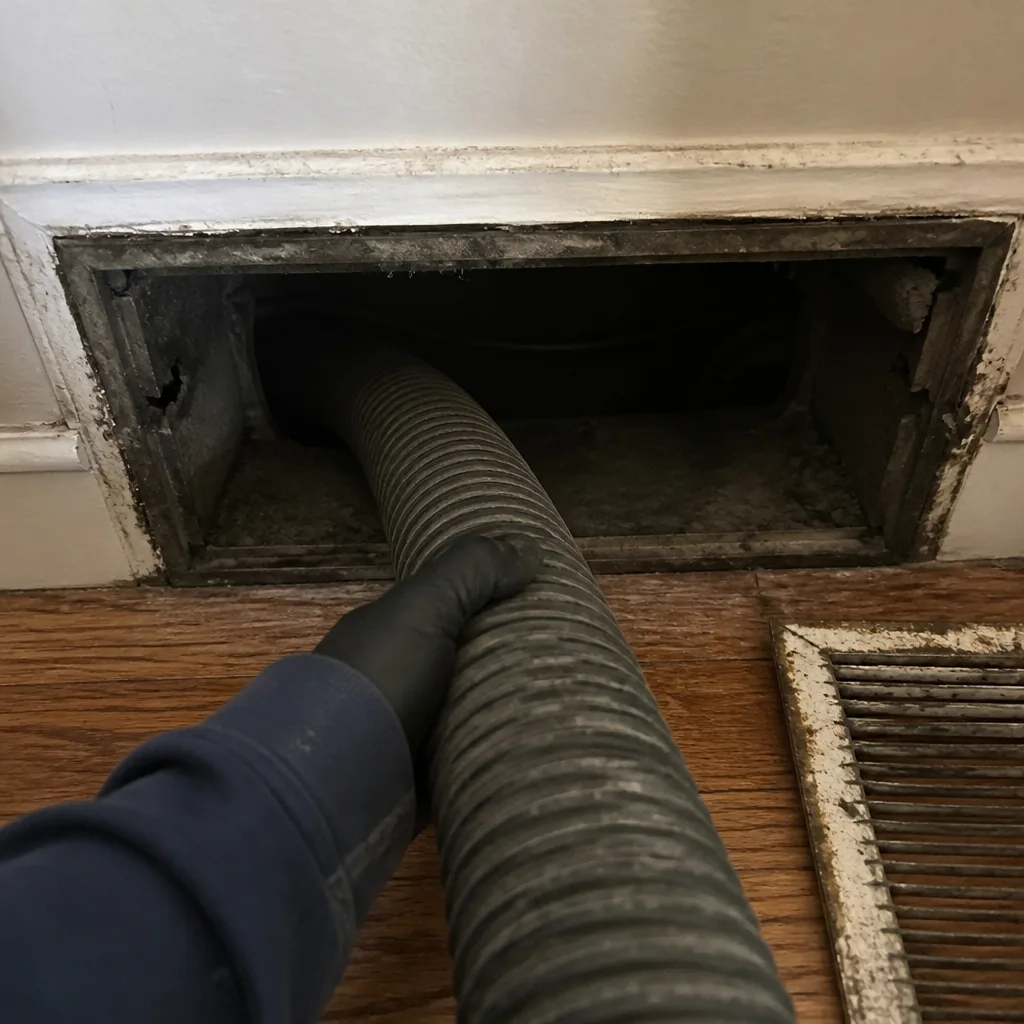
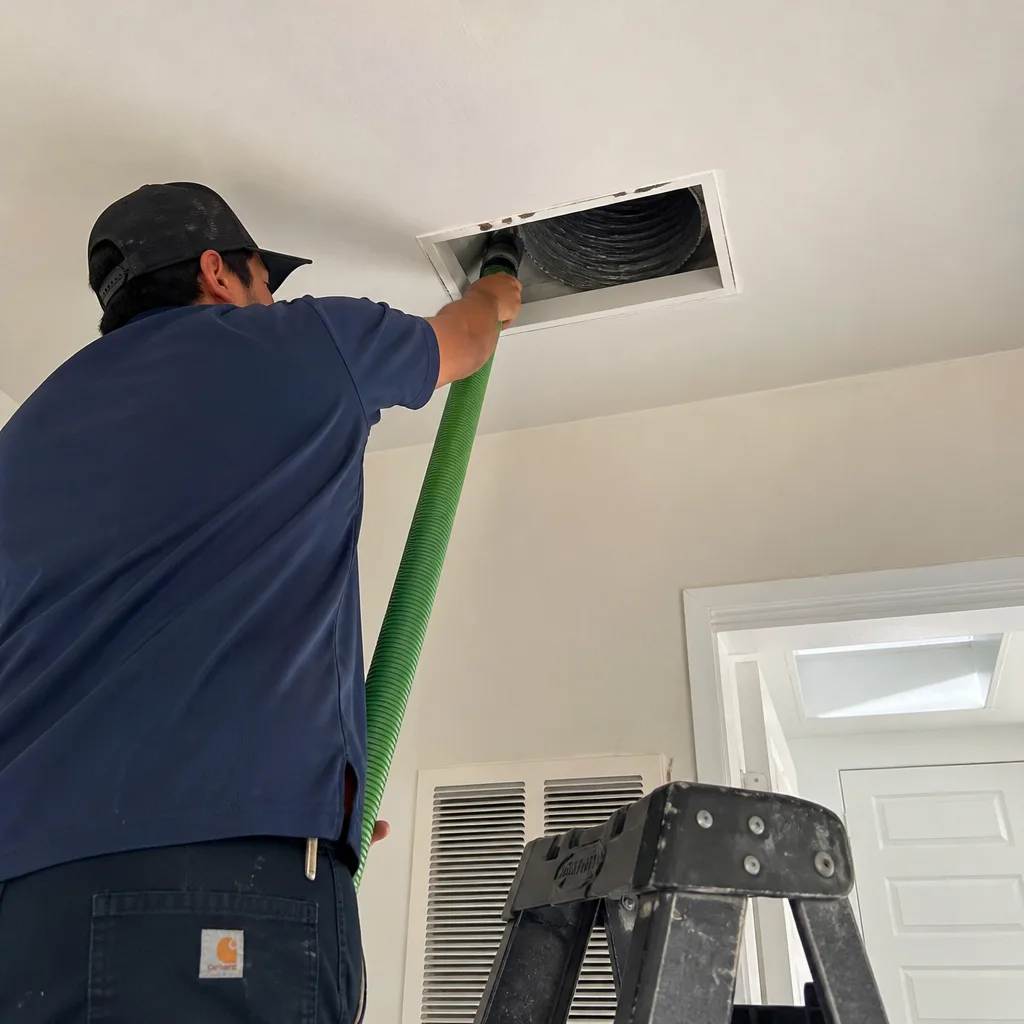
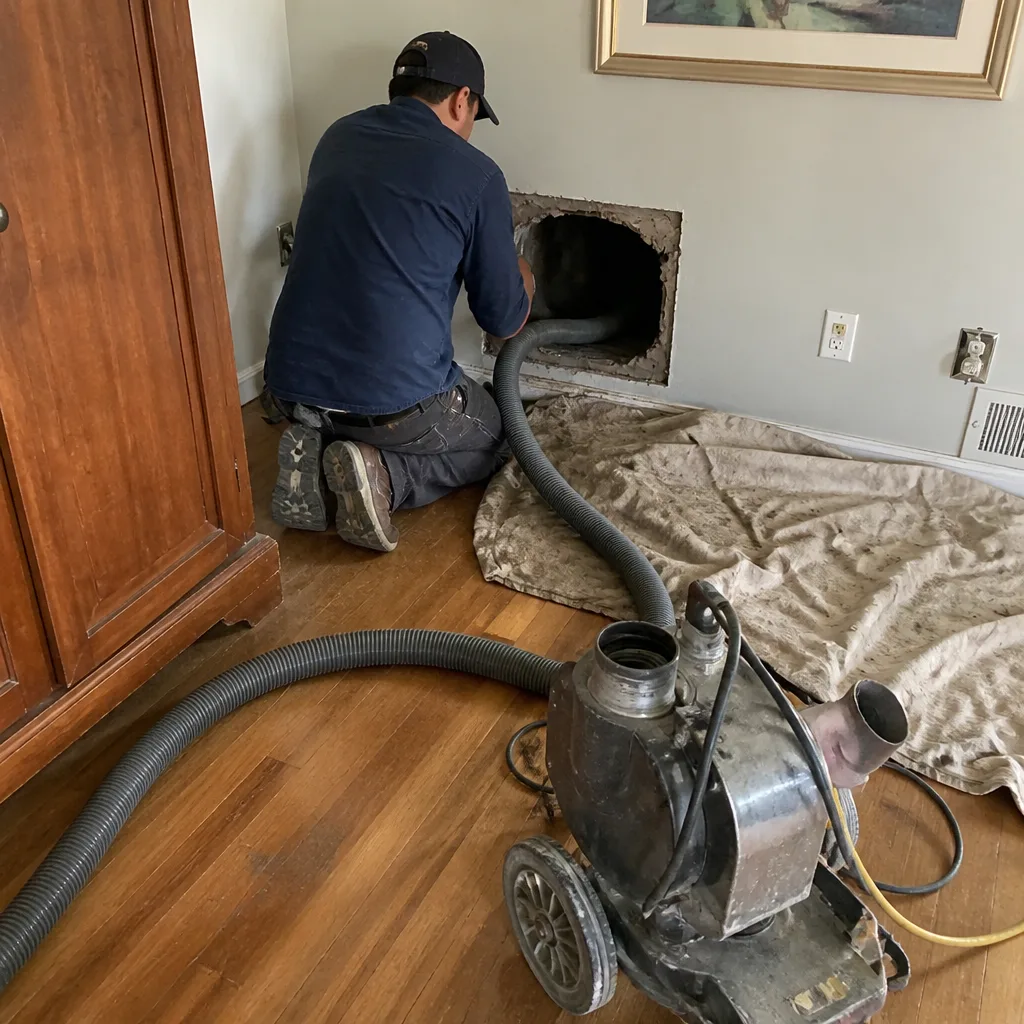
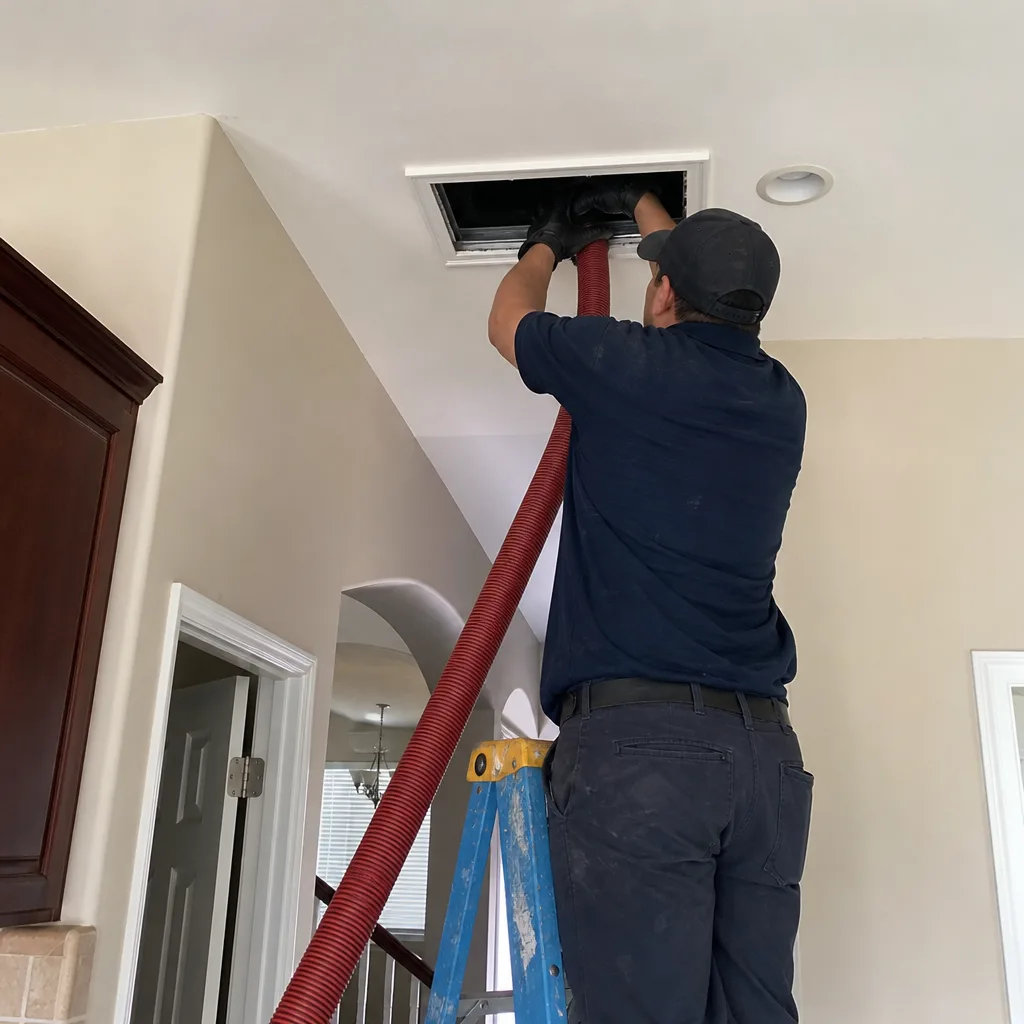
Whole-system duct and dryer vent check with before-and-after photos - you see exactly what came out of your vents
That "$99 whole-house special" is a bait ad - the real number appears once they are in your hallway, or the "clean" is a shop-vac at the register. We photograph the inside of your ducts before and after instead.
Air Duct Cleaning Emergency Preparedness Guide for Cupertino Homes
During the 2020 wildfire season, Bay Area homes with leaky, debris-loaded ductwork became indoor smoke traps even with windows closed. The HVAC system pulled infiltration air through every gap in the dirty, compromised duct network, and the filter never saw most of it. This guide explains how Cupertino homeowners can prepare their duct systems before smoke season, operate them correctly during an AQI event, and know when professional cleaning is the right call. We’ll cover what actually happens inside your ducts when wildfire smoke rolls into the Santa Clara Valley, and the specific steps that keep indoor air breathable when outdoor air isn’t.
Styles & brands we work with
- Whole-home duct cleaning
- Dryer vent cleaning
- Camera inspection
- Sanitizing & deodorizing
Quick Answer
Air duct cleaning emergency preparedness for Cupertino homes means sealing and cleaning your duct system before wildfire season so that when AQI spikes, your HVAC system doesn’t pull unfiltered smoke through duct leaks and recirculate it throughout the house. A pre-season duct audit, a MERV-13 filter during smoke events, and recirculation mode are the three highest-impact steps. After a severe smoke event, professional duct cleaning removes the ultrafine particulate residue that settles inside duct walls and becomes a persistent indoor air quality problem.
Table of Contents
- Why Cupertino’s Location Makes Duct Condition a Smoke-Season Issue
- How Wildfire Smoke Actually Gets Into Your Ductwork
- The Pre-Fire-Season Duct Audit: What to Inspect and Seal Before AQI Events Hit
- During an AQI Event: HVAC System Protocols for Cupertino Homes
- Post-Smoke-Event Inspection Checklist: What Ultrafine Particulate Deposition Looks Like Inside Ducts
- How to Prioritize Post-Event Service for Pets, Children, and Respiratory Conditions
- Why Equipment Matters for Smoke Residue Removal
- Common Mistakes to Avoid
- When to Call a Professional
- Frequently Asked Questions
- The Bottom Line
Why Cupertino’s Location Makes Duct Condition a Smoke-Season Issue
Cupertino sits in a specific geographic position that most emergency preparedness guides ignore. The city is tucked against the eastern foothills of the Santa Cruz Mountains, and when wildfire smoke drifts into the South Bay, it tends to pool against the foothills rather than dissipate quickly. Marine layer influence from the coast pushes smoke inland, where it stalls over the western Santa Clara Valley. Homeowners in neighborhoods like Monta Vista, Rancho Rinconada, and the foothill-adjacent streets near Stevens Creek Canyon experience smoke events differently than homes closer to the bay. The air simply sits longer here.
What this means for your duct system: during a multi-day AQI event, your HVAC system cycles smoky air through the duct network repeatedly. Every hour the system runs, particulate-laden air moves through return ducts, across the filter, through the blower, and into supply ducts. Any leak in that path becomes an unfiltered air intake. Any existing dust and debris inside the ducts becomes a surface for smoke particulate to adhere to. The result is a duct system that smells like smoke for weeks after the outdoor air clears, and that smell comes from actual particulate deposition, not just lingering odor.
We’ve seen this pattern repeatedly in Cupertino homes after smoke events. The homes that had clean, sealed ducts before the event recover quickly once the air clears. Homes with dirty, leaky ductwork carry the smoke smell and the particulate burden for months. The difference is rarely the age of the home or the quality of the HVAC unit. It’s the condition of the duct system itself.
For a deeper look at what professional Air Duct Cleaning in Cupertino involves and how it changes indoor air quality, see our full service guide.
How Wildfire Smoke Actually Gets Into Your Ductwork
Most Cupertino homeowners assume that if the windows are closed and the filter is fresh, the indoor air is protected. That assumption breaks down when you understand how a residential duct system actually moves air. Wildfire smoke is 90% fine particulate matter under 2.5 microns, and those particles follow airflow paths, not just concentration gradients. Your duct system is a network of seams, joints, and connections that were never meant to be perfectly airtight.
Here’s the infiltration pathway that matters most:
- Return-side leakage is the primary vulnerability. Return ducts operate under negative pressure. Any gap, crack, or poorly sealed joint in a return duct actively sucks air in from wherever that duct runs. If return ducts pass through an attic, crawlspace, or garage, they pull smoke-laden air from those spaces directly into the air stream, bypassing the filter entirely.
- Filter bypass defeats even a good filter. The filter slot in most residential air handlers has gaps around the edges. Smoke particulate will take the path of least resistance. If 15% of the air flows around the filter instead of through it, that 15% carries full particulate load into the supply ducts.
- Supply-side leakage pushes conditioned air out. Supply ducts run under positive pressure. Leaks there don’t pull smoke in, but they depressurize the living space, which causes outdoor smoky air to infiltrate through walls, windows, electrical outlets, and any other envelope gap. The net effect is the same: more smoke indoors.
- Existing duct debris acts as a particulate sponge. Dust, pet hair, and construction debris sitting in ducts have enormous surface area. Smoke particulate deposits onto that surface and bonds with it. The duct system becomes a reservoir of smoke odor and particulate that keeps off-gassing into the living space long after the outdoor event ends.
This is why Air Duct Repair in Cupertino is a preparedness service, not just a comfort upgrade. Sealing return-side leaks before smoke season hits changes the infiltration equation entirely.
The Pre-Fire-Season Duct Audit: What to Inspect and Seal Before AQI Events Hit
Cupertino’s fire season runs roughly from August through November, but we’ve seen severe smoke events as early as July and as late as December in recent years. The time to prepare is now, not when the AQI reading hits 200. A pre-season duct audit takes about an hour and catches the issues that turn a smoke event into an indoor air crisis.
Here’s the step-by-step audit we recommend for every Duct Cleaning Cupertino home:
- Inspect every accessible duct joint and seam. Go through the attic or crawlspace with a flashlight. Look for separated sections, sagging flexible duct, disconnected boots, and visible gaps at plenum connections. Duct tape that’s peeling or falling off is a guarantee of leakage.
- Check the filter slot seal. Pull the filter out and look at how it seats. If you can see daylight around the edges of the filter when it’s installed, air is bypassing the filter whenever the system runs. A foam gasket strip around the filter slot edge closes this bypass.
- Verify the filter is the right size. An undersized filter leaves gaps on all four sides. The filter should fill the slot completely with no more than a quarter-inch of play.
- Look for return register gaps. Return grilles that don’t seal tightly against the wall or floor opening allow air to be pulled from wall cavities, attics, or crawlspaces instead of the living space.
- Inspect visible duct insulation. Torn or missing insulation on ducts in unconditioned spaces creates condensation, which attracts dust and promotes microbial growth. That’s a pre-existing indoor air quality problem that gets worse when smoke particulate colonizes the damp surface.
- Schedule a professional duct inspection and cleaning if the system hasn’t been cleaned in five or more years, or if you don’t know when it was last done. The point of a pre-season cleaning is not just to remove existing debris. It’s to start the smoke season with a duct system that has minimal surface area for smoke particulate to bind to.
We use a systematic process for every audit that includes pressure readings and visual documentation of what’s inside the ducts before any recommendation is made. That documentation matters after a smoke event too, because it gives you a baseline comparison for what changed.
During an AQI Event: HVAC System Protocols for Cupertino Homes
When the AQI in Cupertino climbs above 150, your HVAC system becomes either your best defense or your biggest vulnerability, depending on how you operate it. Here are the protocols we recommend, ordered by effectiveness:
- Upgrade the filter to MERV-13 before the event if possible. MERV-13 filters capture particles down to 1-3 microns at meaningful efficiency, including the PM2.5 that dominates wildfire smoke. If you have a 1-inch filter slot, a MERV-13 1-inch filter is available from most hardware stores, but it will increase static pressure, which reduces airflow. Monitor your system for signs of strain. If you have a 4-inch or 5-inch media cabinet, a MERV-13 upgrade is nearly always fine.
- Set the thermostat fan to ON, not AUTO. Continuous fan operation keeps air moving through the filter constantly rather than in bursts. This more than doubles the amount of air filtered per day in most systems.
- Close outdoor air intakes. If your system has a fresh air intake or economizer, close it. You don’t want to deliberately pull smoky outdoor air into the system.
- Use recirculation mode if your system has it. Most residential systems are already 100% recirculating unless they have a dedicated outdoor air intake. If yours is a standard system with no fresh air intake, you’re already in recirculation mode. The goal is to never intentionally introduce outdoor air during a smoke event.
- Do not run exhaust fans continuously. Bathroom fans, kitchen hoods, and laundry room exhaust fans all create negative pressure in the house, which pulls smoky outdoor air through every envelope gap. Run exhaust fans only when necessary during a smoke event.
- Shut the system off entirely if you smell smoke coming from the vents. That smell indicates that smoke is being pulled into the return side of the system through leaks and is bypassing the filter. Running the system in that condition is actively distributing unfiltered smoke throughout the house. Turn it off and call for a duct inspection before restarting.
One more point on Honeywell and Aprilaire equipment, since we work with both brands’ filtration and whole-home air quality systems. If your Cupertino home has a Honeywell F300 electronic air cleaner or an Aprilaire media cabinet, make sure the filter or media is fresh before smoke season. A media cabinet that’s been sitting for 18 months with a loaded filter is not going to help during an AQI event, regardless of the brand name on the cabinet.
Post-Smoke-Event Inspection Checklist: What Ultrafine Particulate Deposition Looks Like Inside Ducts
After a significant smoke event in Cupertino, the outdoor air clears and most people assume the problem is over. It isn’t. Ultrafine particulate from wildfire smoke deposits inside the duct system and remains there until it’s physically removed by cleaning. Here’s what to look for in a post-event inspection:
- Grey or brown film on visible duct surfaces. If you remove a supply register and look inside with a flashlight, normal duct dust is grey and fluffy. Smoke-deposited particulate is typically a thin, even, brownish-grey coating that adheres to the duct surface rather than sitting loose. It often has a slightly oily texture from the volatile organic compounds that condensed along with the particulate.
- Smoke odor that persists for more than 72 hours after outdoor air clears. This is the most reliable indicator that particulate has deposited inside the ducts. Odor molecules are bound to the particulate, and as long as the particulate remains, the odor will return whenever the system runs.
- Darkened filter media in a short time. If you installed a fresh MERV-13 filter before the event and it’s visibly darkened after 2-4 weeks, that’s normal and means the filter did its job. But if subsequent filters continue to darken quickly weeks after the outdoor air cleared, the duct system itself is releasing trapped particulate back into the air stream.
- Visible soot staining around supply register edges. Supply registers direct air across the wall or ceiling adjacent to the register. Smoke particulate in the supply air stream deposits on those surfaces over time. Grey or brown streaks radiating from a supply register are a sign that particulate-laden air was moving through the system.
- New or increased allergy symptoms among household members. Smoke particulate is a respiratory irritant. If someone in the home is experiencing persistent coughing, throat irritation, or sinus issues after the outdoor air quality has recovered, the indoor air is the likely culprit, and the ducts are a common reservoir.
Professional post-event cleaning removes this particulate mechanically. In our experience with Cupertino homes, we’ve found that homes cleaned within a few weeks of a smoke event recover fully and return to pre-event indoor air quality. Homes that wait months or skip cleaning entirely often report persistent smoke odor and respiratory irritation for six to twelve months or longer. For related concerns, our Air Duct Cleaning in Cupertino guide covers the full cleaning process and what to expect.
How to Prioritize Post-Event Service for Pets, Children, and Respiratory Conditions
Not every household needs post-smoke-event duct cleaning with the same urgency. Here’s the prioritization framework we use when consulting with Cupertino homeowners after a major AQI event:
Highest priority: Households with children under 5, pregnant residents, anyone with asthma, COPD, or other respiratory conditions, and any home where someone has had persistent symptoms since the smoke event. Children breathe more air per pound of body weight than adults, and their respiratory systems are still developing. Ultrafine particulate that an adult’s respiratory system can partially clear becomes a heavier burden for a young child. Same logic applies to pets with respiratory sensitivities, especially brachycephalic breeds like bulldogs and Persian cats that already have compromised airways. For these households, schedule duct cleaning as soon as the outdoor air quality recovers enough for technicians to work safely.
Second priority: Homes where the HVAC system was run continuously during the smoke event. Continuous fan operation maximizes particulate deposition in the ducts. If you ran your fan on ON mode during the event, the system has cycled more smoke-laden air through the ducts than a home that shut the system down.
Third priority: Homes with older duct systems or known leakage issues. Leaky ducts pull unfiltered smoke directly into the air stream. If your pre-season audit found gaps and they weren’t sealed before the event, the ducts received a higher particulate dose than a tight system would have.
Standard priority: Everyone else. If the home is occupied by healthy adults, the system was off or used sparingly during the event, and the filter was changed after the air cleared, a post-event inspection is still wise. Cleaning may be recommended based on what the inspection shows, but urgency is lower.
Why Equipment Matters for Smoke Residue Removal
Wildfire smoke particulate is not the same as household dust, and removing it is not the same job. Smoke particulate is finer, stickier, and more likely to bond with duct surfaces than normal household dust. It takes professional-grade agitation to dislodge it, and more importantly, it takes proper containment to capture it once it’s dislodged.
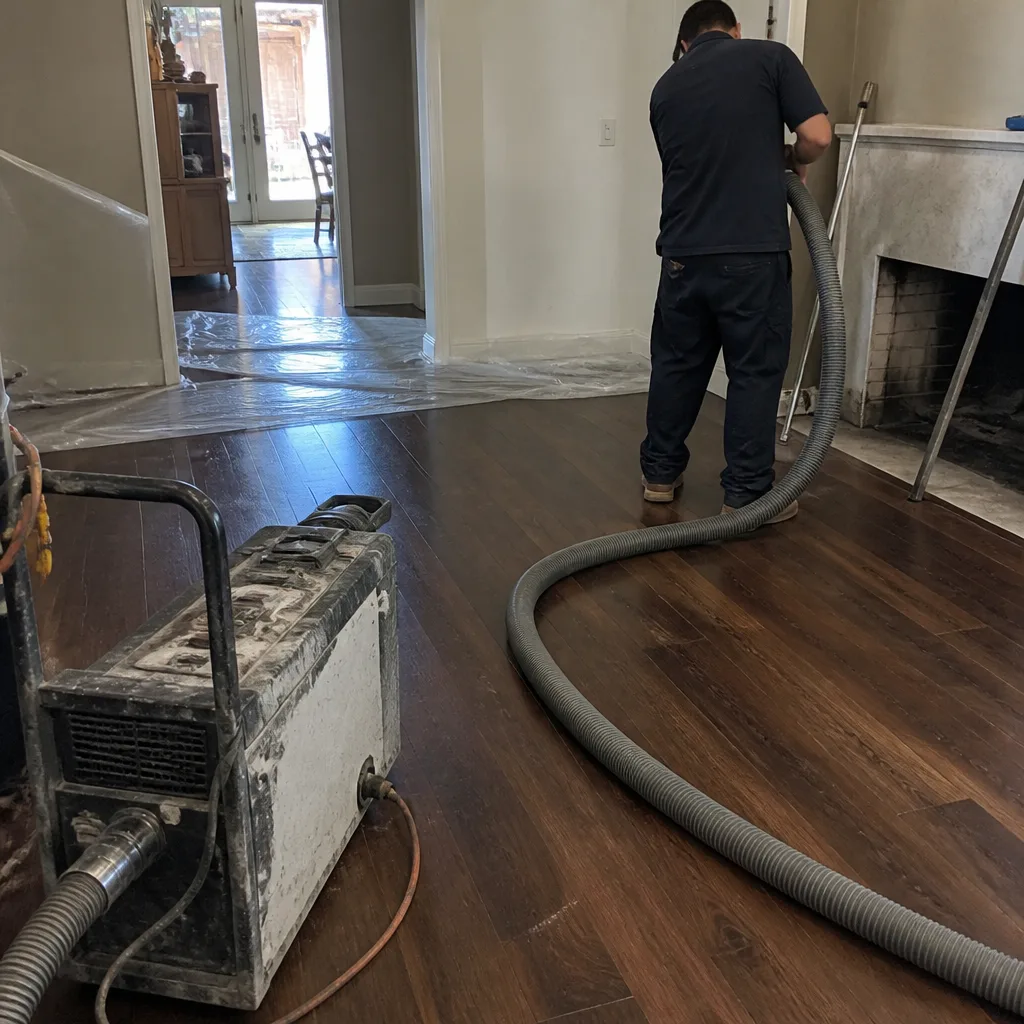
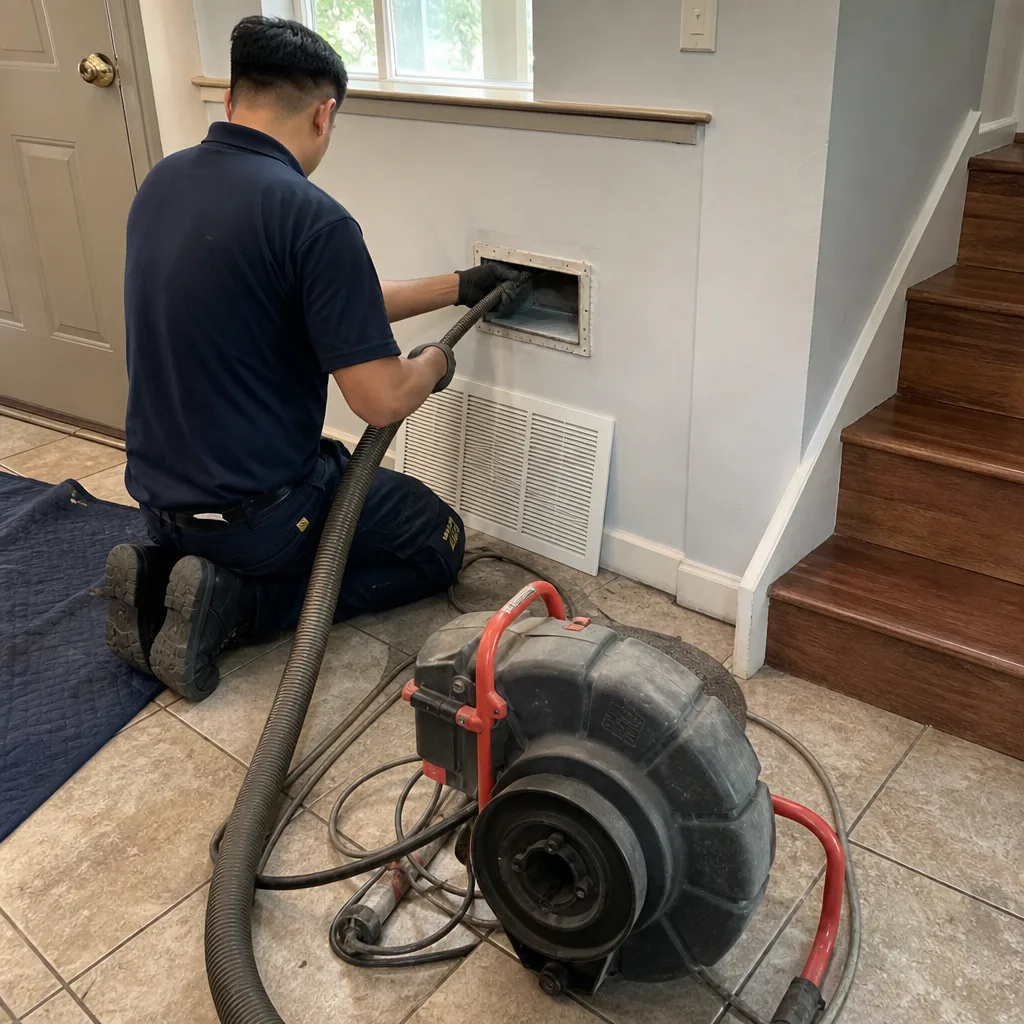
This is where our equipment choice matters for Cupertino homes. We use Rotobrush and Nikro systems, the same duct cleaning equipment trusted by restoration and remediation crews who handle smoke damage from structure fires. These are agitation systems designed to break loose bonded particulate from duct surfaces, paired with vacuum systems sized to maintain negative pressure in the duct while the agitation is happening.
The containment half of the equation is equally important. We run Abatement Technologies equipment on smoke residue jobs because it’s designed for exactly this purpose: negative-pressure containment that ensures dislodged particulate doesn’t escape into the living space during cleaning. Without proper containment, a smoke residue cleaning can actually make indoor air quality worse by stirring up particulate and redistributing it through the house.
This is not work we’d recommend doing with a consumer vacuum and a brush from the hardware store. The particulate load from a wildfire smoke event requires equipment that can capture what it dislodges, and the building envelope in a Cupertino home doesn’t forgive shortcuts. For homes with aging duct systems that took smoke damage, Air Duct Repair in Cupertino is often the more urgent service, addressing the leaks that let smoke infiltrate in the first place.
Common Mistakes to Avoid
- Assuming a HEPA room purifier makes duct cleaning unnecessary. A standalone air purifier cleans the air in one room. It does nothing for the particulate deposited inside the duct system, which keeps releasing into the whole house every time the system cycles. Room purifiers complement duct cleaning; they don’t replace it.
- Switching to a MERV-16 filter in a standard residential system. Filters above MERV-13 create too much static pressure for most residential blowers, reducing airflow enough to strain the motor and potentially freeze the coil. MERV-13 is the sweet spot for smoke particulate for most homes.
- Running the HVAC system on AUTO during a smoke event and assuming the filter is enough. AUTO mode filters air only when the system is actively heating or cooling. During mild Santa Clara Valley weather, the system may run only a few hours a day, filtering a fraction of the air that continuous fan operation would process.
- Waiting until after a smoke event to seal duct leaks. By the time the smoke arrives, the particulate has already infiltrated. Sealing leaks after an event locks the particulate in until the ducts are cleaned. The sequence should be: seal before the event, clean after.
- Ignoring the dryer vent during smoke season. Dryer vents exhaust to the outside and have a backdraft damper, but that damper doesn’t always seal tightly in Cupertino’s older homes. During a smoke event, a dryer vent with a failed damper is an open pathway for smoky air into the laundry room. Dryer Vent Cleaning in Cupertino includes damper inspection for exactly this reason.
- Assuming the ducts are fine because the house is new. We’ve found significant duct leakage in Cupertino homes less than five years old. Construction schedules don’t reward duct sealing, and the result is gaps and disconnected sections that were never caught during the build.
When to Call a Professional
Some preparedness steps are DIY, and some are not. You can replace filters, set your thermostat correctly, and do a basic visual inspection of accessible ducts. But when you see separation at duct joints, disconnected boots, or significant debris visible through register openings, the problem requires equipment and access you don’t have. The same applies after a smoke event when odor persists or particulate is visible inside the ducts. Smoke residue bonded to duct surfaces won’t come off with a shop vac. It takes professional-grade agitation and containment to remove it safely. Duct Cleaning Cupertino offers free estimates in Cupertino, and we’ll show you what’s actually inside your ducts before recommending any work. Call (877) 542-8668 to schedule an inspection.
Frequently Asked Questions
Whole-system air duct cleaning in Cupertino typically ranges from $450 to $900 depending on the size of the home, the number of returns and supplies, and the condition of the system. Factors that push cost toward the higher end include two-story homes with inaccessible duct runs, severe debris buildup, and systems that haven’t been cleaned in a decade or more. We quote one flat price per system agreed before work starts, not a per-vent price that changes once the technicians arrive. Call (877) 542-8668 for an exact quote on your home, estimates are free.
Low-price duct cleaning offers typically come from companies using a consumer-grade vacuum and a brush, with no negative-pressure containment, often as a loss-leader to upsell other services once they’re in the house. The work takes 30-45 minutes and removes loose debris only. Professional smoke-residue and deep-cleaning work requires Rotobrush or Nikro agitation systems paired with Abatement Technologies containment, takes several hours, and captures dislodged particulate rather than redistributing it through the home. The quote difference reflects a real difference in equipment cost, training, and time on the job.
Any professional duct cleaning company should be able to show you before-and-after photos from inside your ducts, taken with a camera at the register openings or through access points. If a company can’t or won’t provide visual documentation, that’s a red flag. Before-and-after photos of your own ducts, not stock images, are the simplest verification that dislodged debris was actually removed.
For most Cupertino homes, every 3-5 years is a reasonable interval. Homes with pets, homes near major construction or road dust, and homes that experience wildfire smoke events should lean toward the 3-year end. Homes with excellent filtration, sealed ducts, and no pets may go 5-7 years. The honest answer depends on what’s actually inside your ducts, which is why we show you photos during the inspection before recommending anything.
You can remove and wash register covers, and you can vacuum what’s visible through register openings. What you can’t do is reach into the full length of the duct runs, agitate bonded debris off the duct walls, or maintain negative-pressure containment while cleaning. Duct cleaning equipment runs hundreds of dollars for entry-level consumer versions, and those versions lack the agitation force and the containment capacity for real smoke residue work. For genuinely useful DIY work, focus on sealing accessible joints and replacing filters.
Yes, with proper preparation. If your ducts are sealed, your filter is fresh MERV-13, and your system is in good condition, running the fan continuously during an AQI event filters indoor particulate and keeps positive pressure in the living space. If your ducts leak or you smell smoke from the vents, shut the system off until the ducts are inspected and sealed. The dividing line is the condition of your duct system, not the AQI number alone.
The Bottom Line
Cupertino’s position in the western Santa Clara Valley, against the foothills where smoke stalls, makes duct condition a genuine emergency preparedness concern. A clean, sealed duct system with a fresh MERV-13 filter is the difference between a home that rides out a smoke event with breathable indoor air and a home that becomes an indoor smoke trap. Prepare before the season with a duct audit and professional cleaning if needed. Operate correctly during the event with continuous fan, recirculation mode, and no exhaust fan overuse. Inspect after the event for smoke deposition and schedule cleaning promptly if you find it. The sequence matters: seal before, clean after, and don’t mistake a room purifier for a duct system that’s doing its job.
Written by the team at Duct Cleaning Cupertino, serving Cupertino since 2015.
See the difference
 Before
 After
 Before
 After
 Before
 After