
Last updated November 3, 2026
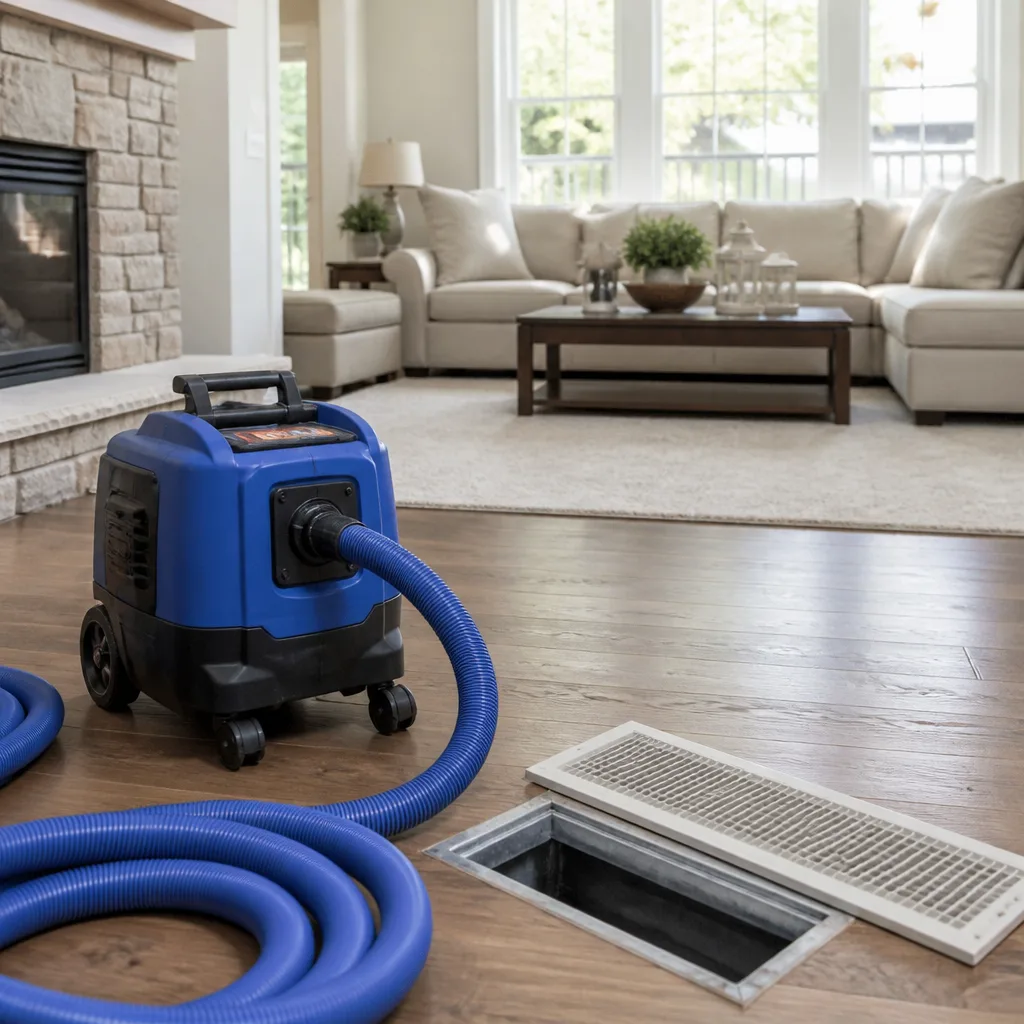 Whole-home duct cleaning
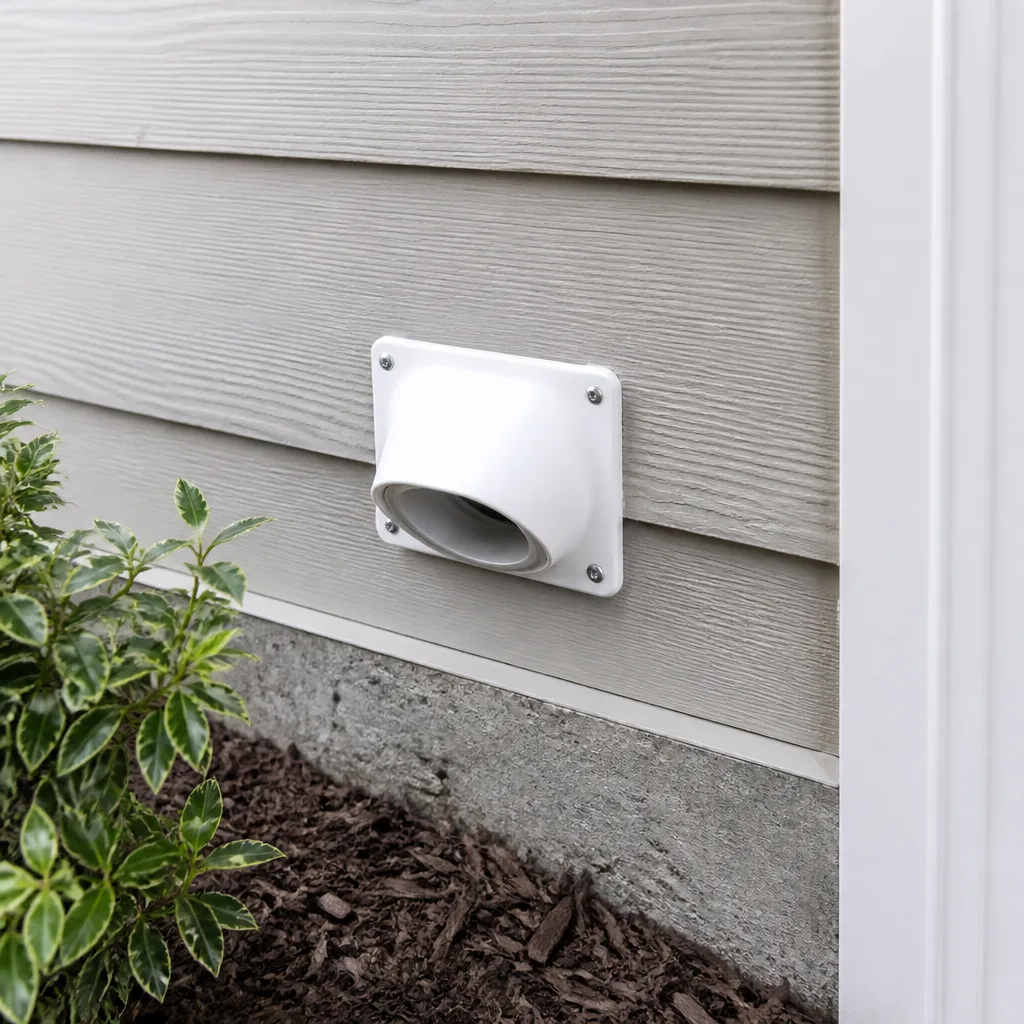 Dryer vent cleaning
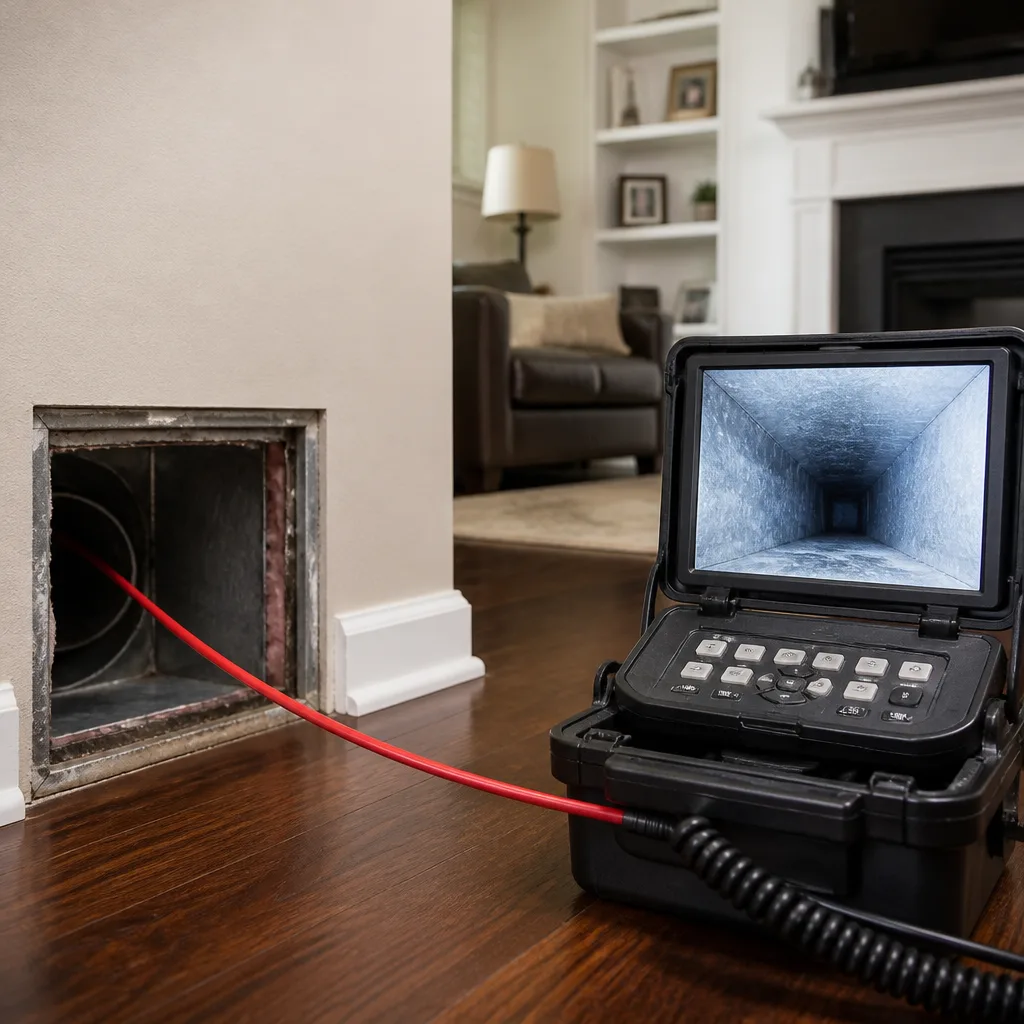 Camera inspection
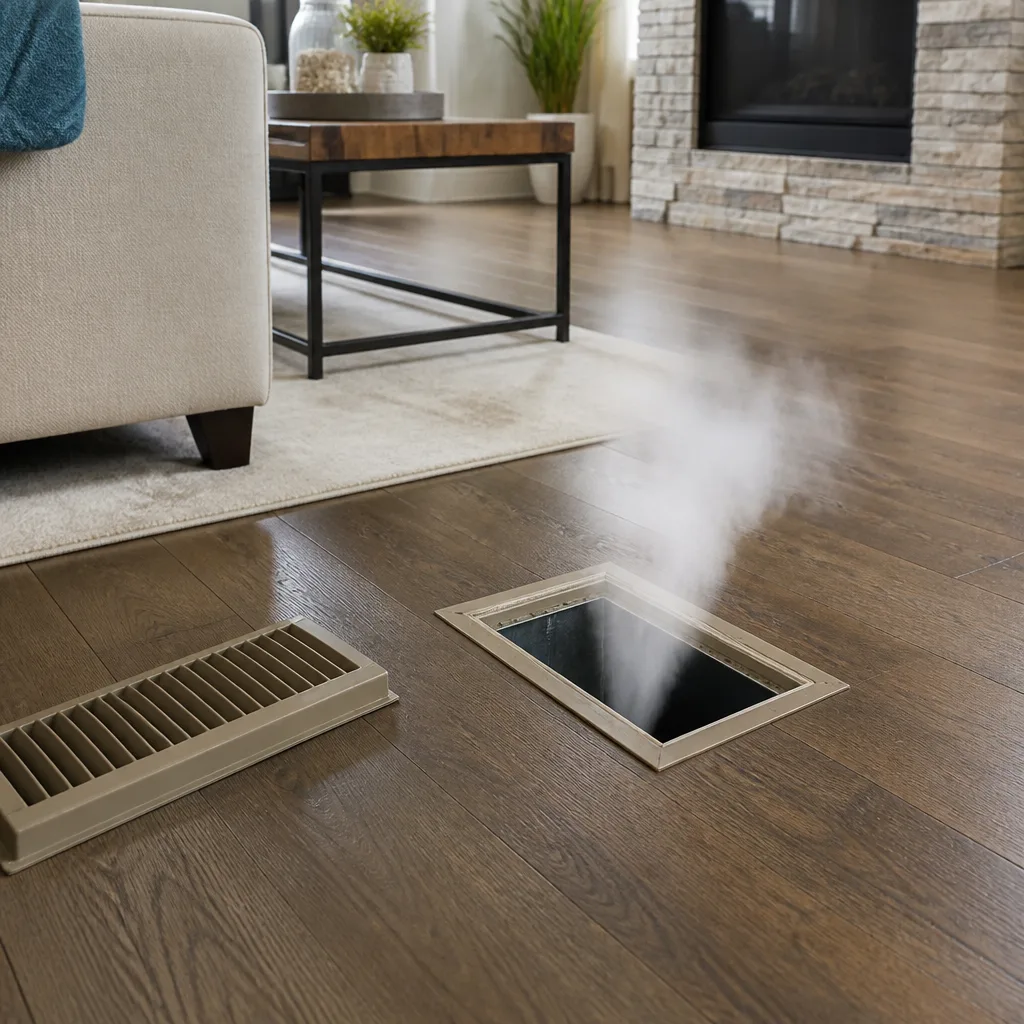 Sanitizing & deodorizing
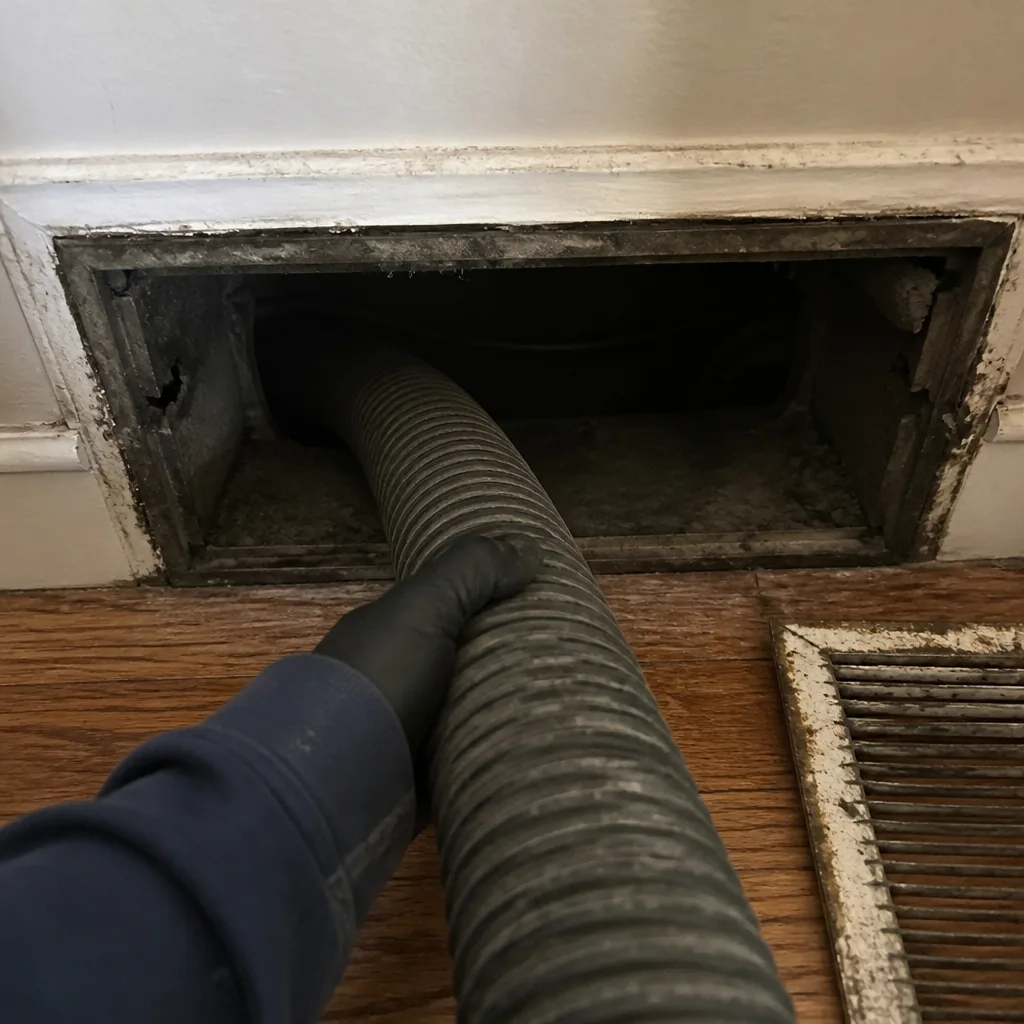
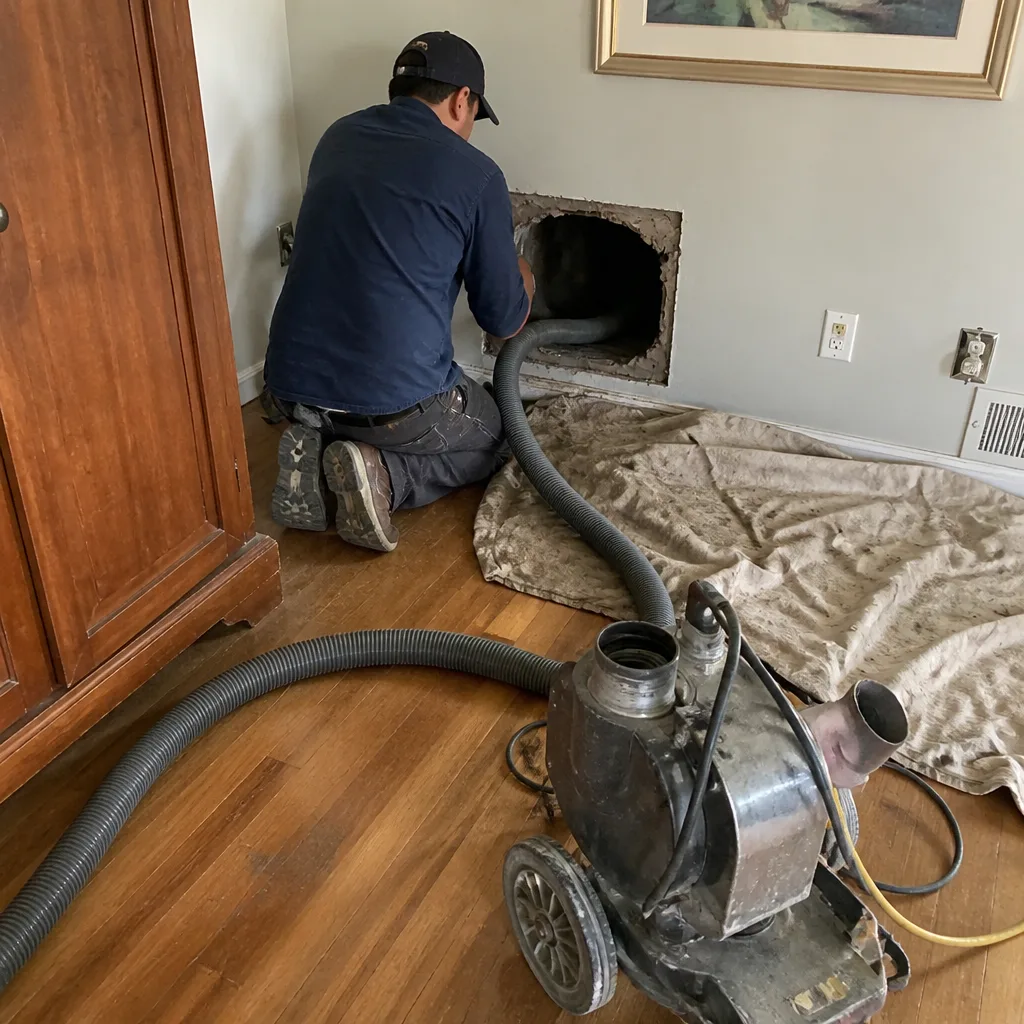
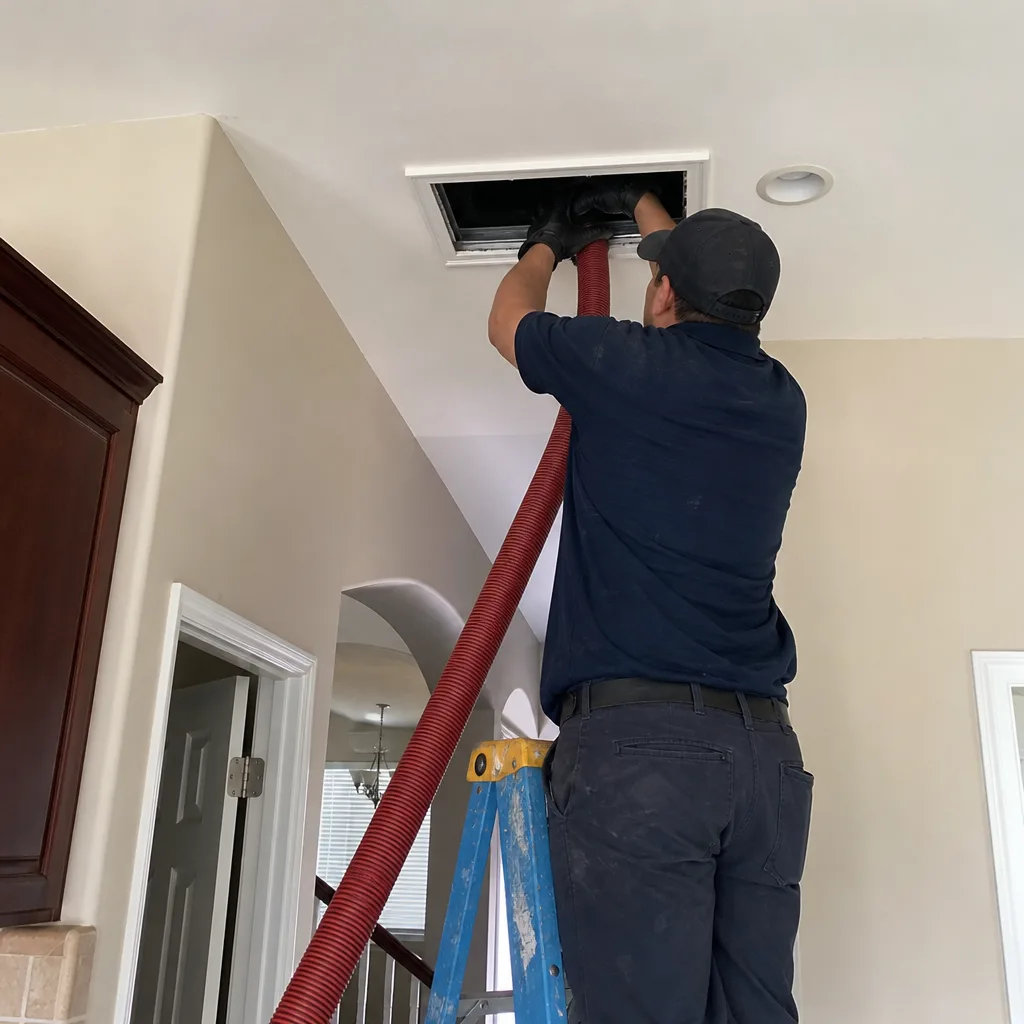
Whole-system duct and dryer vent check with before-and-after photos - you see exactly what came out of your vents
That "$99 whole-house special" is a bait ad - the real number appears once they are in your hallway, or the "clean" is a shop-vac at the register. We photograph the inside of your ducts before and after instead.
Choosing the Right Air Duct Cleaning Brand: A Buyer’s Guide for Cupertino
Duct cleaning companies don’t advertise their equipment specs the way appliance brands advertise horsepower, yet the equipment is the entire service. A five-star company running a portable unit and a shop vac is structurally incapable of delivering the same result as a truck-mounted negative pressure system, no matter how enthusiastic its reviews are. This guide is built for Cupertino homeowners who want to understand what actually separates one air duct cleaning provider from another: the platform, the process, and the proof. By the time you finish reading, you’ll know exactly what questions to ask, which answers matter, and which signals are just noise.
Styles & brands we work with
- Whole-home duct cleaning
- Dryer vent cleaning
- Camera inspection
- Sanitizing & deodorizing
Quick Answer
Choosing the right air duct cleaning brand in Cupertino means evaluating the equipment platform the company is built around, not just its online reputation. For a deeper dive, see The Complete Air Duct Cleaning Guide for Cupertino Homeowners. Professional-grade negative-pressure systems from brands like Rotobrush and Nikro achieve measurable results that portable consumer-grade units cannot match. A focused service menu, NADCA affiliation, and transparent process documentation point to a provider whose equipment and training align with the work your ducts actually need.
Table of Contents
- The Equipment Platform: Why It Is the Brand
- Truck-Mounted Negative Pressure vs. Portable Units: The CFM Difference
- NADCA Membership: What the Credential Actually Requires
- Reading the Service Menu: Specialization vs. Generalist Add-On
- Brush Systems Explained: Contact Cleaning, Air Whip, and Rotary Brush
- Why Review Volume Is a Poor Proxy for Technical Competency
- The Ten Questions to Ask Before Booking in Cupertino
- Common Mistakes to Avoid
- When to Call a Professional
- Frequently Asked Questions
- The Bottom Line
The Equipment Platform: Why It Is the Brand
When a Cupertino homeowner hears the word “brand,” they usually think of a logo. In duct cleaning, the brand that matters is the equipment platform a company is built around. That platform determines what the service can physically accomplish. A provider running Rotobrush or Nikro professional-grade systems is working with the same tools used by restoration and remediation crews after water damage, mold events, and fire cleanup. Those tools are engineered for sustained negative pressure, high CFM airflow, and containment. Compare that to a generalist HVAC company using a portable vacuum and a rotating brush attachment. Both can claim they clean ducts. Only one can prove it with measurable air movement.
Duct Cleaning Cupertino home services are built on professional-grade equipment, not consumer workarounds. That distinction matters because what happens inside your ductwork is invisible. You cannot watch the loosened debris travel through the system. You either trust the platform or you don’t. A specialist who chooses purpose-built equipment, maintains it properly, and trains technicians on its operation is telling you something concrete about the work. A company that brings whatever fits in the van is telling you something else entirely.
For Cupertino homeowners, where homes range from 1960s ranch-style construction to newer builds in the hills, the platform question is especially relevant. Older duct systems accumulate decades of construction debris, pet dander, and fine particulate. Newer systems can suffer from drywall dust and insulation fragments left over from construction. Neither responds well to weak airflow. Professional-grade equipment, including negative-pressure containment systems from Abatement Technologies, captures dislodged contaminants rather than recirculating them into living spaces. That is the difference between cleaning your ducts and simply moving dust from one part of the house to another.
Truck-Mounted Negative Pressure vs. Portable Units: The CFM Difference
The clearest technical divider among duct cleaning providers is airflow, measured in cubic feet per minute (CFM). Truck-mounted negative pressure systems typically generate 10,000 to 15,000 CFM or more. Portable electric units, even well-maintained ones, often deliver less than a tenth of that. Why does CFM matter? Because loosening debris from duct walls is only half the job. The other half is moving that debris out of the system entirely before it settles back or escapes into your home. High CFM creates the suction force needed to pull dislodged material through the full length of the duct run and into a containment filter. Low CFM loosens debris and leaves most of it behind.
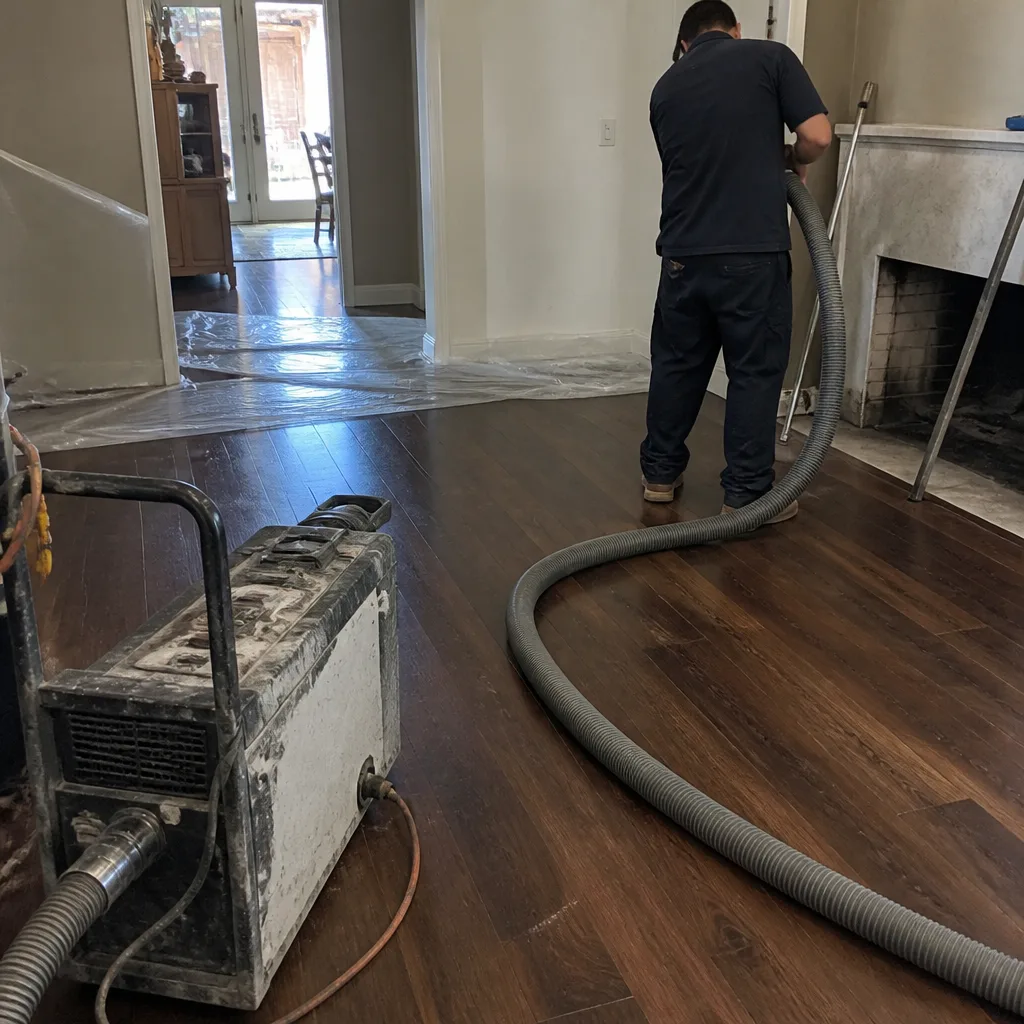
We’ve seen this play out in Cupertino homes across neighborhoods like Monta Vista and Rancho Rinconada, as covered in The Complete Air Duct Cleaning Guide for Cupertino Homeowners. Homeowners call us after a cheap cleaning that left them with worse air quality than before. The technician arrived with a portable unit, agitated the dust, and could not generate enough suction to capture it. The result was visible dust on registers and furniture within days. A negative-pressure system like the ones we run using Nikro equipment changes the physics. The duct system is placed under vacuum while agitation tools loosen debris. The air moves in one direction: out of the ducts and into the containment unit.
This is also why HEPA-level containment matters. Abatement Technologies equipment provides a capture standard that portable canisters cannot match. When you run high CFM through a home’s ductwork, you are moving a lot of air. If that air is filtered through a HEPA-level system, the particulates are trapped. If it vents through a basic filter bag, fine dust can escape back into the home. The containment platform is part of the brand. It determines whether the cleaning is genuinely removing contaminants or just redistributing them.
NADCA Membership: What the Credential Actually Requires
NADCA, the National Air Duct Cleaners Association, is the closest thing this industry has to a standards body. Membership is not a badge of technical excellence, but it does establish a baseline. To maintain NADCA membership, companies must employ at least one Air Systems Cleaning Specialist (ASCS) who has passed a certification exam covering HVAC system design, contamination assessment, and cleaning methodology. The company must also carry the proper insurance and agree to follow NADCA’s assessment, cleaning, and restoration standards.
For a Cupertino homeowner comparing providers, NADCA membership answers some basic questions. It tells you the company has a certified individual on staff who understands duct system design and airflow principles. It tells you the company has invested in consistent training, not just equipment. And it gives you a reference point if something goes wrong, since NADCA has a code of ethics and a complaint process. A company that cannot point to any industry credential is asking you to trust them on charm alone.
That said, NADCA membership is a floor, not a ceiling. Plenty of NADCA member companies run portable equipment and deliver mediocre results within the letter of the standard. The credential tells you they understand the process. It does not tell you whether their equipment can actually execute it. That is why the platform question and the credential question must be answered together. A NADCA-certified technician running professional-grade negative-pressure equipment is a very different proposition from a NADCA-certified technician running a portable vacuum. In our Air Duct Cleaning in Cupertino service, we consider certification and equipment as two halves of the same requirement.
Reading the Service Menu: Specialization vs. Generalist Add-On
A company’s service menu is a signal. A specialist lists three services: air duct cleaning, dryer vent cleaning, and air duct repair. A generalist lists twenty, and duct cleaning appears somewhere between furnace installation and bathroom fan replacement. The difference is not just focus. It is process mastery. A specialist who performs duct cleaning every day develops an instinct for the work. They recognize the sound of a loose damper. They know which access points matter in different duct configurations. They have encountered the failure modes of every common system and know how to work around them.
In Cupertino, where HVAC systems run heavily during summer heat waves and winter cold snaps, ductwork gets a workout. A generalist technician who cleans ducts twice a month is still learning what a specialist learns weekly. The specialist has also invested in equipment that serves one purpose. A generalist HVAC company buys duct cleaning attachments for equipment designed for other tasks. The result is a service that technically qualifies as duct cleaning but lacks the engineering focus of a dedicated platform.
Our service menu is deliberately narrow: three services, each within our core expertise. Dryer Vent Cleaning in Cupertino is treated as a fire-safety service, not a discounted add-on, and is backed by equipment designed for the specific task of clearing lint and blockages from vent lines. Air Duct Repair in Cupertino addresses damaged, disconnected, or leaking duct sections that undermine both air quality and system efficiency. When a company chooses a narrow scope, it signals a commitment to depth over volume. That commitment shows up in the work.
Here is how to read a service menu like an informed buyer:
- Count the core services. If air duct cleaning appears alongside unrelated trades like roofing or plumbing, the company may not have dedicated duct-cleaning equipment.
- Look for dedicated dryer vent cleaning. This is a specific service with specific tools. A company that treats it as an add-on is not treating it as fire prevention.
- Check for repair capability. A duct cleaning specialist who also performs duct repair understands system integrity, not just debris removal.
- Ask what percentage of their work is duct-related. A high percentage indicates the equipment gets used regularly and the technicians stay sharp.
Specialists build their reputation on one thing. They either do it well or they stop getting calls. Generalists can absorb a mediocre duct cleaning because it represents a small fraction of their revenue. The incentive structures are different. When your entire business depends on ductwork outcomes, you invest in the equipment and training required to deliver them consistently.
Brush Systems Explained: Contact Cleaning, Air Whip, and Rotary Brush
Once the negative-pressure platform is in place, agitation is what dislodges debris from duct walls. There are three primary agitation methods, and each serves a different purpose. Understanding them helps you evaluate what a company is actually proposing to do inside your ducts.
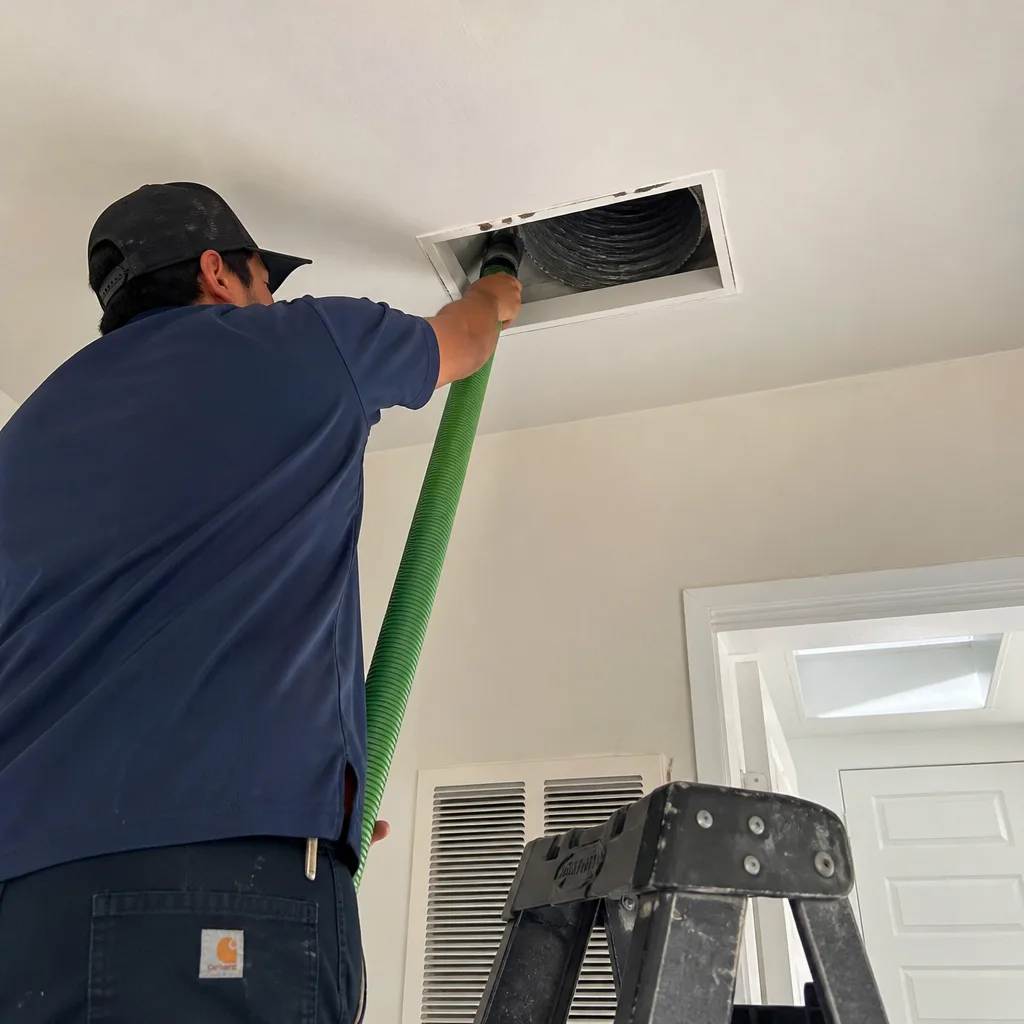
Contact cleaning uses a brush head that physically scrubs the interior duct surface. This is the most aggressive mechanical method and is appropriate for ducts with heavy caked-on debris, years of accumulated dust, or construction residue. The brush makes direct contact with the duct walls and scrapes material loose. Contact cleaning works best on rigid sheet metal ducts, which are common in many Cupertino homes. It requires care on older systems where duct seams may be fragile.
Air whip systems use compressed air delivered through a whip-like nozzle that flails inside the duct. The air pressure dislodges debris without direct metal-on-metal contact. This method is effective for lighter debris and is gentler on duct interiors. It is often the preferred choice for flexible duct runs, which can be damaged by aggressive rotary brushes. The air whip, combined with adequate negative pressure, loosens material and the vacuum captures it.
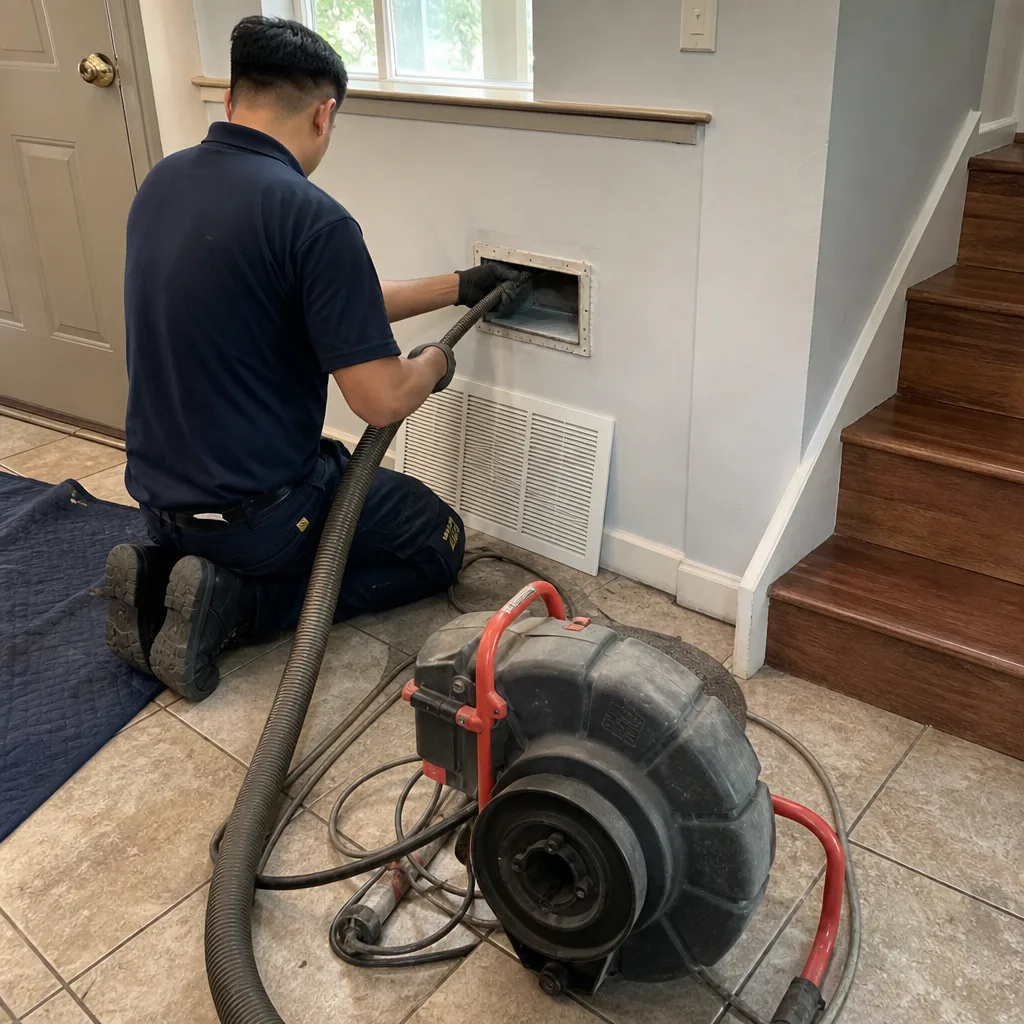
Rotary brush systems spin a brush head on a flexible shaft, scrubbing the duct walls as the shaft is fed through the system. This method combines the direct contact of a brush with the accessibility of a flexible drive system. Professional rotary brush systems, like those from Rotobrush, deliver consistent agitation while the negative-pressure side of the system removes dislodged material. The quality of the result depends heavily on the power of the brush motor and the CFM of the collection unit.
The right method depends on your system. We evaluate each Cupertino home individually. A 50-year-old duct system with decades of accumulation might require contact cleaning followed by an air whip pass. A newer system with construction dust might need only air whip agitation. A company that owns all three tools and chooses based on the system is a different provider from one that owns a single portable brush and applies it to every job. The equipment mix is part of the brand.
Why Review Volume Is a Poor Proxy for Technical Competency
Online reviews tell you whether a technician was polite, whether they arrived on time, and whether the homeowner felt good about the interaction. Reviews do not tell you whether the ductwork was actually cleaned. Most homeowners cannot see inside their ducts after the service. They cannot measure the CFM. They cannot verify that the negative pressure actually pulled debris from the farthest reaches of the system. What they see is a friendly technician, a tidy work area, and a receipt. That produces a five-star review even when the technical outcome was mediocre.
In Cupertino, review platforms are heavily weighted toward transactional satisfaction. A company with three hundred five-star reviews may be excellent at customer service and weak at duct cleaning. The reviews will not reveal that because the reviewer lacked the means to evaluate the work. Meanwhile, a specialist with fewer reviews might be running superior equipment and delivering measurably better outcomes. The review gap is not evidence of lower quality. It is evidence of lower volume.
When we use reviews in our own evaluation process, we look for phrases that indicate actual technical observation. A review that says “they showed me photos of my ducts before and after” indicates the company provided visual proof, which is a strong signal. A review that says “they explained the CFM rating of their truck-mounted system” indicates a technician who understood the work. Reviews mentioning “they sealed the register openings during the process” or “they showed me the debris they removed” tell you something real. Reviews that only mention timeliness, friendliness, and cleanliness tell you very little about the cleaning itself.
This is why equipment-specific questions matter more than review counts. Ask about the platform. Ask about CFM. Ask about containment. A company that can answer those questions clearly is demonstrating technical competency. A company that defers with “we have great reviews” is telling you they cannot speak to the engineering of their own service.
The Ten Questions to Ask Before Booking in Cupertino
These questions are organized to move from equipment platform to process to proof. Write them down or keep them on your phone. A competent provider will answer every one without hesitation.
- What type of negative pressure system do you use, and what is its CFM rating? The answer should include a specific number and a brand name like Rotobrush or Nikro. Vague answers are a red flag.
- Is your containment system HEPA-level certified? This determines whether fine particulates are captured or released back into your home. Abatement Technologies equipment is one recognized standard.
- Are you NADCA certified, and who holds the ASCS credential on your team? Certification ensures at least one trained specialist is responsible for the work.
- What agitation method will you use on my ducts, and why? The answer should reference contact cleaning, air whip, or rotary brush, and should be specific to your duct type.
- How do you access the full duct system, not just the registers? Proper cleaning requires access points at multiple locations, not just through the register openings.
- What do you do to protect my home during the process? Guardsman-level protective standards include floor coverings, register sealing, and controlled work areas.
- Will you show me before-and-after photos of my own ducts? Visual proof is the minimum standard for verification. A company that cannot provide it is not documenting the work.
- Do you perform duct repair as part of your core services? A specialist who can identify and repair damaged duct sections is delivering more than surface cleaning.
- Is dryer vent cleaning a dedicated service with dedicated equipment? This tells you whether the company treats dryer vent cleaning as fire prevention or an upsell.
- What is your flat price per system, and what exactly does it include? A clear, whole-system price agreed before work starts removes the bait-and-switch risk that plagues this industry.
These questions will quickly separate specialists from generalists. A provider who answers with specifics about equipment, process, and verification is running a professional operation. A provider who answers with generalities about “thorough cleaning” and “great service” is not.
Common Mistakes to Avoid
- Choosing based on the lowest whole-system price. Duct cleaning prices in Cupertino vary because equipment costs vary. A portable unit and a truck-mounted negative-pressure system are not comparable services with different prices. They are different services.
- Assuming a generalist HVAC company cleans ducts as well as a specialist. Generalists bring generalist equipment. A specialist’s entire reputation depends on duct outcomes, which reshapes their equipment investments and training priorities.
- Ignoring the containment question entirely. Many homeowners think about what goes into the ducts, not what comes out. A system without HEPA-level containment can release fine dust into your living spaces during the cleaning.
- Treating review count as a quality metric. Cupertino review platforms reward politeness, timeliness, and price satisfaction, none of which measure whether the ducts were actually cleaned well.
- Skipping the before-and-after photo request. Without visual documentation, you are trusting a technician’s word that the work was done. Reputable providers should offer photographic proof without being asked, but you should ask anyway.
- Booking a duct cleaning without asking about dryer vent cleaning equipment. Dryer vents require specific tools. A company that improvises with duct-cleaning tools is not addressing the lint accumulation that causes dryer fires.
- Failing to ask about access points. Cleaning only through register openings leaves most of the duct interior untouched. The best providers cut temporary access ports, clean the full system, and seal the ports properly afterward.
When to Call a Professional
Some signs require a professional assessment rather than a DIY attempt. If you see visible dust being released from supply registers when the system turns on, the ducts have accumulated debris that is actively entering your living space. If certain rooms in your Cupertino home never reach the same temperature as others, a duct obstruction or leak may be restricting airflow. If your allergies worsen at home but improve when you leave, the duct system may be circulating accumulated allergens. If you have recently completed a renovation, construction dust and debris are almost certainly present in the ductwork. And if you have never had the ducts cleaned in a home older than ten years, an assessment is overdue. Duct Cleaning Cupertino offers free estimates in Cupertino. Call (877) 542-8668.
Frequently Asked Questions
Whole-system air duct cleaning in Cupertino typically ranges from $350 to $750 depending on system size, access difficulty, and the level of contamination. The key differentiator is whether the company charges one flat price per system or prices per vent, which creates an incentive to inflate the vent count. We quote one flat price per system agreed before work begins. Call (877) 542-8668 for an exact quote based on your system.
Cheaper quotes usually come from companies running portable equipment, not truck-mounted negative-pressure systems. Portable units generate a fraction of the CFM and often lack HEPA-level containment, so the actual cleaning outcome is fundamentally different. The lower price is not a discount on the same service. It is a different service.
Ask for before-and-after photos of your own ducts, taken with a camera system. We provide photographic documentation showing the interior condition before and after cleaning. Without visual proof, you are relying on the technician’s word, which is insufficient.
For most Cupertino homes, every three to five years is appropriate. Homes with pets, recent renovations, or allergy-sensitive occupants may benefit from more frequent cleaning. The interval depends on how quickly debris accumulates, which varies by household.
Yes, particularly if the home was built recently. New construction leaves drywall dust, sawdust, and insulation fragments in the duct system that the builder does not remove. We clean the ducts in many newly built and recently renovated Cupertino homes and consistently find construction debris in the returns and supply lines.
Yes, Dryer Vent Cleaning in Cupertino is one of our three core services, performed with dedicated equipment rather than improvised duct-cleaning tools. Dryer vent clogs are a leading cause of residential fires, and we treat the service accordingly. Call (877) 542-8668 to schedule both services during the same visit.
The Bottom Line
Choosing the right air duct cleaning brand in Cupertino comes down to evaluating the equipment platform, the service scope, and the proof of work. Truck-mounted negative-pressure systems with HEPA-level containment deliver measurable results that portable units cannot match, regardless of review counts or promotional pricing. A focused service menu signals process mastery over volume-driven generalism. And before-and-after photographic documentation is the minimum standard for verifying that the work happened. Ask the ten questions. Look for the equipment answers. Choose the specialist who can speak to the engineering of their own service. Contact us for a free estimate at (877) 542-8668.
Written by the team at Duct Cleaning Cupertino, serving Cupertino since 2015. Explore more guides & resources.
See the difference
 Before
 After
 Before
 After
 Before
 After