
Last updated November 2, 2026
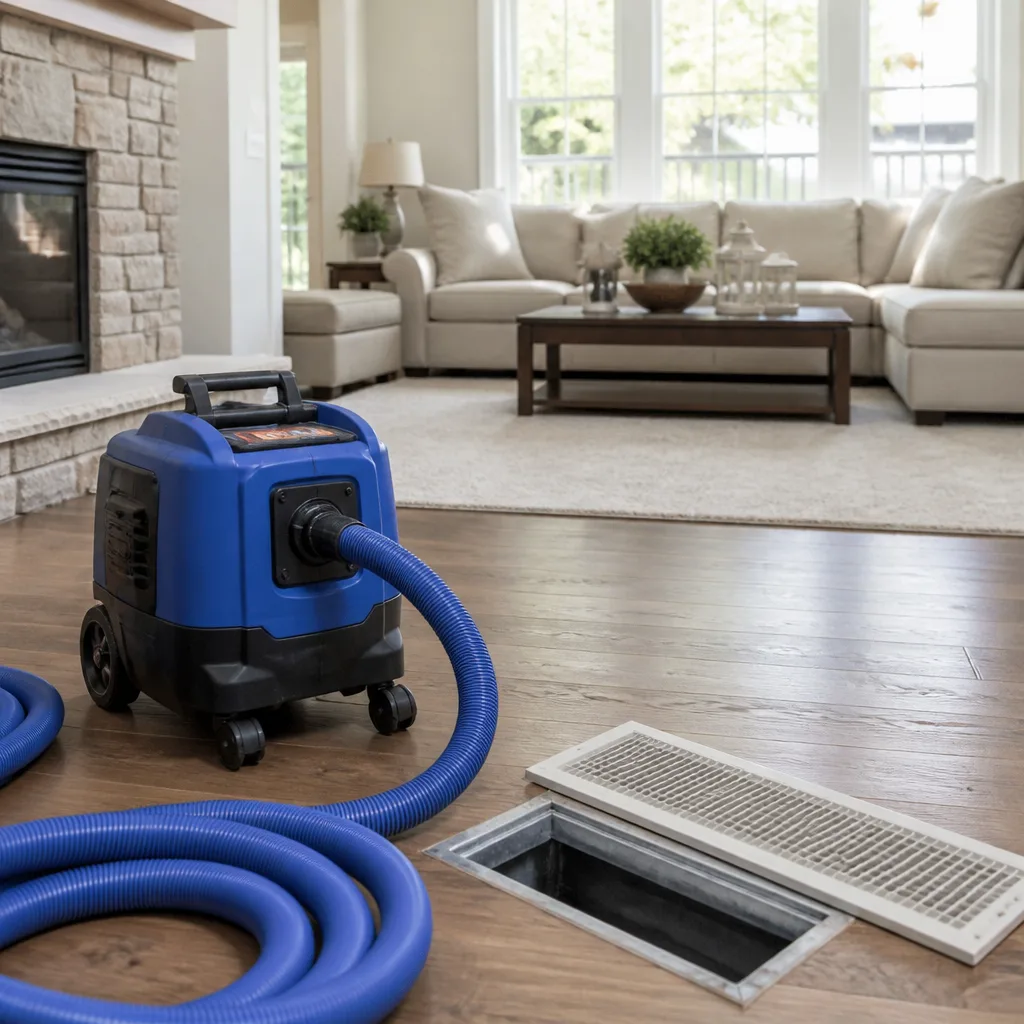 Whole-home duct cleaning
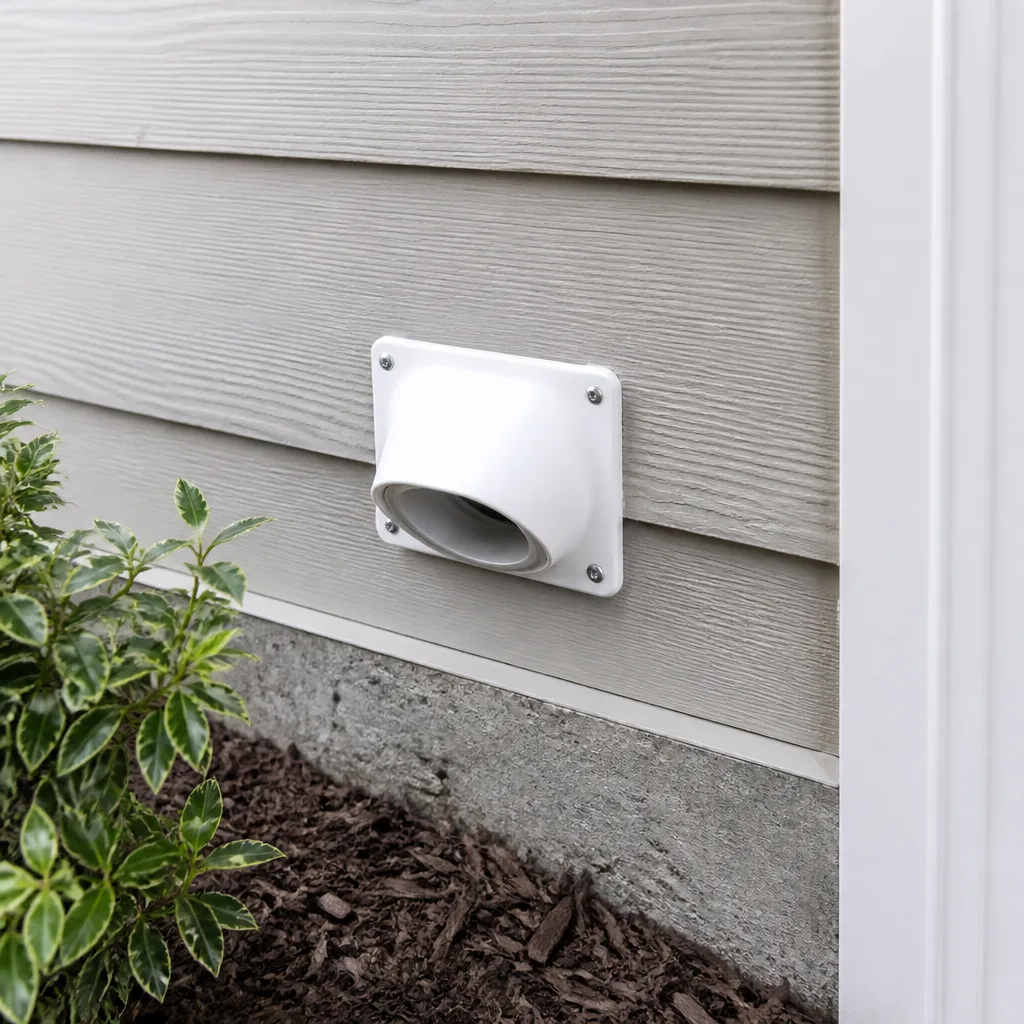 Dryer vent cleaning
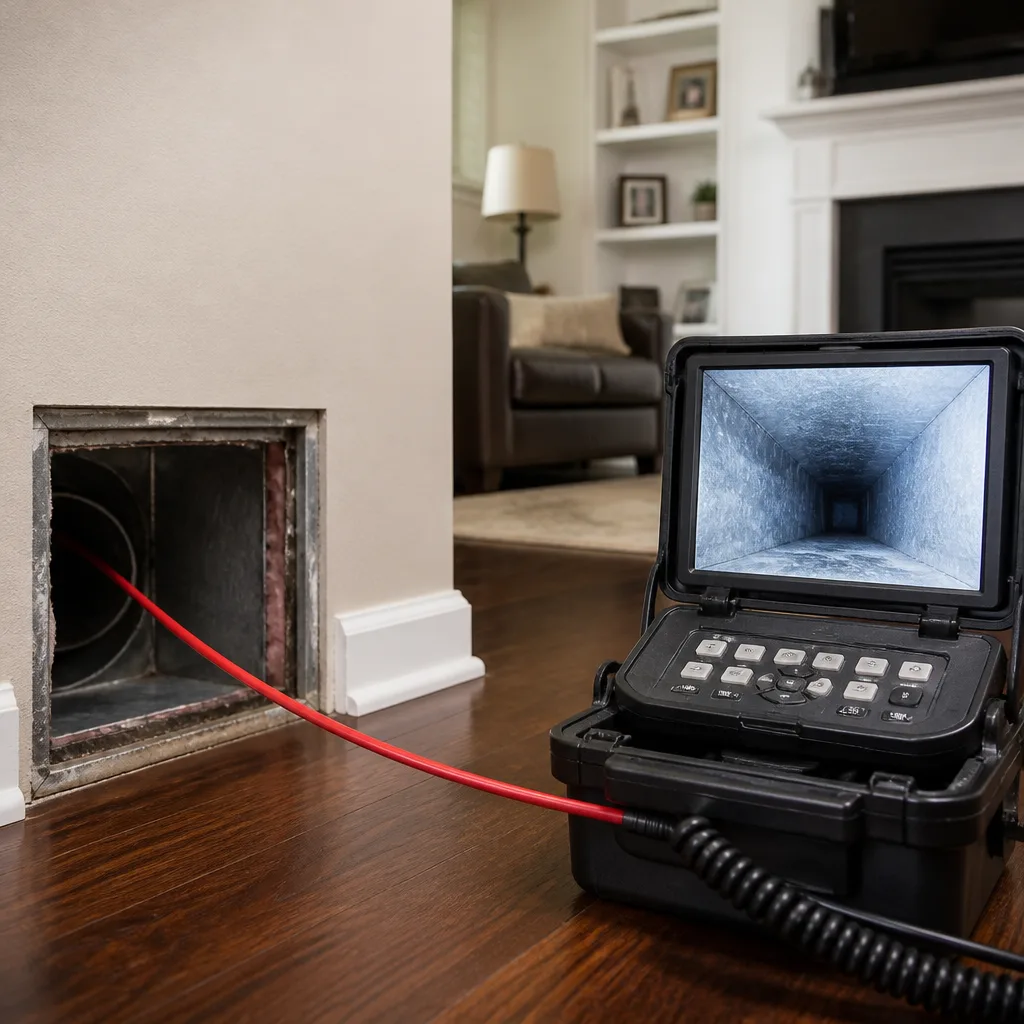 Camera inspection
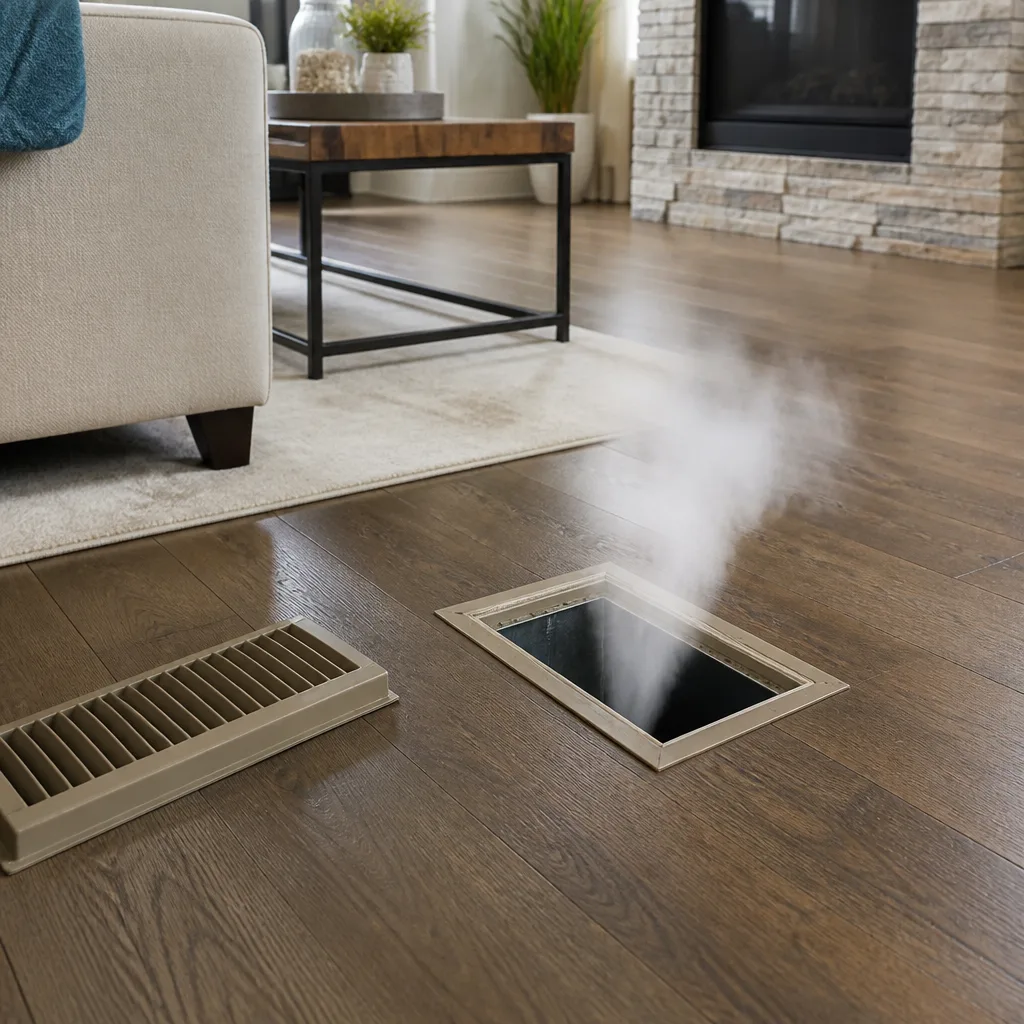 Sanitizing & deodorizing
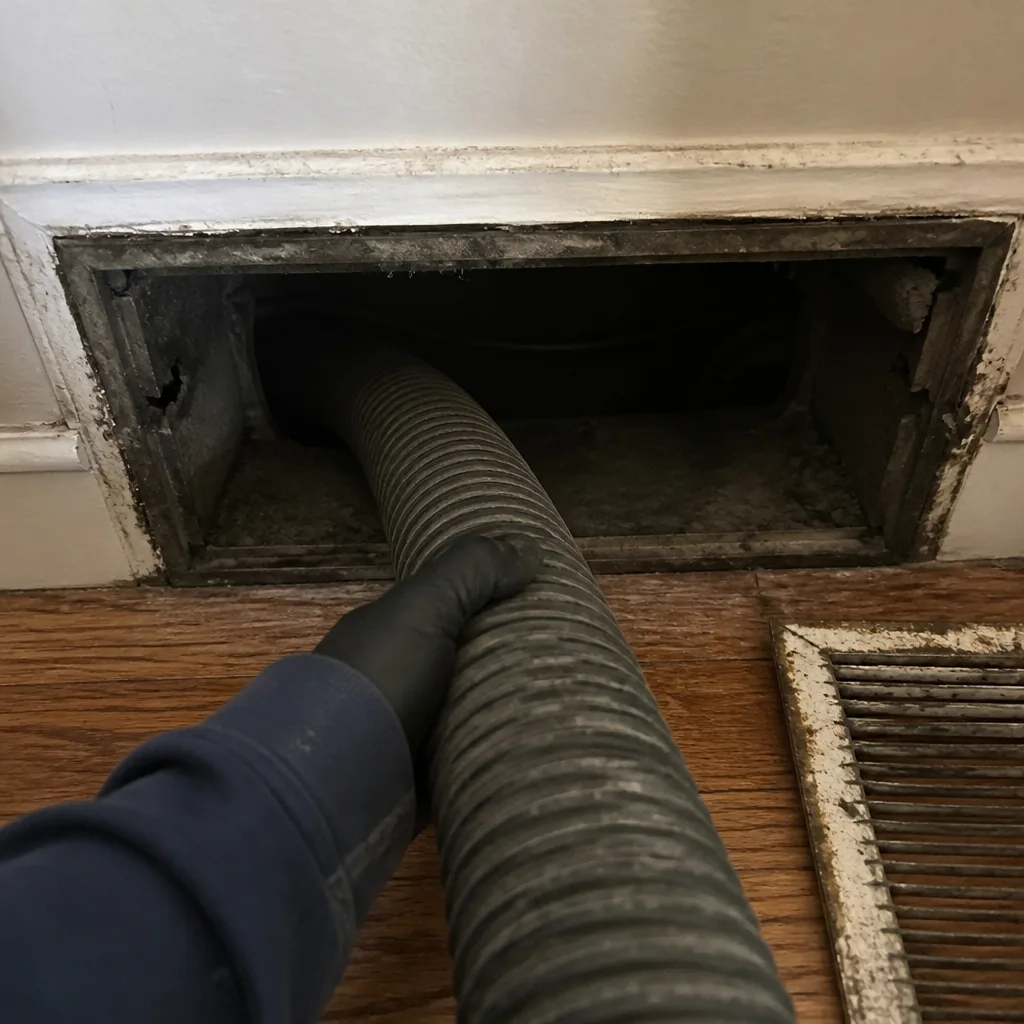
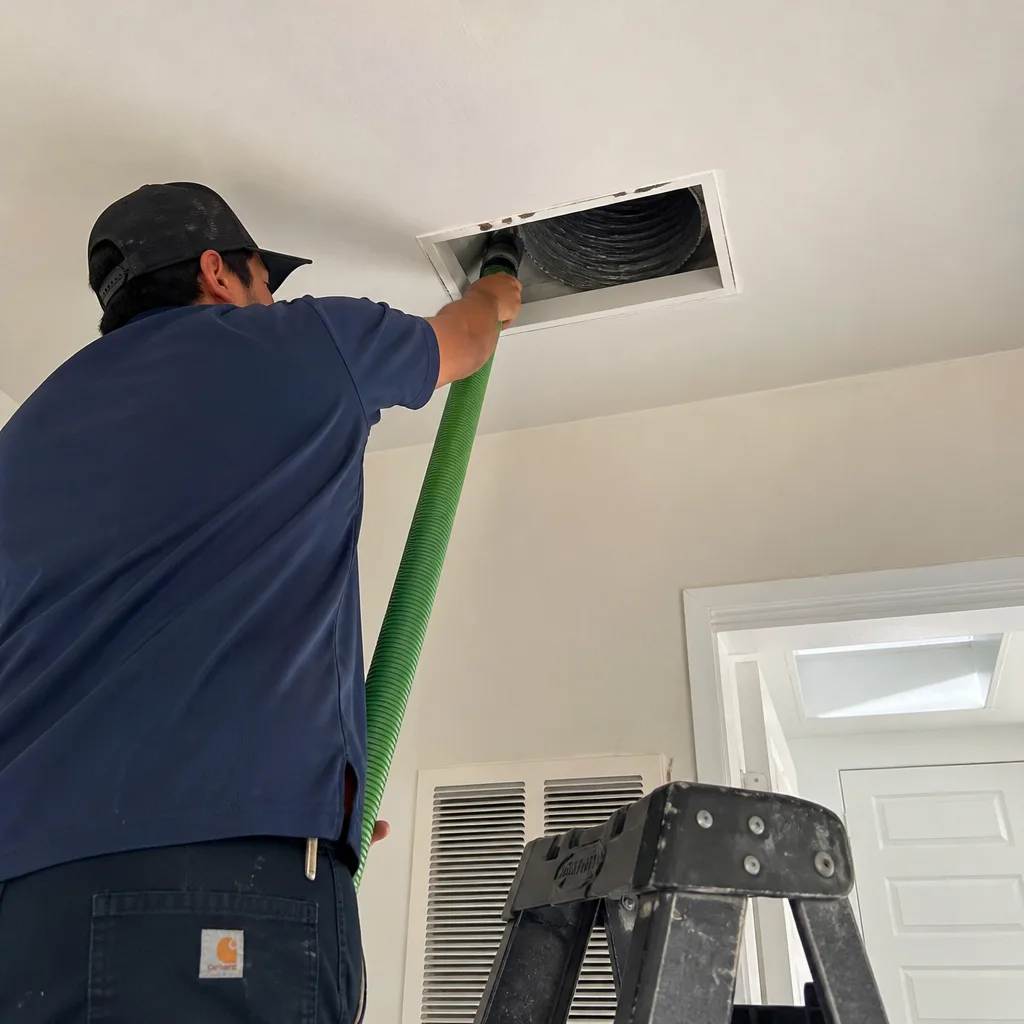
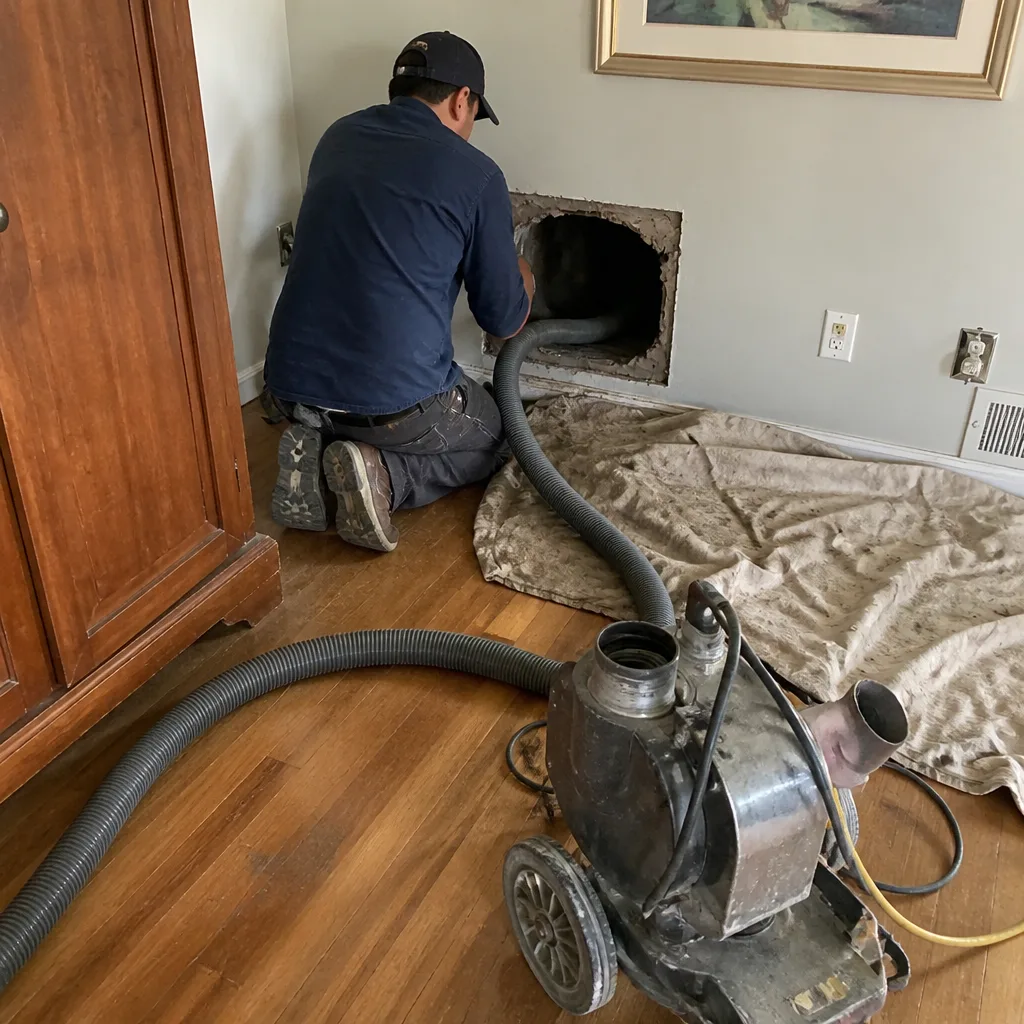
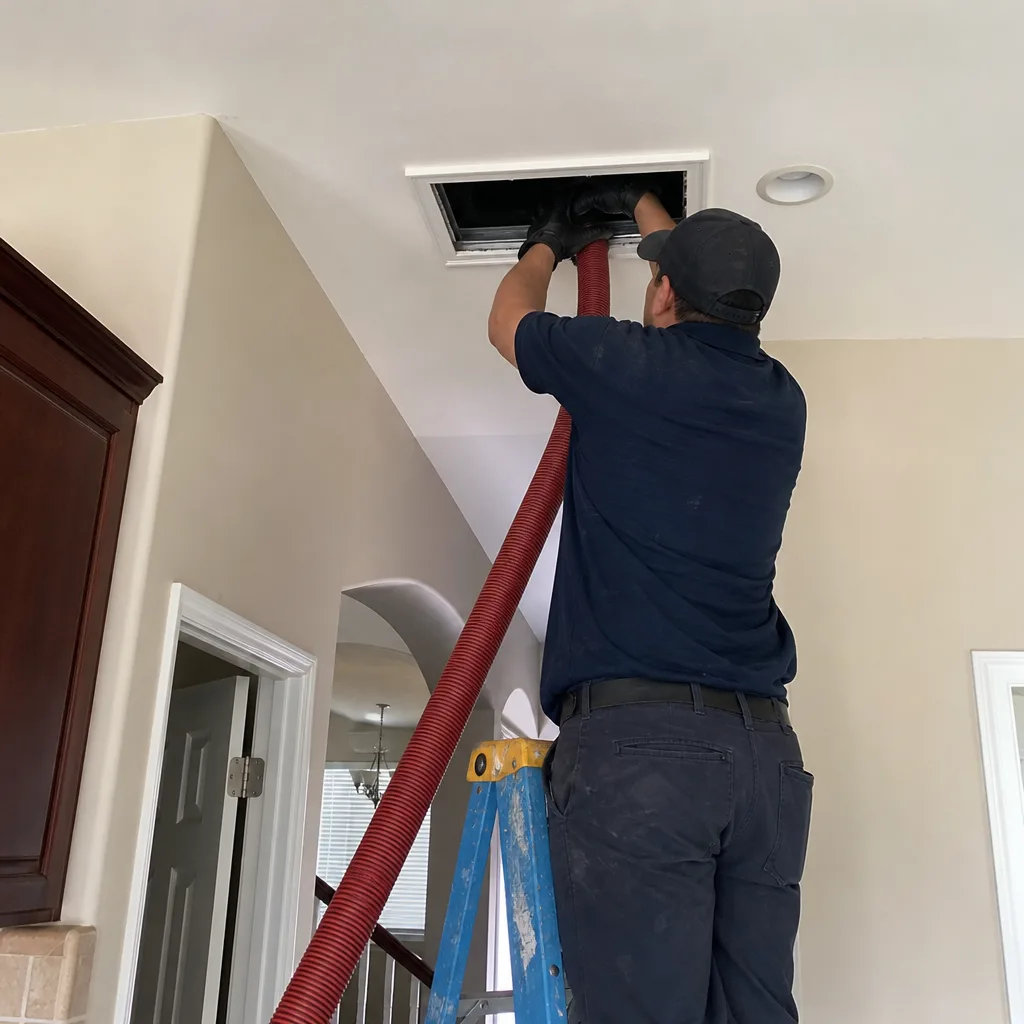
Whole-system duct and dryer vent check with before-and-after photos - you see exactly what came out of your vents
That "$99 whole-house special" is a bait ad - the real number appears once they are in your hallway, or the "clean" is a shop-vac at the register. We photograph the inside of your ducts before and after instead.
Air Duct Cleaning Warning Signs: A Cupertino Homeowner’s Reference Guide
Dust collecting on your supply registers is not a warning sign. It’s normal surface buildup, the same way dust settles on any horizontal surface in your home. The actual warning signs live inside the duct system, and they announce themselves in ways most Cupertino homeowners attribute to something else: a heating bill that creeps up in December, a bedroom that never quite warms on foggy mornings, an odor that appears only when the furnace kicks on for the first time in November. This guide walks through each of those signals, explains what’s happening inside the ductwork when you notice them, and tells you which ones matter and which ones don’t. For The Complete Air Duct Cleaning Guide for Cupertino Homeowners, see our dedicated resource.
Styles & brands we work with
- Whole-home duct cleaning
- Dryer vent cleaning
- Camera inspection
- Sanitizing & deodorizing
Quick Answer
The most common warning signs that your air ducts need cleaning in Cupertino are uneven room temperatures, a musty smell when the HVAC system first starts after months of non-use, visible debris at supply registers that looks like dark dust rings or insulation fibers rather than ordinary surface dust, and air filters that clog noticeably faster than the manufacturer’s recommended replacement interval. If you notice two or more of these signs, our Air Duct Cleaning services can address the accumulated contamination that’s affecting system performance and indoor air quality.
Table of Contents
- Uneven Room Temperatures: The Blockage Question
- Musty Odor on First Startup: What It Actually Means
- Visible Debris at Supply Registers: Reading the Debris
- Filter Replacement Frequency: The Upstream Contamination Signal
- Wildfire Smoke Infiltration: A Cupertino-Specific Warning Sign
- Noise and Airflow Changes: The Performance Indicators
- Renovation History and Construction Dust: The Overlooked Trigger
- Common Mistakes to Avoid
- When to Call a Professional
- Frequently Asked Questions
- The Bottom Line
Uneven Room Temperatures: The Blockage Question
Uneven temperatures between rooms in a Cupertino home are rarely a thermostat problem. More often, the thermostat is reading the temperature in one location while individual rooms are being starved or overfed by the delivery system. The ductwork is the delivery system, and when one branch is partially blocked, the room it serves gets less conditioned air. That’s the first place to look.
But here’s where it gets specific. A partially blocked duct and an HVAC system that’s simply undersized produce similar symptoms, and the differentiation matters because one is a cleaning issue and the other is an equipment issue. Here’s how to tell them apart:
- Compare rooms on the same floor. If two upstairs bedrooms are consistently different temperatures despite having the same sun exposure and window orientation, the difference is likely in the duct delivery, not the HVAC sizing. An undersized system struggles everywhere, not just in one room.
- Check register airflow. Hold a tissue near the register in the warm room and then near the register in the cold room. A noticeably weaker draft in the colder room points to a delivery restriction in that branch line.
- Note when the difference appears. If the problem room has always been cooler since you moved in, it might be a design issue. If the difference has developed gradually over months or years, that’s progressive blockage accumulating inside the duct, and that’s a cleaning issue.
- Inspect the register itself. Remove the register cover and look inside with a flashlight. If you can see debris buildup within the first few inches of the visible duct, there’s more of it farther down where you can’t see.
In Cupertino specifically, homes built in the 1960s through 1980s, common in neighborhoods like Monta Vista and the older pockets near De Anza Boulevard, often have original metal ductwork that’s been in service for forty or fifty years. In our experience, partial blockages in those older systems tend to concentrate in long horizontal runs and at transition points where the duct changes direction.
For a deeper look at how the cleaning process addresses these blockages, see our Air Duct Cleaning in Cupertino page.
Musty Odor on First Startup: What It Actually Means
The first cold snap in Cupertino usually arrives in November, and that’s when the furnace gets its first real workout since spring. If you notice a musty, stale, or sour smell in the first few minutes of furnace operation, that odor is coming from inside the duct system, and it’s telling you something specific about the interior surface condition of your ductwork.
Here’s what happens. During the months when the HVAC system sits idle, dust, skin cells, pet dander, and other organic particles that have accumulated on the interior duct surfaces absorb moisture from the air. Silicon Valley’s coastal influence means Cupertino’s humidity levels fluctuate more than inland communities, especially during foggy mornings and winter rains. That moisture activates microbial growth on the organic material coating the duct interior. When you fire up the furnace, the warm airflow passes over those surfaces and carries the resulting odor into your living space.
The key diagnostic distinction is timing. An odor that appears only during the first few minutes of operation and then fades is surface contamination on the duct interior warming up and off-gassing. An odor that persists throughout the entire heating cycle could indicate a more serious issue like mold growth inside the duct or a dead rodent. Here’s how to differentiate:
- Fades within 2-5 minutes: Likely dust and organic debris on interior duct surfaces. Cleanable with professional equipment.
- Persists for 15+ minutes or worsens: Could indicate active mold, animal intrusion, or a blocked condensate drain feeding moisture into the return duct. Requires inspection.
- Smells like burning dust: A brief burnt-dust smell on first seasonal startup is common and usually clears quickly as accumulated dust burns off the heat exchanger. This is different from a duct contamination odor.
- Smells like something died: That’s exactly what it often is. Rodents, birds, and squirrels can enter ductwork through unsealed penetrations and die inside. Requires professional removal and sanitization.
Homes in Cupertino neighborhoods with mature landscaping, particularly near Stevens Creek and the foothill transition zones where rodents are more active, report higher instances of animal intrusion into crawlspace ducting. If you hear scratching sounds in addition to odor, that’s the tell.
Visible Debris at Supply Registers: Reading the Debris
Not all debris at a register is created equal. The type of material you see tells you what’s happening inside the duct system. After years of inspecting ductwork in Cupertino homes, we’ve learned to read the debris the way a mechanic reads a dipstick.
Here’s what different debris types indicate:
- Dark dust rings around register edges: This is the classic sign of active particle deposition. The register edge creates turbulence, and particles that were suspended in the airstream get deposited right at the boundary. Dark rings mean the air moving through the duct is carrying more particulate than it should. In a clean system, register edge buildup takes months to become visible. In a contaminated system, it appears within weeks.
- Insulation fibers or flecks at the register: Fiberglass or mineral wool fibers coming through the supply register means the duct insulation is degrading somewhere upstream. In older Cupertino homes with internally insulated ductwork, the insulation can break down over decades and shed fibers into the airstream. Those fibers end up in your breathable air, and that’s not something to ignore.
- Graysh powdery dust with a fine, gritty texture: This is typically drywall dust or construction debris that entered the duct system during a renovation and never got cleaned out. It’s heavier than normal household dust and settles into low points in the duct, then gets re-entrained whenever airflow increases.
- Dark, sooty-looking particles: If you’ve had candles burning routinely, a fireplace in use, or cooking that produces smoke, those combustion byproducts can accumulate on duct interiors and eventually break loose. In Cupertino homes that experienced wildfire smoke exposure during the 2020 and 2021 fire seasons, this type of residue can linger in duct systems for years if not cleaned.
- Visible mold or biological growth: Green, black, or brown spots that look organic rather than dusty are a different category entirely. This requires professional assessment, not just cleaning.
The important distinction is that ordinary surface dust on top of a register is normal and expected. Debris that appears to be coming from inside the register, or that accumulates unusually quickly, is the signal to investigate further.
Filter Replacement Frequency: The Upstream Contamination Signal
Your HVAC filter is the canary in the coal mine, and the rate at which it loads up tells you what’s happening upstream in your duct system. This is one of the most overlooked diagnostic indicators in a Cupertino home.
A standard 1-inch filter in a residential system should last roughly 90 days under normal conditions. That’s the manufacturer’s baseline. If you’re replacing your filter every 30 to 45 days because it’s visibly loaded with dust, something is feeding that filter more particulate than normal household activity would generate.
There are three possible sources, and they’re not mutually exclusive:
- Upstream duct contamination. The return side of your duct system is pulling air from your living space, but if the return ducts themselves are lined with accumulated dust, that dust gets re-entrained into the airstream with every cycle and loaded onto the filter. The filter is catching what the ducts are already carrying.
- Return leak pulling unfiltered air. If a return duct in the attic or crawlspace has a gap or disconnection, it’s pulling unfiltered air from those spaces directly into the system. Attic air in a Cupertino summer is hot and dusty. Crawlspace air is damp and carries soil particulates. Both bypass the normal filtration path and load the filter faster.
- Post-filter contamination on the supply side. Supply-side duct contamination doesn’t load the filter because the filter is upstream. But it contributes to the dust levels in your living space, which then gets pulled back through the return and eventually onto the filter. It’s a self-perpetuating cycle.
The diagnostic takeaway is simple: if your filter replacement frequency has noticeably increased without a corresponding increase in household activity, pets, or open-window hours, the problem is likely in the duct system, not in your living habits.
For homeowners wondering whether a cleaning addresses these upstream and downstream issues, our Duct Cleaning Cupertino home page explains the process from start to finish.
Wildfire Smoke Infiltration: A Cupertino-Specific Warning Sign
Cupertino sits in a geographic position that makes it particularly vulnerable to wildfire smoke. When fires burn in the Santa Cruz Mountains to the west or in the hills east of San Jose, the prevailing wind patterns funnel smoke through the valley, and Cupertino’s location along the 280 corridor puts it directly in the path. The 2020 CZU Lightning Complex fire and the 2021 regional fires taught Silicon Valley homeowners something specific about their duct systems: smoke particles don’t just pass through the house. They find places to settle.
Here’s what wildfire smoke does to residential ductwork, and how to recognize it:
- Fine particulate penetration. Wildfire smoke particles are typically 0.4 to 0.7 microns, far smaller than household dust. These particles penetrate deep into the duct system and settle on interior surfaces, especially at joints, elbows, and any place where airflow slows.
- Smoke residue persists. Unlike ordinary household dust, wildfire smoke residue contains oils and combustion byproducts that create a sticky, tenacious film on duct surfaces. It doesn’t blow off easily. It requires mechanical agitation and HEPA-level extraction to remove properly.
- The smell returns with heat. That sticky residue releases odor when heated. Homeowners who experienced heavy smoke infiltration often notice a stale campfire smell returning during the first heating cycle of the following fall. That’s the signal that smoke residue remains in the duct system.
- Filter loading spikes. During and after a smoke event, homeowners often see their filters load to capacity in days rather than months. That’s the smoke particulate being caught by the filter, which is good, but it also means the system was processing far more particulate than it was designed for.
The differentiation between normal particulate accumulation and smoke infiltration is mostly about timing and texture. If your home experienced noticeable smoke odor during fire season and you haven’t had your ducts cleaned since, the residue is likely still there. If you haven’t experienced smoke events but still see heavy dust accumulation, that’s more likely to be household-source dust that’s been cycling through the system for years.
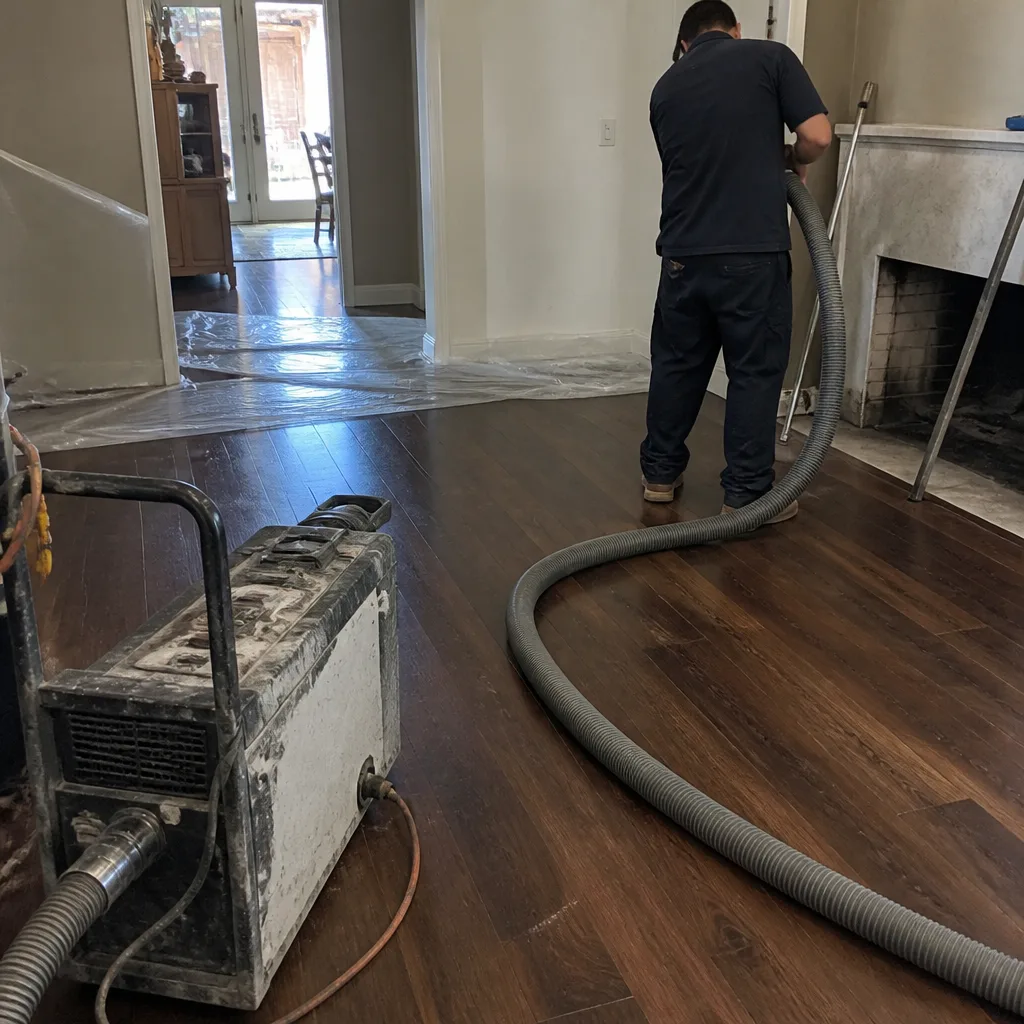
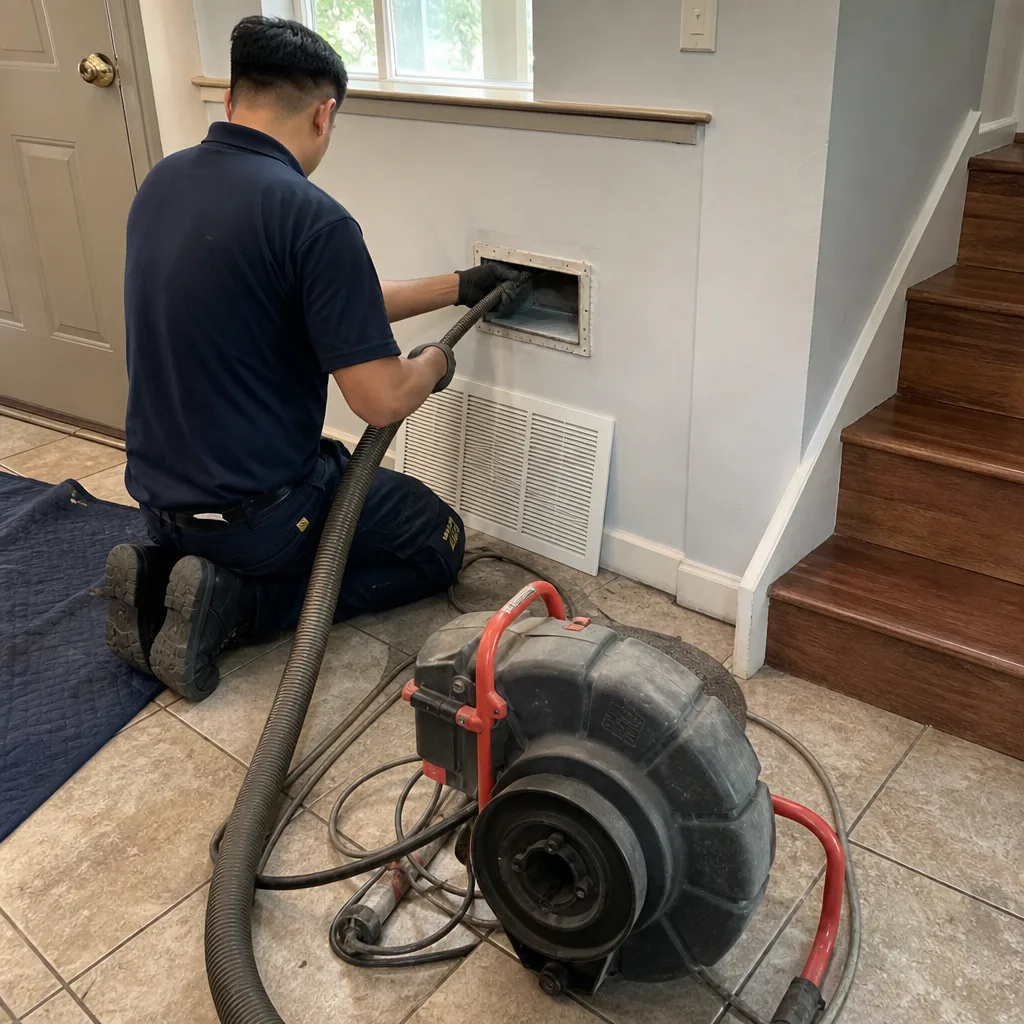
Equipment matters here. Professional-grade systems from manufacturers like Nikro use HEPA filters rated for sub-micron particle capture, and containment equipment from Abatement Technologies maintains negative pressure during cleaning so dislodged smoke residue is captured, not recirculated into living spaces. A shop-vac attached to a register cannot achieve this.
Noise and Airflow Changes: The Performance Indicators
Your HVAC system has a baseline noise signature. You’ve heard it thousands of times. When that signature changes, the ductwork is often the culprit, and the specific type of noise tells you what kind of problem you’re dealing with.
Here are the noise and airflow changes that indicate duct contamination or damage:
- Whistling at specific registers: A whistling sound at one register but not others usually means that register’s damper is partially closed or the register opening is obstructed. But if the whistling appears suddenly without any damper adjustment, debris may have shifted and created a partial blockage in that branch line, causing the air to accelerate through a narrower opening.
- Rattling or flapping sounds: A rhythmic rattle that corresponds with system operation often indicates loose insulation or debris moving inside the duct. In older Cupertino homes, deteriorated internal duct lining can partially detach and flap in the airstream, creating a sound that’s difficult to localize and impossible to fix from the outside.
- Reduced airflow at all registers: If every register in the house is delivering noticeably weaker airflow than it did a year ago, that points to either a failing blower, a severely loaded filter, or a significant blockage in the main trunk line. If you’ve replaced the filter and the airflow is still weak, the main trunk is the next place to look.
- Increased system runtime: Listen to how long the system runs per cycle. If your unit is running longer to reach the same setpoint, airflow is restricted somewhere, and the system is working harder to push air through compromised ductwork. Longer runtime means higher energy bills, which is often the first thing a Cupertino homeowner actually notices.
The connection between airflow and energy cost is direct. A 20% reduction in airflow through a duct system doesn’t just make rooms less comfortable. It means the blower motor is running longer at a given CFM, which draws more power. When a Cupertino homeowner sees a PG&E bill that’s higher than the previous year with no behavior change, duct restriction is one of the first things we look at.
Renovation History and Construction Dust: The Overlooked Trigger
Cupertino has seen continuous residential turnover and renovation activity for decades. Homes that were built in the 1950s and 1960s have been remodeled, expanded, and updated multiple times. Each renovation generates construction dust, and unless the duct system was properly sealed and cleaned after each project, that dust ended up inside the ductwork.
Here’s the sequence that plays out in renovated Cupertino homes:
- Construction generates fine dust. Drywall sanding, floor refinishing, tile cutting, and demolition all produce particulate that’s fine enough to stay suspended in air for hours and travel throughout the house.
- The HVAC system may be running during construction. Even when contractors seal off the work area, the HVAC system may continue operating, pulling construction dust into the return ducts and distributing it through the supply side. If the system is off, dust still settles into open duct penetrations and waits.
- Contractors don’t clean ducts. General contractors handle demolition, framing, drywall, paint, and flooring. Duct cleaning is a separate trade, and it’s rarely included in the renovation scope. The dust stays.
- Months later, the dust migrates. Construction dust settles in low points and horizontal runs during the renovation, then gets re-entrained gradually over the following months and years as normal airflow pulls it loose. Homeowners notice increased dust in the house, faster filter loading, and sometimes a drywall-dust smell on startup months after the renovation finished.
If you purchased a Cupertino home that was renovated before you moved in, or if you’ve completed a renovation without having the ducts cleaned afterward, there’s a high probability that significant construction dust remains in the system. This is a known issue in homes throughout the South Bay, and it’s one of the reasons a professional cleaning makes sense even when the ducts are relatively new. The dust isn’t from your household. It’s from your contractor’s job site.
For homes where the ductwork has also been damaged during renovation, Air Duct Repair in Cupertino addresses the structural issues that often accompany construction-related contamination.
Common Mistakes to Avoid
- Assuming visible register dust means the ducts are dirty. Surface dust on register covers is normal and doesn’t indicate duct contamination. The meaningful signals are inside the system: odor on startup, uneven temperatures, rapidly loading filters, and debris emerging from inside the register.
- Ignoring a musty smell because it fades quickly. The fact that the smell fades after a few minutes doesn’t mean the source is gone. It means the warmed air has stopped off-gassing until the next cycle. The contamination remains on the duct surfaces.
- Blaming the thermostat for uneven room temperatures in a Cupertino home. Thermostats fail predictably and completely, not in subtle room-by-room patterns. Uneven temperatures point to delivery problems in the duct branches.
- Running the HVAC system during a renovation without sealing returns. Contractors don’t always seal duct openings, especially in homes where the system is older and access is difficult. Once construction dust enters the system, it’s there until professionally removed.
- Assuming a clean filter means clean ducts. The filter protects the equipment, not the duct interiors. Dust accumulates on duct surfaces regardless of filter condition because the air passing through the duct has already been filtered. The filter doesn’t clean the ducts. It never touches what’s already stuck to the duct walls.
- Choosing the cheapest cleaning quote without verifying equipment. The difference between a professional duct cleaning and a surface-level vacuuming is equipment. Rotobrush and Nikro systems agitate and extract. A shop-vac and a brush can’t reach deep into branch lines, and without negative pressure containment, whatever they dislodge gets blown back into the house.
- Delaying duct cleaning until a problem becomes obvious. Most of the duct contamination we encounter in Cupertino homes accumulated over years, not months. By the time homeowners notice multiple warning signs, the system has been operating with contaminated surfaces for a long time. Addressing it earlier means less contamination to remove and better air quality in the interim.
When to Call a Professional
Some warning signs are informational. Others are actionable. Here’s when to pick up the phone. If you notice a musty odor on HVAC startup that persists for more than five minutes, that’s a contamination issue requiring professional inspection. If you see debris actively emerging from inside supply registers, especially insulation fibers or dark particulate, the system needs cleaning and possibly repair. If your filter loading has accelerated noticeably without household changes, something upstream is feeding the system. If your Cupertino home experienced wildfire smoke infiltration during the 2020 or 2021 seasons and you haven’t cleaned the ducts since, the residue is still in there.
Any one of these signals justifies a professional assessment. Two or more make it a priority. Duct Cleaning Cupertino offers free estimates in Cupertino – call (877) 542-8668 and we’ll assess your system and tell you honestly whether cleaning is warranted.
Frequently Asked Questions
Air duct cleaning in Cupertino typically runs between $450 and $900 for a standard single-family home, depending on the number of systems, the total linear footage of ductwork, and the level of contamination present. Homes with multiple HVAC systems, extensive contamination from renovation or smoke, or difficult crawlspace access fall on the higher end. Call (877) 542-8668 for an exact quote – estimates are free and there are no per-vent pricing games, just one flat price per system agreed before work starts.
Most Cupertino homes benefit from professional duct cleaning every 3 to 5 years, but the real answer depends on household variables: pets, renovation history, wildfire smoke exposure, and whether anyone in the home has allergies or respiratory conditions. A home with two shedding dogs in a 1970s house near Stevens Creek that experienced heavy smoke infiltration during fire season is on a different schedule than a newer condo with no pets and no renovation history. Use the warning signs in this guide as your trigger, not the calendar.
Cheap duct cleaning quotes in the Cupertino area generally reflect cheaper equipment and a faster process. A technician with a portable vacuum and a basic brush attachment can offer a low price because the job takes less time and the equipment doesn’t agitate or extract from deep branch lines. Professional systems like Rotobrush and Nikro are expensive to purchase and maintain, and they require training to operate correctly, which is reflected in the price. A low quote might also be a teaser that escalates once the technician is in your home and “discovers” additional work. That’s not how we operate.
Ask for before-and-after photos of the duct interior. A professional company using professional equipment can insert a camera probe into the ducts before cleaning and after cleaning, showing you exactly what was removed and what the interior looks like afterward. If a company can’t or won’t provide this documentation, that’s a red flag. We show every Cupertino customer their own duct interiors before and after the job, because the work speaks for itself.
Yes, and the mechanism is straightforward. Contaminated duct interiors hold dust, pollen, pet dander, and mold spores that get re-entrained into the airstream with every heating and cooling cycle. That means the air circulating through your Cupertino home is picking up additional particulate load from surfaces that should be clean, not adding to it. If someone in the home has allergies, they’re breathing higher particulate concentrations than necessary, and cleaning the ducts removes a source that’s constantly feeding the problem. For homeowners considering air quality upgrades beyond cleaning, we work with Honeywell and Aprilaire filtration systems to address particulate at multiple points in the system.
They’re separate services that address separate systems, but both affect the air quality and fire safety of your Cupertino home. Air duct cleaning addresses the HVAC distribution system that heats and cools your living space. Dryer vent cleaning addresses the dedicated exhaust duct that carries hot, lint-laden air from your dryer to the outdoors. A clogged dryer vent is a leading cause of residential fires, and it requires purpose-built equipment. For more on that service, see our Dryer Vent Cleaning in Cupertino page.
The Bottom Line
The duct system in your Cupertino home is the circulatory system for your indoor air, and it’s not self-cleaning. The warning signs covered in this guide – uneven temperatures, startup odor, visible debris emerging from registers, accelerated filter loading, and smoke or renovation residue – are all diagnostic indicators pointing to the same conclusion: the duct interior has accumulated contamination that’s affecting performance and air quality. None of these signals resolves on its own. The contamination stays until it’s physically removed with professional equipment. When you notice two or more of these signs, call (877) 542-8668 for a free estimate. We’ll inspect the system, show you what’s inside, and give you one flat price per system before any work begins.
Written by the team at Duct Cleaning Cupertino, serving Cupertino since 2015.
See the difference
 Before
 After
 Before
 After
 Before
 After