
Last updated November 2, 2026
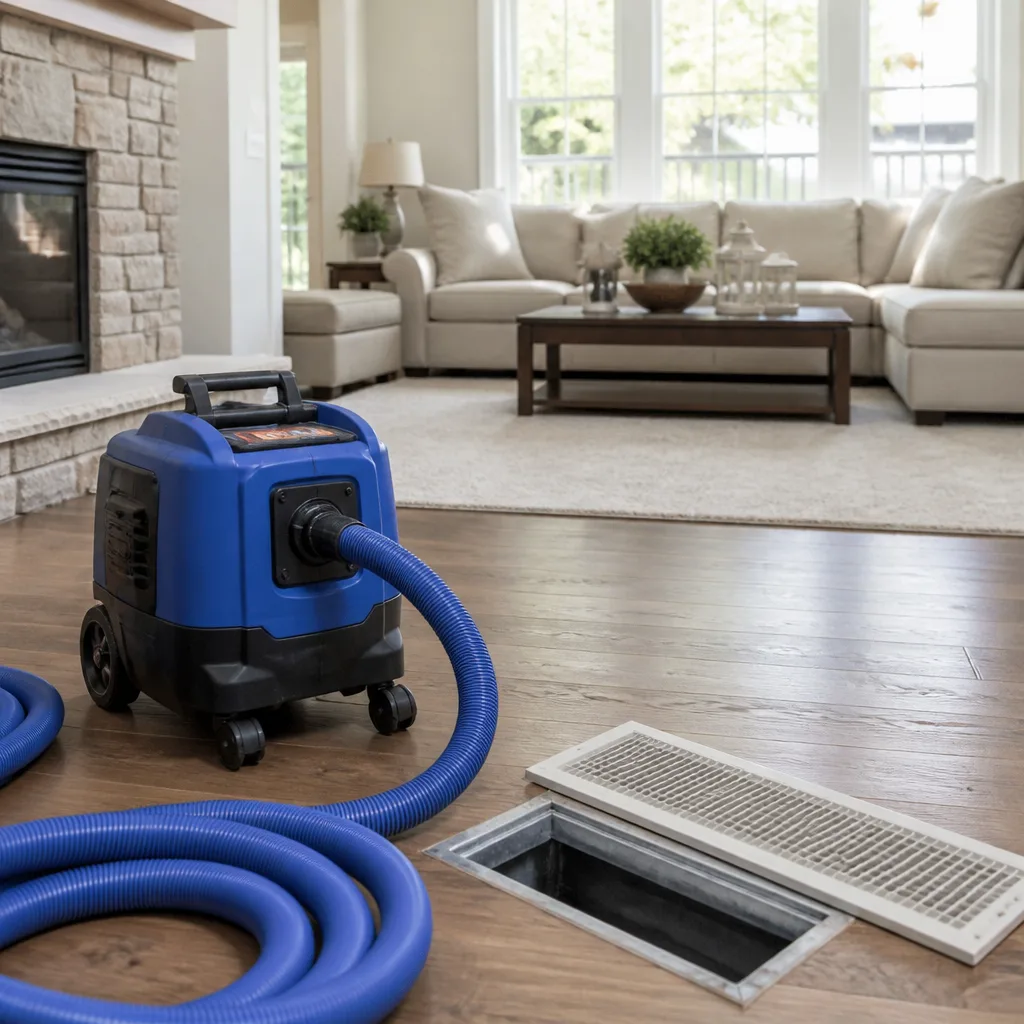 Whole-home duct cleaning
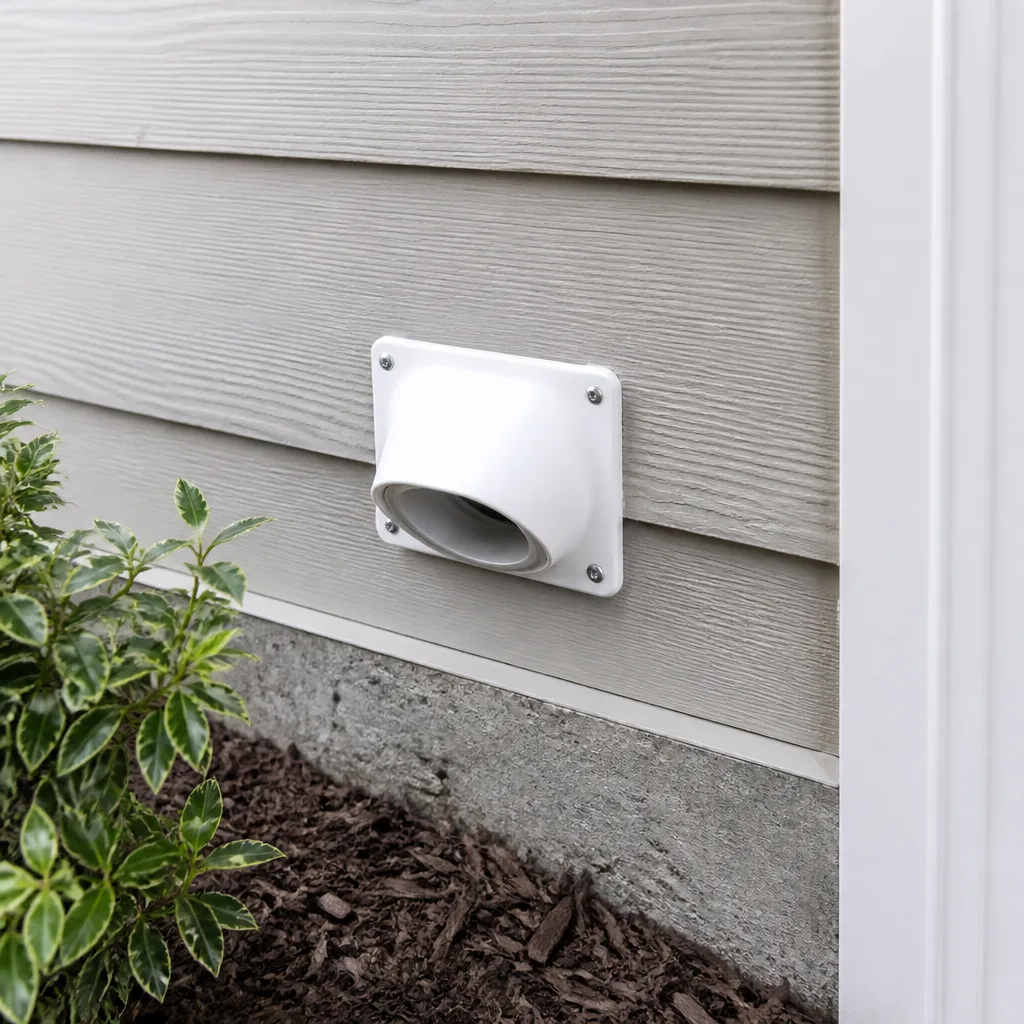 Dryer vent cleaning
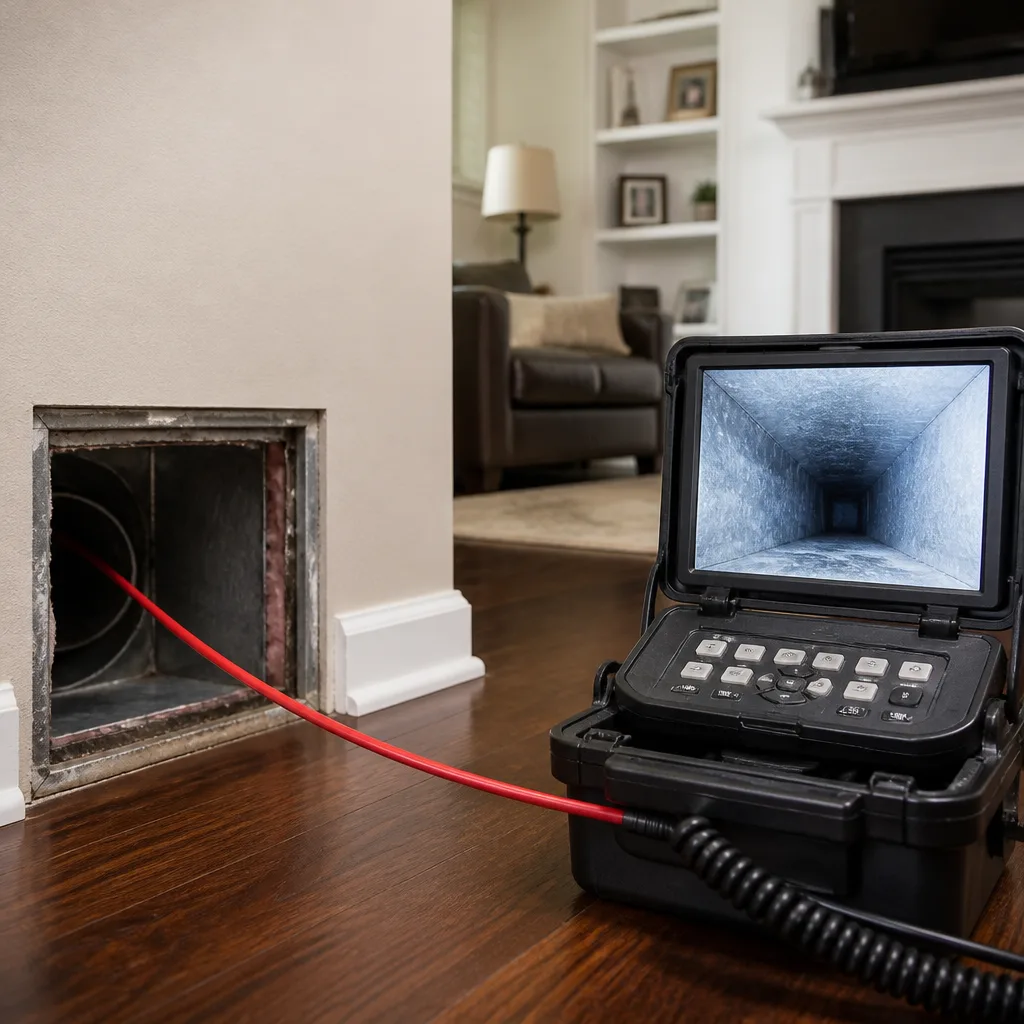 Camera inspection
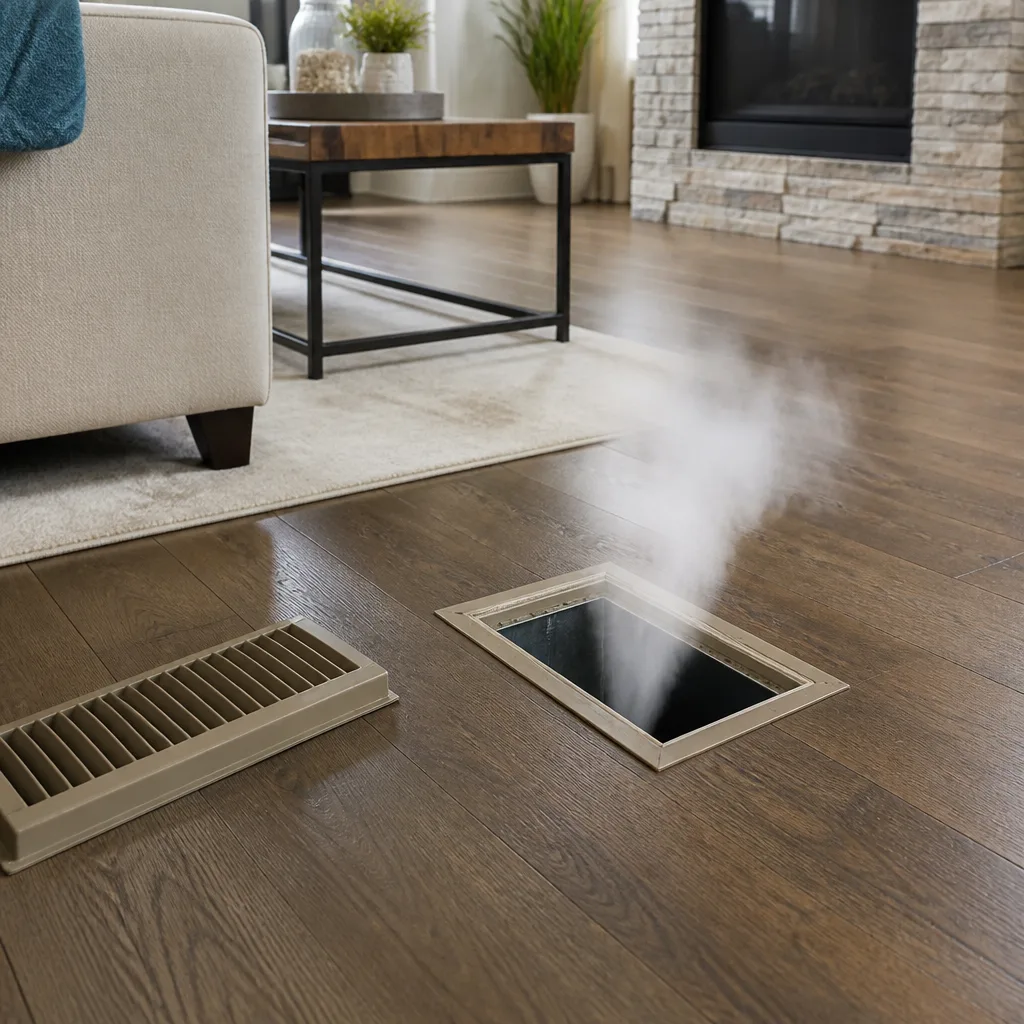 Sanitizing & deodorizing
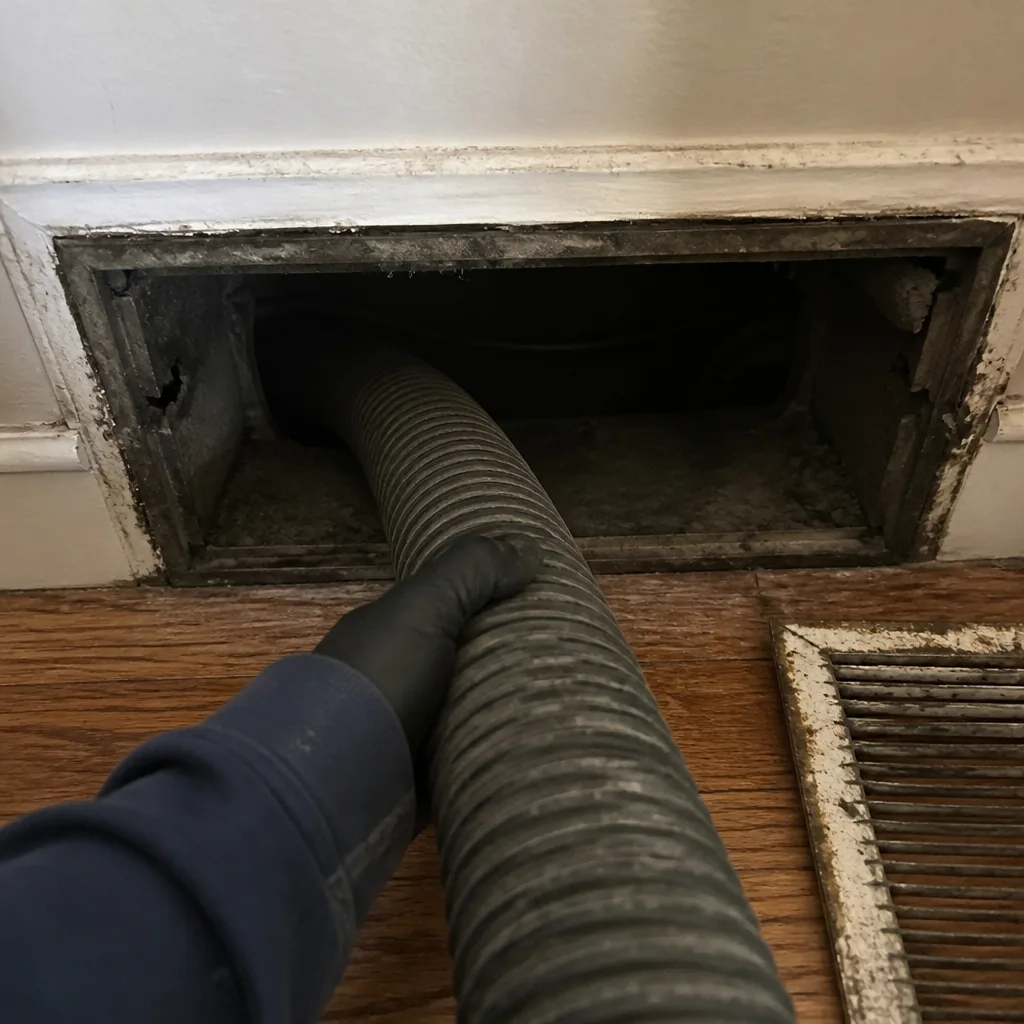
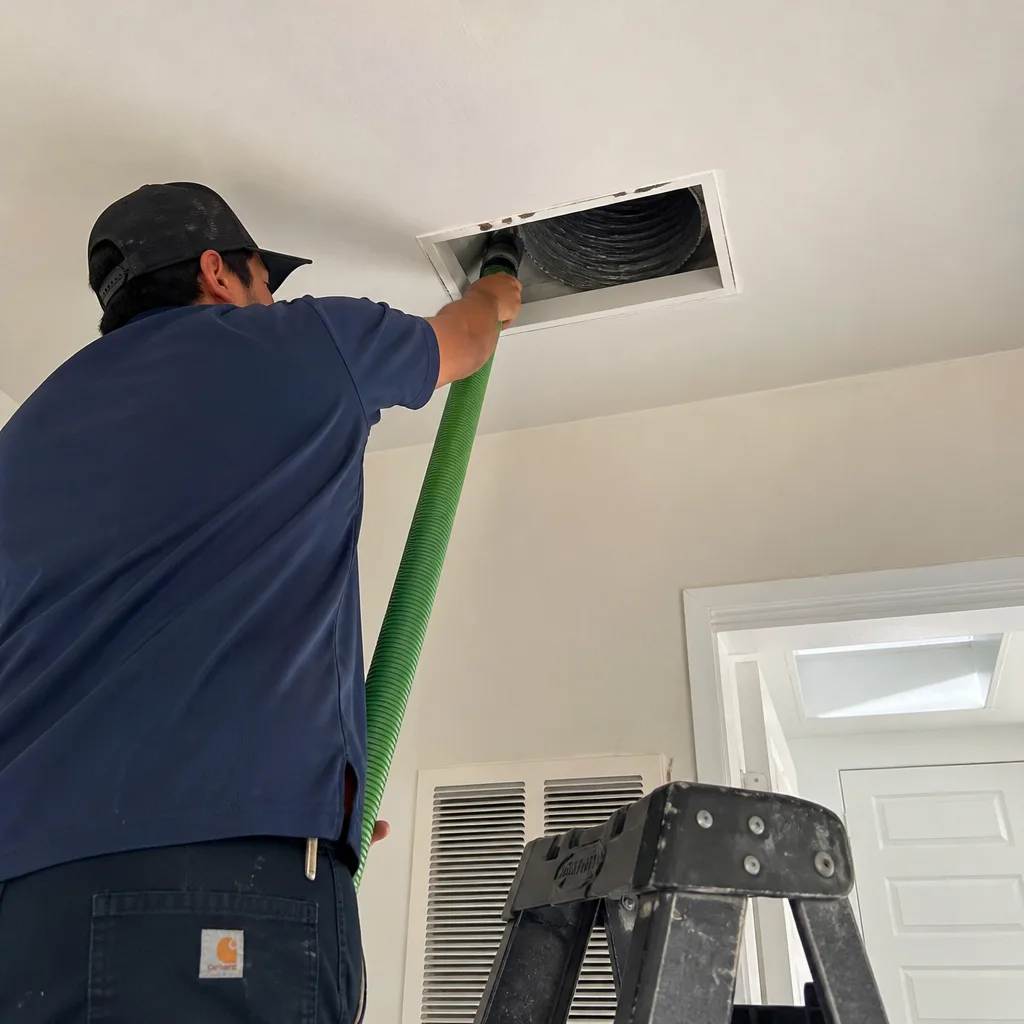
Whole-system duct and dryer vent check with before-and-after photos - you see exactly what came out of your vents
That "$99 whole-house special" is a bait ad - the real number appears once they are in your hallway, or the "clean" is a shop-vac at the register. We photograph the inside of your ducts before and after instead.
Air Duct Cleaning Cost Breakdown: The Cupertino Homeowner’s Reference for 2026
That $149 whole-house duct cleaning deal you saw is real. It’s also not a whole-house duct cleaning. The number that buys the job scope you actually need in a 2,000 sq ft Cupertino home looks different, and the gap between those two figures is where most homeowners get burned. This guide pulls apart the real cost structure behind duct cleaning in Cupertino, line item by line item, so you can compare quotes on what’s actually being done, not what’s printed on the flyer. For more, see our Air Duct Cleaning Maintenance Checklist for Cupertino Homeowners.
Styles & brands we work with
- Whole-home duct cleaning
- Dryer vent cleaning
- Camera inspection
- Sanitizing & deodorizing
Quick Answer
Air Duct Cleaning services in Cupertino typically cost between $350 and $650 for a standard single-family home in 2026, assuming a full-system cleaning by a specialized contractor using professional-grade equipment. Whole-home jobs on larger properties or homes with significant contamination can reach $800 or more. The variance comes down to three things: the pricing model used, the scope of the system being cleaned, and whether the contractor is actually cleaning the entire air path or just the visible vents.
Table of Contents
- Why the Price Range Is So Wide
- The Three Pricing Models and What Each Incentivizes
- The Real Line-Item Breakdown of a Full-System Cleaning
- Access-Point Cutting: What It Is, What It Costs, and Why Some Cupertino Homes Need It
- Add-Ons Worth Paying For vs. Upsells to Question
- How to Benchmark Any Quote Against NADCA Data
- How Cupertino’s Climate and Housing Stock Affect Your Cost
- What a Complete Job Should Include
- Common Mistakes to Avoid
- When to Call a Professional
- Frequently Asked Questions
- The Bottom Line
Why the Price Range Is So Wide
The most honest statement we can make about duct cleaning costs in Cupertino is this: the numbers are all over the map because the service definitions are all over the map. A $99 “vent cleaning” and a $600 “whole-system air duct cleaning” are not the same job with different markups. They are different jobs.
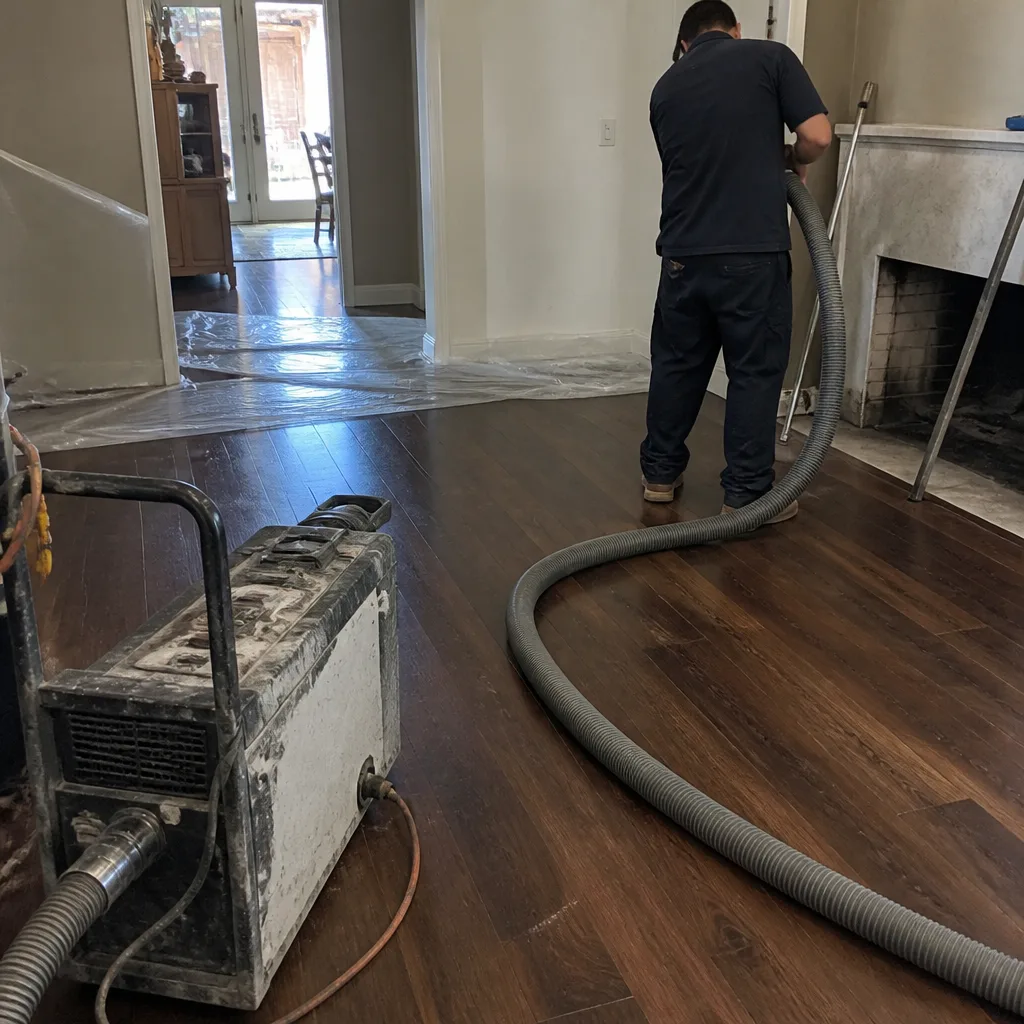
A $99 special typically covers supply registers only. The technician removes vent covers, vacuums the visible boot, wipes the grille, and moves on. That’s maybe 45 minutes of work using a shop-style vacuum. A full-system cleaning involves connecting professional-grade negative-pressure equipment to the main trunk line, agitating debris loose with powered brushes, cleaning the return air side, the blower compartment, and every branch run back to the register. That’s a half-day job requiring a truck-mounted or high-CFM portable system.
In Cupertino, where a meaningful portion of the housing stock dates to the 1960s and 1970s tract-home boom, the age of the ductwork introduces another variable. Older systems with decades of accumulated dust, construction debris from past remodels, or – in homes near the foothills – fine particulate that drifts in from wildfire season will take longer to clean properly. Labor time is cost. When a Cupertino homeowner in Monta Vista asks us why their quote is higher than a neighbor’s in a newer development, the answer is usually system condition, not contractor greed.
- Vent-only cleaning: $90 – $180. Registers removed, cleaned, reattached. No trunk line, no return, no blower. About an hour of work.
- Supply-side cleaning: $250 – $400. All supply registers, branch runs, and main supply trunk agitated and extracted with professional equipment.
- Full-system cleaning: $400 – $800. Supply side plus return air side, blower compartment, air handler if accessible, and plenums. This is what a legitimate “whole-house” cleaning means.
- Full-system plus add-ons: $500 – $1,000+. Includes dryer vent cleaning, evaporator coil cleaning if accessible, and possibly access-point cutting on flex-duct systems.
If a quote lands below $250 for a full-system job in a 2,000 sq ft Cupertino home, assume something is being excluded. Read the scope. Ask specifically what gets cleaned.
The Three Pricing Models and What Each Incentivizes
Contractors in the Cupertino market price duct cleaning three ways. Each model shapes behavior, and knowing the model tells you a lot about what the contractor is optimizing for.
1. Per-Vent Pricing
The contractor quotes a flat figure per vent, typically $25 to $45 per supply register. A home with 12 supply registers and 2 returns lands at $350 to $630. This model is popular in the residential market because it’s easy to explain: count your vents, multiply, done.
What it incentivizes: Technically, more vents means more money, so a contractor using this model has incentive to find more vents to count. That’s not inherently bad – more vents cleaned means a more complete job. The risk is that return air registers get counted at a higher rate, or that the trunk line and blower compartment are billed as separate line items on top, which can push the total well past the advertised per-vent figure. Always ask: does the per-vent price include the main trunk, the return side, and the blower, or are those “additional services”?
2. Flat-Rate Whole-Home Pricing
One price for the entire system, regardless of vent count. Cupertino flat-rate quotes for a typical 3-bedroom, 2-bath single-family home generally fall between $400 and $600 in 2026. This is the model most professional duct-cleaning specialists use, because it aligns the contractor’s incentive with completing the full scope rather than maximizing vent count.
What it incentivizes: Efficiency. The contractor wants the job done correctly the first time, with no reason to stretch or shrink the scope. The risk is the inverse of per-vent: a contractor might under-clean on a genuinely large or heavily contaminated system if the flat rate was based on a smaller home. A good flat-rate quote specifies the square footage or system size it’s based on. If your home is 2,800 sq ft and the quote says “up to 2,000 sq ft,” the price will go up.
3. Square-Footage Pricing
Less common in Cupertino, but still seen with some larger HVAC companies. The quoted price is based on the conditioned square footage of the home, usually $0.18 to $0.30 per square foot. A 2,000 sq ft home therefore lands at $360 to $600, overlapping with flat-rate territory.
What it incentivizes: Square footage is a rough proxy for duct volume, but it’s imprecise. A 2,000 sq ft home with a single return and eight supplies has far less ductwork than a 2,000 sq ft home with dual returns, twelve supplies, and long branch runs to a converted garage. Square-footage pricing can work as a quick estimate tool, but we’d rather see a contractor price on actual system inspection than on floor area. That said, as a homeowner, square-footage pricing gives you a fast sanity check against flat-rate quotes.
The Real Line-Item Breakdown of a Full-System Cleaning
Here’s what an honest full-system air duct cleaning in Cupertino actually includes, and roughly what each component costs as a share of the total job. These are benchmark figures for the Northern California market, not universal truths, but they reflect what we see in Cupertino homes week over week.
- Supply registers and grilles: $40 – $80. Removal, cleaning, and reinstallation of every supply register. This is the visible part of the job and the least technically demanding, but it matters for finished results.
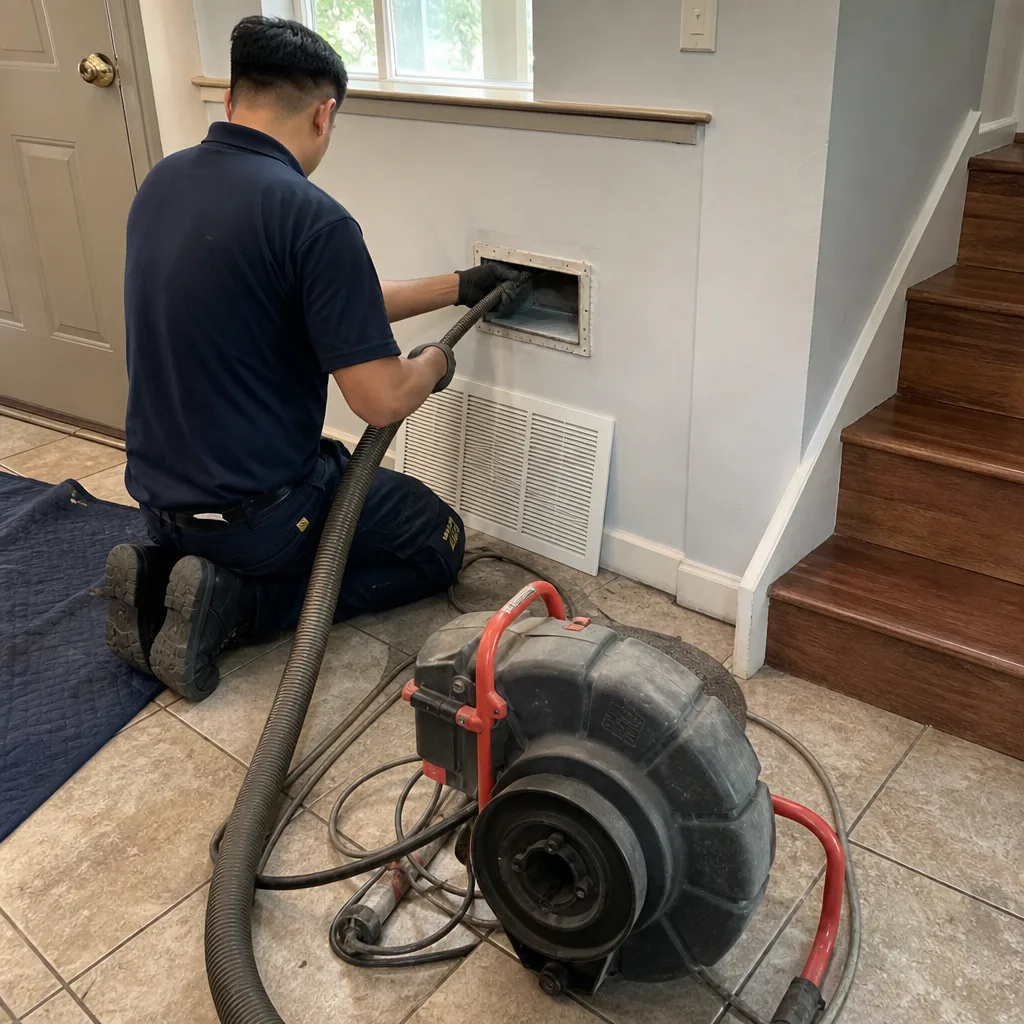
- Branch runs: $120 – $220. Each flexible or rigid duct running from the main trunk to a register gets agitated and extracted using a powered brush system like Rotobrush or Nikro. This is where the bulk of dislodged fine dust lives. In Cupertino tract homes with flex duct, this is also where access limitations and tears from previous work tend to appear.
- Main supply trunk: $80 – $150. The large central duct that distributes conditioned air to the branch runs. Cleaning it properly requires creating negative pressure at the farthest point and feeding the agitation tool through the trunk.
- Return air side: $70 – $120. Pulling air back into the system is where filters catch what they catch, but what passes through accumulates on the return duct walls. This is frequently the dirtiest part of a Cupertino system, especially in homes that have run cheap fiberglass filters for years.
- Blower compartment and plenum: $50 – $100. The blower motor housing, fan blades, and surrounding plenum collect a fine layer of dust that impacts airflow and can contribute to motor heat buildup. This is a standard part of any legitimate full-system job.
- Access points, if needed: $45 – $90 per access cut. On flex-duct systems where there’s no existing access to every branch run, a professional may need to cut small access ports into the duct, clean through them, then seal and cap them. More on this below.
- Dryer vent add-on: $80 – $150. A separate service and covered in detail in the add-ons section, but it’s a common and genuinely valuable inclusion when bundled with a duct cleaning.
Add it up, and a legitimate full-system cleaning on a typical Cupertino home lands between $400 and $700, before any access cutting or add-ons. That’s not a markup. That’s the cost of doing the job to a professional standard with professional equipment.
Access-Point Cutting: What It Is, What It Costs, and Why Some Cupertino Homes Need It
This is the part of a duct cleaning quote that most guides gloss over, and it’s worth understanding because it accounts for a meaningful share of quote variance in Cupertino.
Most homes built in Cupertino between the 1950s and 1980s, especially in neighborhoods like Lynbrook and Monta Vista, were constructed with flexible ductwork for at least some branch runs. Flex duct is a corrugated inner liner wrapped in insulation and an outer vapor barrier. It works well, but it cannot be safely cleaned through a register alone in many cases. The agitation tool needs a straight-line path, and flex duct bends.
When a branch run cannot be reached through the register and has no existing access point, the professional solution is to cut a small circular access port into the duct, insert the agitation and extraction tools, clean the run, then seal the port with a purpose-built cap and foil tape. This is standard practice under NADCA guidelines, and it’s what separates a real cleaning from a “vent vacuuming.”
What legitimate access cutting costs: $45 to $90 per access point, depending on duct size and location. A typical Cupertino home might need two to five access points, adding $90 to $450 to the quote.
How to evaluate access-point charges: A contractor should always explain why an access point is necessary and show you the location. If a quote includes $500 in access charges but the technician can’t explain which runs need access and why, that’s a red flag. Conversely, if a contractor claims no access is ever needed, they’re either not cleaning the branch runs or they’re using a system that pulls negative pressure but doesn’t agitate, which leaves compressed debris in place. Neither is a real cleaning.
Add-Ons Worth Paying For vs. Upsells to Question
Once the quote covers the base cleaning, the conversation turns to add-ons. Some have real value. Some are thin-margin revenue generators dressed up as essential services. Here’s how to tell the difference in the Cupertino market.
Add-Ons With Real Value
- Dryer vent cleaning: $80 – $150. This is a fire-safety service, and it’s one of the few add-ons where the value proposition is unambiguous. Lint accumulation in dryer vents is a leading cause of residential fires, and Cupertino homes with older vent runs often have significant buildup. A purpose-built dryer vent cleaning system with rotary brushes and high-CFM extraction does a materially different job than pushing a duct-cleaning brush through a dryer line. If you’re paying for a duct cleaning anyway, adding dryer vent cleaning at a bundled rate is money well spent.
- Evaporator coil cleaning: $150 – $300 when accessible. If your coil is caked with dust and pet hair, cleaning it restores cooling efficiency and reduces strain on the compressor. The catch: many Cupertino homes have coils installed in locations that are not safely accessible for a duct-cleaning contractor. If the coil requires refrigerant line disconnection or extensive disassembly, that’s an HVAC technician’s job, not a duct cleaning add-on. A good contractor will tell you that.
- Air filter replacement or upgrade: $15 – $60. If your system uses standard 1-inch filters, upgrading to a higher-MERV filter from a brand like Honeywell or Aprilaire is a simple, low-cost improvement. Aprilaire’s media-style filter cabinets offer better filtration than a 1-inch fiberglass filter without the airflow restriction of a cheap high-MERV pleated filter. We routinely recommend this upgrade to Cupertino homeowners who run their systems year-round.
Upsells to Question
- Routine “sanitizer” or “fogging” application: $80 – $200. There are legitimate antimicrobial treatments for duct systems with confirmed mold or bacterial growth, but applying a sanitizer as a routine add-on to an otherwise clean system has thin justification. The product dissipates, the effect is temporary, and the application is often sold with vague language about “improved freshness.” If mold is present, the correct response is source remediation, not a fogging spray. If mold is not present, a sanitizer is a solution in search of a problem. Ask for the product name, the active ingredient, and what specific contaminant it’s addressing.
- “Free inspection” that becomes a high-pressure sales visit: The inspection is free, but the next hour of your life is not. Some Cupertino-area companies use a low-cost inspection as a foot in the door to run a high-pressure pitch with photos of dust (which every duct system has) framed as an emergency. A legitimate contractor inspects, tells you what’s actually needed, and gives you a quote you can think about.
- Duct sealing as an automatic recommendation: $500 – $2,000. Leaky ducts are real, and sealing them saves energy. But an automatic “you need duct sealing” recommendation after every cleaning is a sign the contractor is selling services, not fixing problems. If your ducts have measurable leakage, a pressure test will show it. Ask for the numbers before committing.
How to Benchmark Any Quote Against NADCA Data
The National Air Duct Cleaners Association publishes industry-wide average job costs based on survey data from member contractors. The latest figures indicate a national average residential duct cleaning cost in the $450 to $550 range for a typical single-family home, with the Northern California market running slightly higher due to labor costs and regulatory compliance requirements.
Here’s a practical method for benchmarking any Cupertino quote:
- Write down the scope in plain language. What exactly does the quote say is being cleaned? Supply registers? Branch runs? Return side? Blower? If “whole system” is the only descriptor, ask for the specific components.
- Count your supply registers and returns. Walk the house. Typical Cupertino homes have 8 to 14 supply registers and 1 to 3 returns. Knowing these numbers lets you run a quick per-vent sanity check.
- Compare the quote to the $450 – $550 NADCA average, adjusted for home size. A quote significantly below this average with the same scope claim means something is being excluded. A quote significantly above it should come with specific justification: access points, heavy contamination, unusually long duct runs.
- Ask about the equipment. Professional-grade systems like Rotobrush and Nikro rigs cost real money to own and maintain. A contractor using a portable shop vacuum and a drill brush cannot deliver a full-system cleaning, regardless of what the quote says. This is the single fastest way to separate specialists from generalists in the Cupertino market.
- Request a written scope of work. Any contractor who cannot or will not put the scope in writing is a risk at any price. A written scope protects you and makes the quote comparable across contractors.
How Cupertino’s Climate and Housing Stock Affect Your Cost
Cupertino’s specific conditions shape both the need for duct cleaning and the cost of doing it well. Understanding these factors helps explain why your quote might differ from national averages or from what a friend in a different part of the Bay Area paid.
Wildfire season particulate. Cupertino sits close enough to the Santa Cruz Mountains that wildfire smoke from regional fires, including those in the Los Gatos and Saratoga foothills, regularly drifts through the city. Fine particulate from smoke infiltrates homes and settles in ductwork, especially in older homes with leaky envelopes. After a significant smoke event, accumulated ash and soot adds to the debris load in duct systems. Homes that experienced heavy smoke exposure during the 2020 and 2021 fire seasons and have not been cleaned since are more likely to carry heavier contamination.
Aging housing stock. A large share of Cupertino’s residential parcels were developed between the 1950s and 1980s. Homes from this era typically have galvanized steel trunk lines with flex-duct branch runs, often with insulation that has degraded over decades. Degraded liner material adds particulate to the air path, and flex-duct kinks or sags create spots where debris accumulates faster than in newer, rigid systems. Running an HVAC system season after season in a 40-year-old Cupertino home means more accumulation, which means more labor time, which means a higher legitimate quote.
Year-round HVAC usage. Cupertino’s mild climate means many homeowners run their systems for heating in winter and cooling in summer, without the long shoulder seasons of full system rest seen in colder or hotter climates. More runtime equals more air cycled through the ducts equals more particulate deposited on duct walls. A 2,000 sq ft Cupertino home with the system running 7 to 8 months a year accumulates debris faster than a same-sized home in a climate with more off-season downtime.
Remodel activity. Cupertino has seen significant remodel and teardown-rebuild activity, especially in neighborhoods like Cherry Chase and Garden Gate. Construction dust is a major duct contaminant, and homes that underwent renovations without sealing off the HVAC system carry drywall dust, sawdust, and miscellaneous construction debris in the ducts. If you bought a flipped or recently renovated Cupertino home, a full-system cleaning should be a priority purchase, not a maybe.
What a Complete Job Should Include
Part of getting value from a duct cleaning is knowing what “done” looks like. A complete professional job includes more than the time the technician spends inside the home.
Before-and-after documentation. A contractor using professional equipment should be able to show you what the inside of your ducts looked like before cleaning and after. This is standard practice with specialist firms that run camera inspection equipment. If a contractor can’t or won’t show you the results, you have no way to verify the work was actually done, and the industry’s history of bait-and-switch pricing is exactly why verification matters. We use this documentation as a core part of our process at Duct Cleaning Cupertino home.
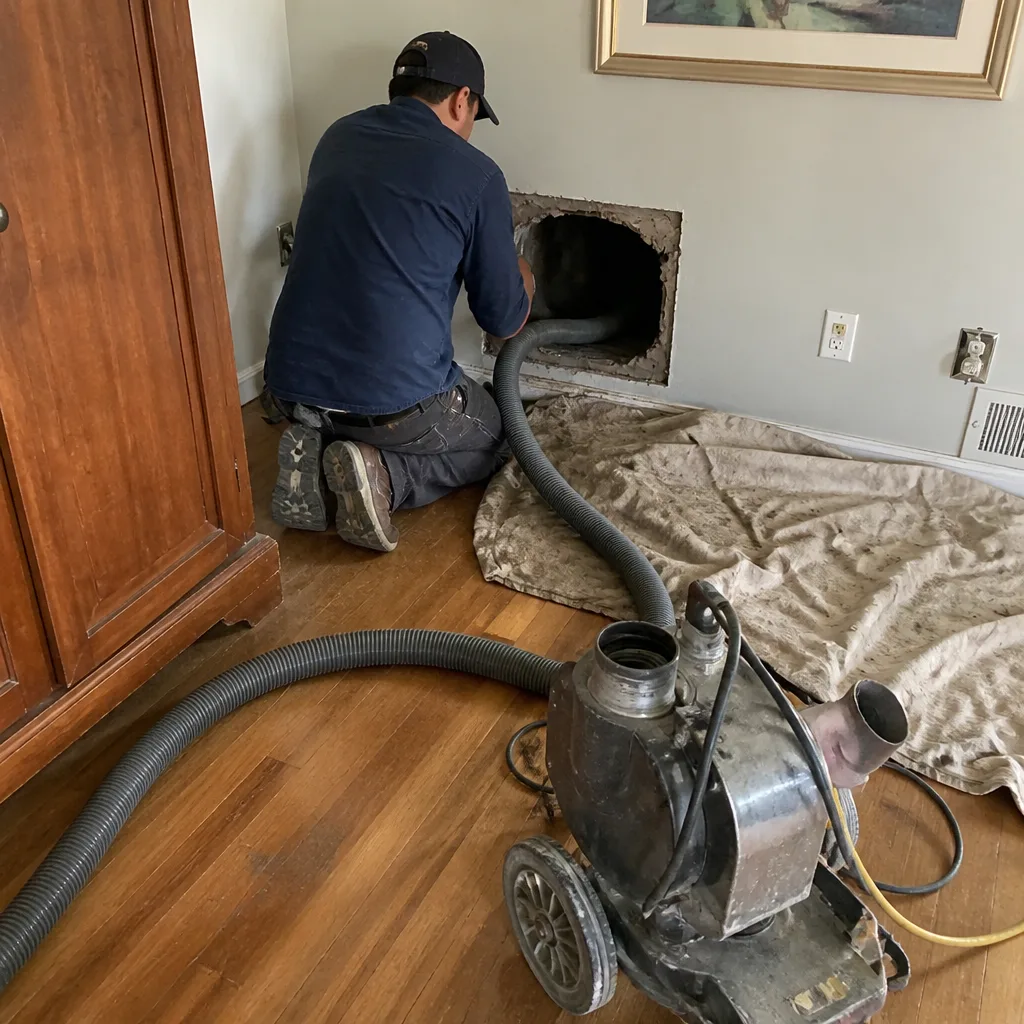
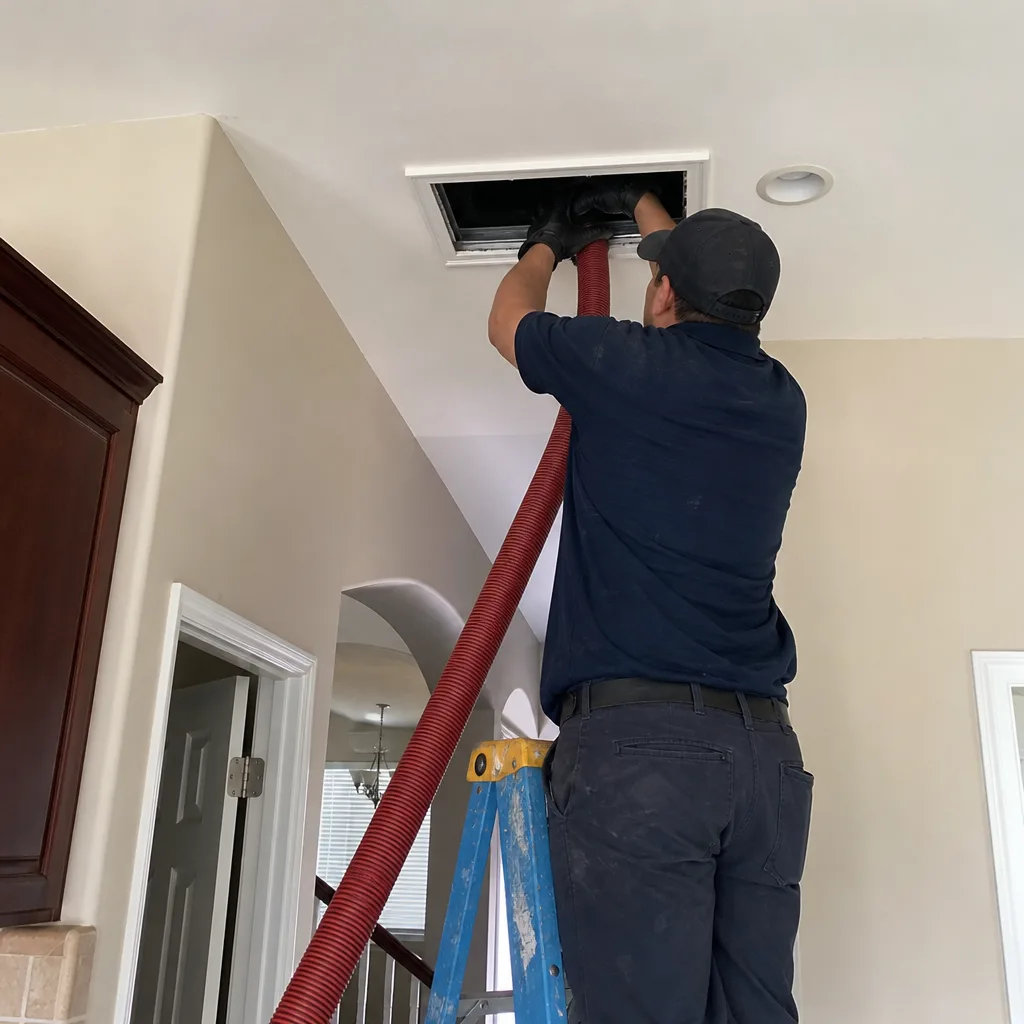
Negative-pressure containment. Professional cleaning systems run under negative pressure, meaning the air inside the duct system is extracted and filtered rather than pushed out into your living space. Equipment from brands like Abatement Technologies provides HEPA-level containment capability, which matters when the debris being dislodged includes fine particulate, mold spores, or pest droppings. Ask any contractor you’re considering whether their system runs under negative pressure and what level of filtration it provides. This is not a niche technical detail; it’s the difference between cleaning your ducts and redistributing the contents of your ducts through your living room.
Post-job walkthrough. After the cleaning, the contractor should walk you through the work: which access points were cut and where, what was removed, what the before/after images show, and any issues discovered during the job. Cracks in ductwork, disconnected runs, or evidence of pests are common findings in older Cupertino homes, and a good contractor surfaces these without turning them into high-pressure upsell moments. If an air duct repair in Cupertino is genuinely needed, that conversation should be evidence-based and pressure-free.
Common Mistakes to Avoid
- Comparing quotes on price alone. A $99 vent vacuuming and a $550 full-system cleaning are not the same product. Compare scope first, then price. If the scope descriptions differ, the prices will differ, and the cheap one is not the better deal.
- Assuming every vent defines the system size. Vent count is part of the equation, but the main trunk, return side, and blower compartment are where the real contamination lives. Many low-price quotes exclude these areas entirely.
- Skipping the dryer vent because it’s “fine.” Dryer vent fires are one of the leading causes of residential home fires in the United States, and Cupertino homes with longer vent runs from interior laundry rooms are at higher risk. A $100-ish add-on is cheap insurance compared to the alternative.
- Trusting photographic “proof” without context. Every duct system looks dirty on camera. The question is whether the contractor can show before and after images from the same location, cleaned to a visible difference. A photo of a dusty duct is not evidence that a cleaning is needed.
- Falling for the “sanitizer” package without a specific rationale. If the contractor can’t name the contaminant being treated and the active ingredient doing the treating, the sanitizer package is a margin item. Mold is addressed by remediation, not fogging.
- Treating duct cleaning as a one-time purchase. Duct systems re-accumulate debris as fast as the HVAC runs. In Cupertino’s climate, a 3 to 5 year interval is reasonable for most homes, shorter for households with pets, allergy sufferers, or recent renovation work.
- Not asking about the equipment before booking. The tool defines the outcome. Portable consumer vacuums cannot move enough air to clean a trunk line. Professional rigs from manufacturers like Rotobrush and Nikro are the industry standard for a reason.
When to Call a Professional
Duct cleaning is not a DIY job. The equipment needed to agitate and extract debris from deep inside a duct system costs more than the service itself, and the training required to do it without damaging the ductwork or contaminating the living space is not something YouTube can provide. Some scenarios make the call especially clear.
If you’ve purchased a Cupertino home and the previous owner’s maintenance records are thin, schedule a cleaning before you move furniture in. If you’ve completed a remodel without sealing off the HVAC system, construction dust is in your ducts. If someone in the household has unexplained allergy symptoms or respiratory irritation that worsens when the system runs, contaminated ducts are worth investigating. If you can see visible dust buildup on register covers or smell a musty odor when the system cycles on, the system needs attention. If your dryer takes longer than one cycle to dry a normal load, lint accumulation in the vent is the likely cause.
Duct Cleaning Cupertino offers free estimates in Cupertino. Call (877) 542-8668 to schedule an inspection, or use the form on this page to request a callback. We’ll assess your system, tell you what’s actually needed, and quote a flat rate for the full scope before any work begins.
Frequently Asked Questions
A legitimate full-system air duct cleaning in Cupertino costs between $400 and $700 for a typical single-family home, with larger homes or heavily contaminated systems reaching $800 or more. Low-price offers under $250 almost always exclude the main trunk line, return air side, and blower compartment. Call (877) 542-8668 for a free estimate based on your specific system.
Cheap quotes typically cover only supply registers and visible vent openings, not the full air path. The main trunk, branch runs, return side, and blower compartment are where the significant debris accumulates, and cleaning them properly requires professional-grade equipment like Rotobrush or Nikro systems. A $99 special and a $550 full-system quote are not the same service with different margins; they are different scopes of work.
In Cupertino’s climate, with year-round HVAC usage and seasonal wildfire smoke particulate, a professional cleaning every 3 to 5 years is a reasonable interval for most homes. Households with pets, allergy sufferers, or recent renovation work may need more frequent cleaning. If you’ve never had your ducts cleaned and your home dates to the 1970s or earlier, the first cleaning is overdue.
The deals exist, but the whole-house scope does not. A $99 special typically covers register removal, vacuuming of the visible boot, and reattachment. That’s about 45 minutes of work. The main trunk line, branch runs, return air side, and blower compartment are not included. If a deal sounds too good to be true, read the scope of work. That’s where the exclusions live.
Request before-and-after photo or video documentation from inside the ducts, captured with a camera inspection system. A professional contractor using proper equipment can show you the interior of your trunk line and branch runs before and after cleaning. If a contractor cannot provide this documentation, you have no way to verify that the work was completed, and that’s a reason to find a different contractor. Call (877) 542-8668 for a quote from a team that documents every job.
No. Dryer vent cleaning is a separate service with separate equipment, and it’s typically priced as an add-on in the $80 to $150 range. We recommend it as a bundled service during any duct cleaning because lint accumulation is a fire hazard, and the rotary brush systems used for dryer vents are purpose-built for that specific task. Our dryer vent cleaning in Cupertino service uses dedicated equipment, not improvised duct tools.
The Bottom Line
Air duct cleaning in Cupertino is a service where the lowest price and the best value rarely align. The real cost of a legitimate full-system cleaning falls between $400 and $700 for most homes, with the variance driven by system size, contamination level, and whether access points are needed. The best defense against overpaying or under-scoping is understanding the pricing model, reading the written scope of work, asking about the equipment, and requiring before-and-after documentation. A professional-grade job leaves you with documented results and a system that moves clean air, not just a receipt and a dust-free register cover.
Written by the team at Duct Cleaning Cupertino, serving Cupertino since 2015. Explore more guides & resources on keeping your home’s air clean.
See the difference
 Before
 After
 Before
 After
 Before
 After