
Last updated November 2, 2026
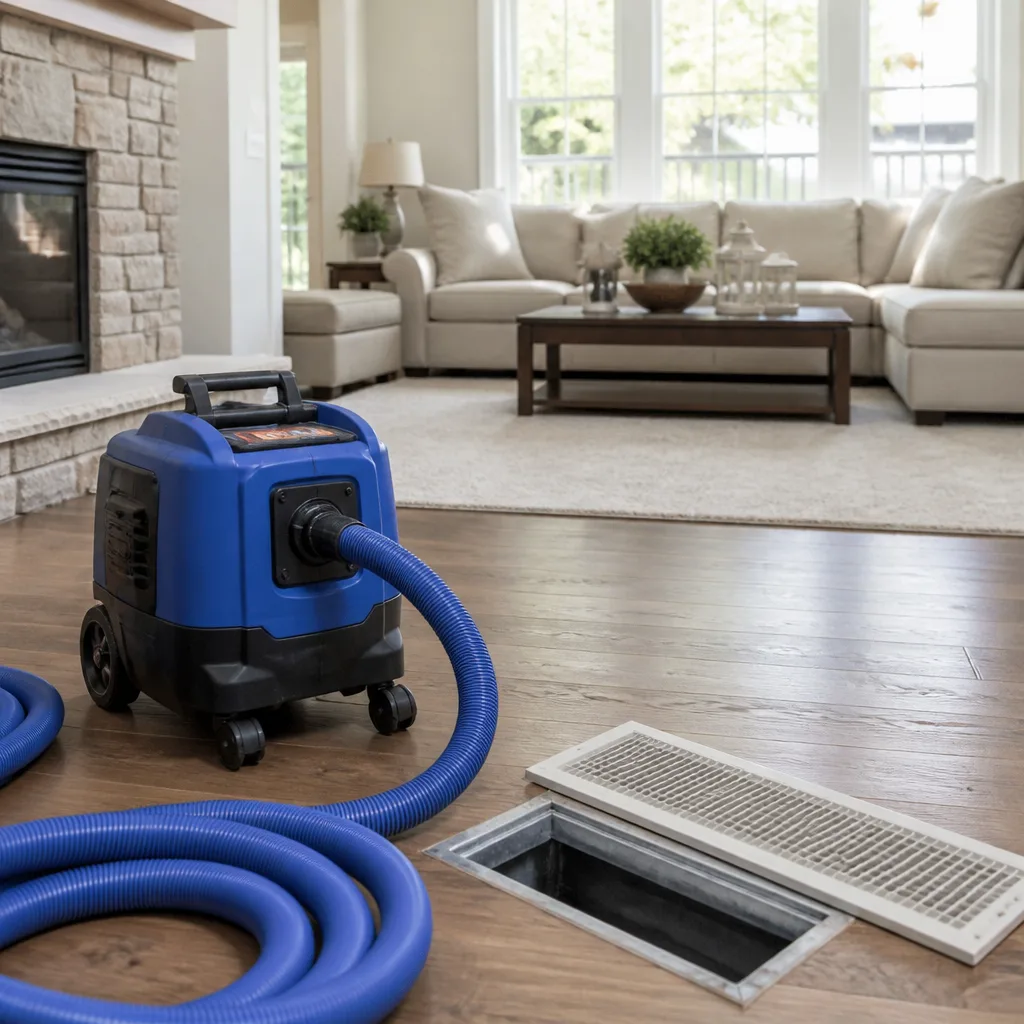 Whole-home duct cleaning
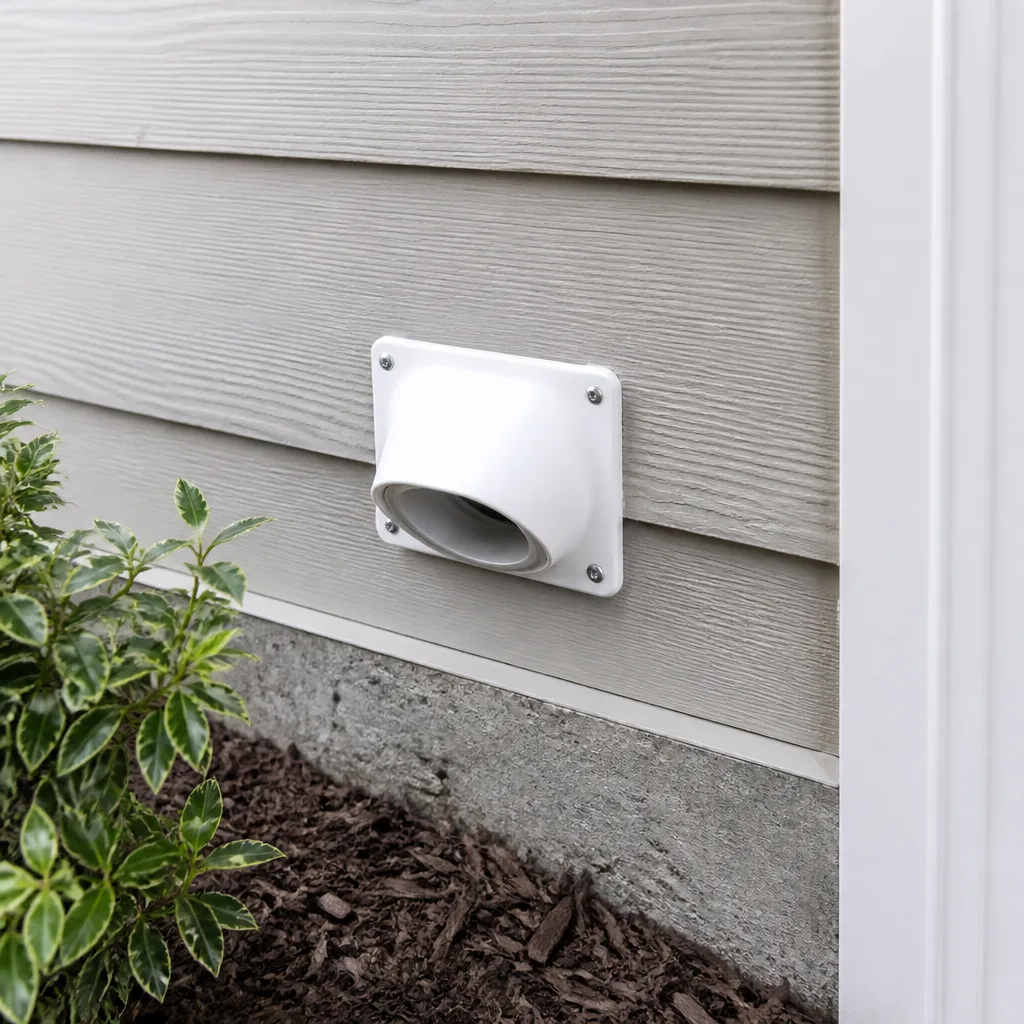 Dryer vent cleaning
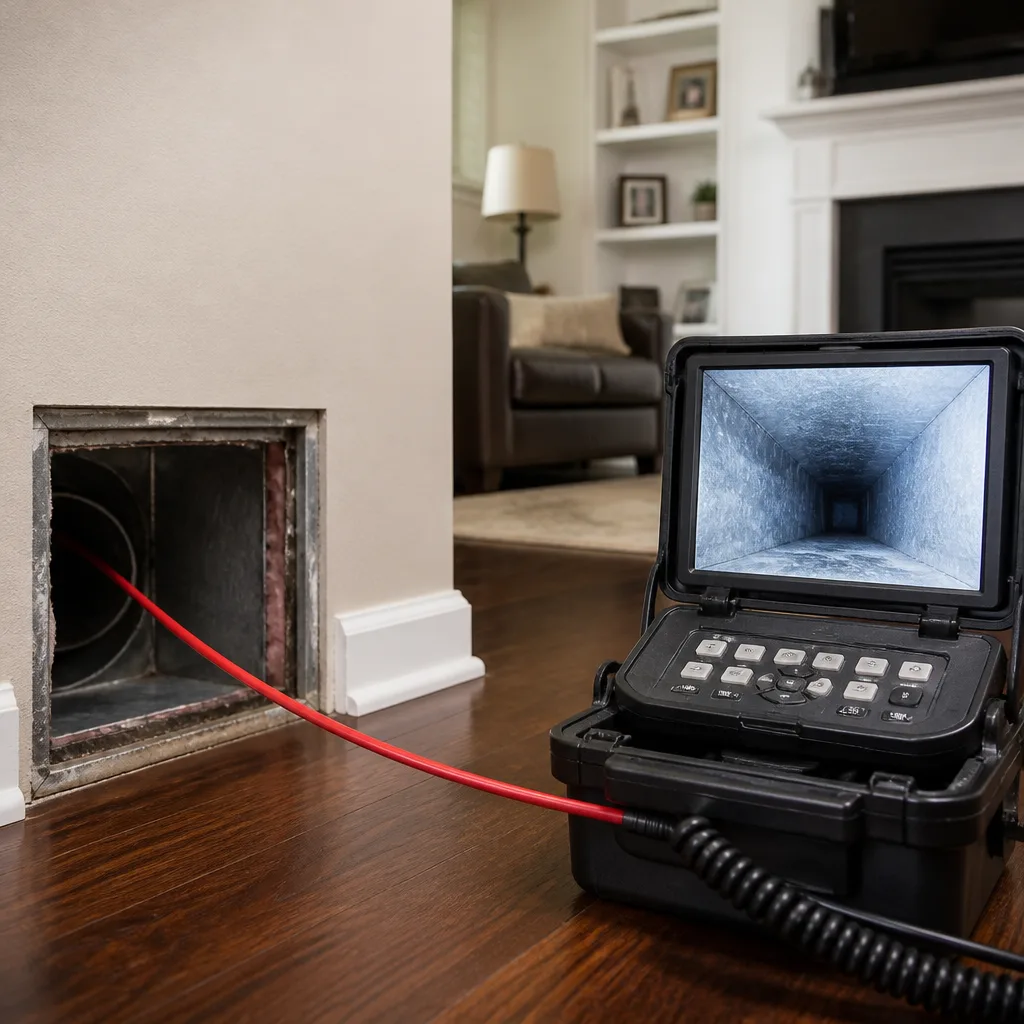 Camera inspection
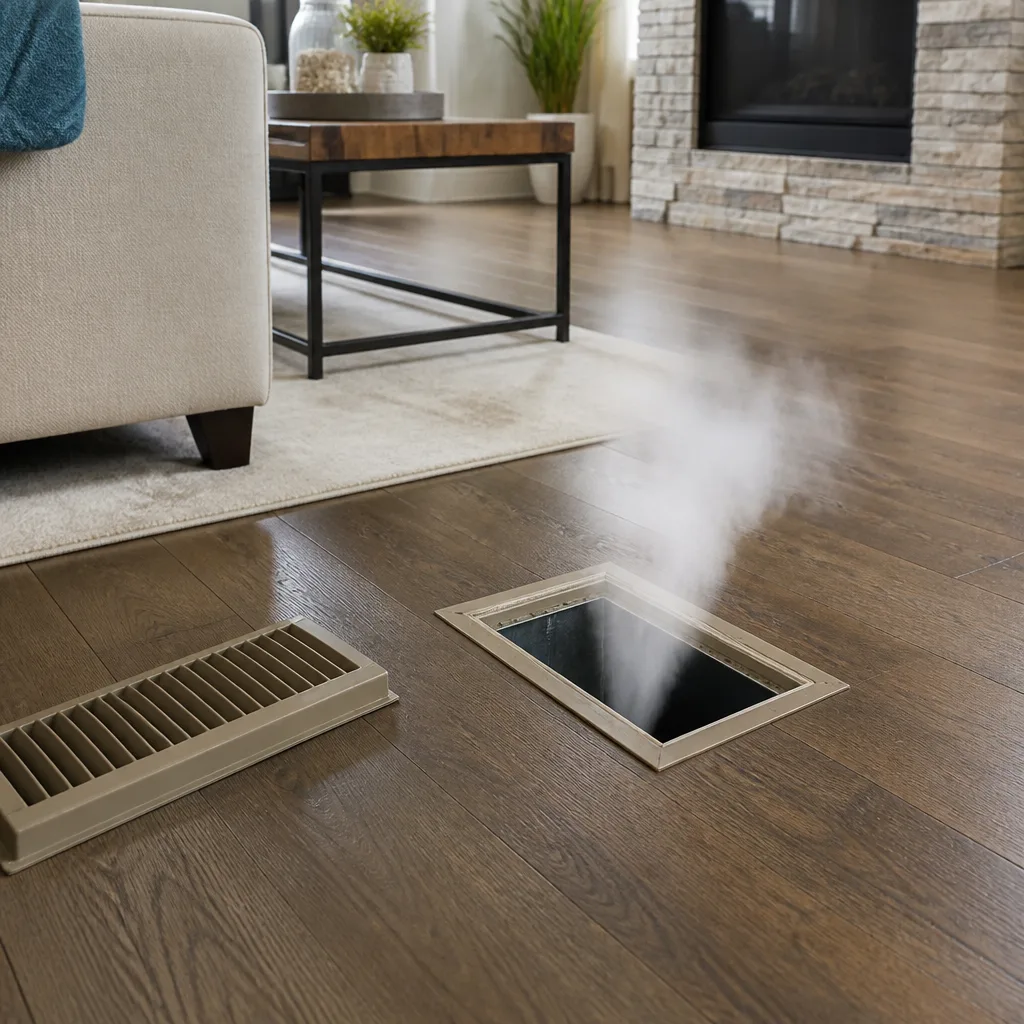 Sanitizing & deodorizing
Whole-system duct and dryer vent check with before-and-after photos - you see exactly what came out of your vents
That "$99 whole-house special" is a bait ad - the real number appears once they are in your hallway, or the "clean" is a shop-vac at the register. We photograph the inside of your ducts before and after instead.
Air Duct Cleaning Permits, Codes & Inspections in CA: What You Need to Know
Most Cupertino homeowners assume any work done inside their HVAC system requires a stack of permits and a parade of inspectors. The reality is more nuanced, and honestly, more interesting. Plain air duct cleaning, the kind that removes years of accumulated dust, pet dander, and construction debris from your ductwork, sits in an unregulated gray zone in California. No permit. No inspection. No state license specifically for the cleaning itself. But the moment work edges into duct modification, repair, replacement, or mold remediation, the legal landscape shifts. This guide walks you through exactly where those lines are drawn, what the California Mechanical Code says, how Santa Clara County approaches enforcement, and how to make sure whoever works on your Cupertino home isn’t quietly doing regulated work without the credentials to back it up. For related reading, see our Air Duct Cleaning Warning Signs: A Cupertino Homeowner’s Reference Guide.
Quick Answer
Routine air duct cleaning does not require a permit anywhere in California, including Cupertino and Santa Clara County. However, any work that modifies the duct system – replacement, repair, spray-applied sealing, encapsulation, or mold remediation inside the ducts – typically requires either a building permit, a licensed HVAC contractor (C-20 or C-38 classification), or both. The line between cleaning and regulated work is crossed more often than most homeowners realize, usually when a cleaning technician discovers damage or contamination and proposes a fix.
Styles & brands we work with
- Whole-home duct cleaning
- Dryer vent cleaning
- Camera inspection
- Sanitizing & deodorizing
Table of Contents
- Do You Need a Permit for Air Duct Cleaning in California?
- What the California Mechanical Code Actually Says
- When a Licensed Contractor Becomes Legally Required
- Mold in Ductwork: The Health and Safety Code Trigger
- Duct Sealing and Encapsulation: The Regulatory Words That Change Everything
- Santa Clara County and Cupertino: Local Amendments and Enforcement Reality
- How to Verify a Contractor’s License Category Before Work Begins
Do You Need a Permit for Air Duct Cleaning in California?
No. Straight duct cleaning, the process of agitating and extracting debris from the interior surfaces of your HVAC ductwork using negative-pressure equipment, is not a permit-required activity under any California building code. This holds true in Cupertino, across Santa Clara County, and throughout the state. The California Residential Code and California Mechanical Code simply do not address duct cleaning as a construction activity, because nothing is being built, altered, or structurally changed.
What this means practically: a company can show up at your Cupertino home with a Rotobrush or Nikro system, run the agitation and extraction process through your supply and return ducts, and complete the work without ever contacting the city’s building department. That’s entirely legal. The service falls under maintenance, not construction.
But here’s where it gets tricky. During a routine cleaning, you might learn that your ducts are in worse shape than expected. Cracked sections. Disconnected joints. Rust-through in the plenum. Mold growth that cleaning alone won’t solve. If the technician recommends fixing those issues, that work is no longer cleaning. That’s repair or replacement, and those activities live in a different regulatory universe. Many Cupertino homeowners only discover this distinction mid-project, when a simple cleaning quote suddenly becomes a repair proposal with permit implications. For help identifying issues early, read our Air Duct Cleaning Troubleshooting: Common Problems and How to Fix Them. Knowing the line before the van shows up saves you from making decisions under pressure.
What the California Mechanical Code Actually Says
The California Mechanical Code (CMC), specifically Chapter 3, governs the installation, alteration, and repair of HVAC systems and ductwork throughout the state. The CMC is adopted by reference into Title 24 of the California Code of Regulations, and municipalities like Cupertino enforce it through their local building departments. Under the CMC, any alteration to a duct system – changing its configuration, replacing sections, adding new runs, or modifying airflow characteristics – constitutes regulated work requiring a permit issued by the local authority having jurisdiction.
Here’s the practical breakdown:
- Cleaning, inspection, filter replacement: No permit required. No license category triggered.
- Duct section replacement: Permit required. Must be performed by or under the supervision of a C-20 (Warm-Air Heating, Ventilating and Air-Conditioning) licensed contractor.
- Adding new duct runs or enlarging existing ones: Permit required. C-20 license required.
- R-6 or R-8 insulation retrofit on existing ducts: Permit required in most jurisdictions, including Cupertino, because it modifies the thermal envelope of the system.
- Spray-applied duct sealing (aerosolized sealant systems): This is the grayest area. The CMC classifies it as an alteration, and most California building officials now require a permit and a C-20 license for the contractor performing the work.
What surprises most homeowners is that the CMC doesn’t care how small the repair is. A two-foot section of crushed flex duct being replaced triggers the same permit conversation as a full system redesign. In practice, many small repairs happen without permits across Cupertino and the Bay Area. We’re not here to police that. But if a company tells you a permit isn’t needed for duct replacement work, they’re either misinformed or hoping you won’t check. Either way, the liability lands on the homeowner, not the contractor, when unpermitted work surfaces during a future home sale inspection.
When a Licensed Contractor Becomes Legally Required
California’s Contractors State License Board (CSLB) requires that any contractor performing HVAC work beyond cleaning hold a C-20 Warm-Air Heating, Ventilating and Air-Conditioning license. Some HVAC-related work also falls under C-38, Refrigeration, which covers cooling-specific components like evaporator coils and refrigerant lines. The distinction matters, because duct repair that touches only the distribution side of the system typically falls under C-20, while anything involving the condenser, coils, or refrigerant circuit requires C-38.
Here’s where Cupertino homeowners should pay close attention. A duct cleaning company, even a professionally equipped one using purpose-built Rotobrush or Nikro systems with Abatement Technologies filtration, is not required to hold a C-20 license to perform cleaning alone. That’s fine. The equipment, the training, and the methodology for cleaning fall outside the CSLB’s licensing categories. But if that same company recommends and performs a duct repair – say, reconnecting a fallen section under your crawlspace or replacing a crushed boot at a floor register – they’ve now performed work that California law reserves for C-20 license holders.
This is not a technicality. If an unlicensed contractor damages your system, the CSLB has limited recourse for you as a homeowner. If a licensed C-20 contractor causes damage, you have access to the CSLB’s complaint process and potential recovery through the contractor’s bond. The license exists as much for your protection as it does for regulatory compliance. Before you let anyone do anything to your ducts beyond cleaning, ask to see their license classification. If they can’t produce a C-20 for repair work, do not proceed.
Mold in Ductwork: The Health and Safety Code Trigger
This is the section that surprises most Cupertino homeowners. During a routine duct cleaning, our technicians sometimes find what we’ve come to expect in older Bay Area homes: dark, velvety patches on the interior of supply ducts, often near registers where condensation collects, or in the return plenum where warmer air spends time before being cooled. That’s microbial growth, and the moment it’s confirmed as mold, the service conversation changes.
California Health and Safety Code Section 17920.3 and the related mold remediation provisions set out specific requirements when mold is present in conditioning systems. The California Department of Public Health issued guidance in the early 2000s, and while mold remediation inside HVAC systems wasn’t subsequently codified into a standalone license category, several legal realities apply:
- Mold removal beyond surface cleaning: If remediation requires cutting out and replacing duct sections, that’s covered under the CMC permit requirements and the C-20 license mandate.
- Chemical or antimicrobial treatments inside ductwork: California restricts the application of biocides, fungicides, and antimicrobial coatings inside operational duct systems. The state has repeatedly cautioned against introducing chemicals into the air stream. Any company proposing chemical treatment inside your ducts should be able to cite EPA registration for the specific product and explain how residual chemical exposure will be managed.
- Workplace safety standards during remediation: If the mold contamination is extensive, Cal/OSHA standards for worker protection and containment kick in. That’s when you’ll see Abatement Technologies negative-pressure containment units being used, the same equipment restoration professionals run after water damage.
The practical takeaway for Cupertino homeowners: cleaning can remove surface mold, but it cannot restore ductwork that has been structurally compromised by microbial growth. If someone tells you a chemical spray will “kill the mold” without addressing the moisture source or replacing contaminated materials, you’re talking to someone more interested in a quick upcharge than a lasting fix.
Duct Sealing and Encapsulation: The Regulatory Words That Change Everything
Words matter in this industry, and two of them deserve special attention: sealing and encapsulation. Duct cleaning companies, especially ones performing a cleaning and finding minor leaks, will often propose “re-sealing” or “re-encapsulating” sections of ductwork. What those words mean in regulatory terms can vary dramatically, and Cupertino homeowners should ask the right questions before approving the work.
Duct sealing in the traditional sense means applying mastic, foil tape, or an aerosolized sealant product to close leaks in duct seams, joints, and connections. This is an alteration under the California Mechanical Code. It changes the performance characteristics of the system. Aerosolized sealing, where a mist of vinyl acetate polymer is pumped through the ducts and accumulates at leak points, is an increasingly popular retrofit, but it requires specialized equipment, proper containment, and – in most Bay Area jurisdictions – a permit and a C-20 license. The work alters the duct system’s integrity, even if the configuration remains the same.
Duct encapsulation is a different animal entirely. Encapsulation typically refers to applying a coating or liner to the interior of duct surfaces, often marketed as a solution for older fiberglass-lined ducts that are shedding particles, or as a mold remediation step. Encapsulation coatings are a more aggressive intervention than sealing. They add material to the air stream surface area, can affect airflow dynamics, and have been scrutinized by indoor air quality researchers for potential off-gassing. In California, interior duct coating with non-EPA-registered products is legally risky territory, and most legitimate HVAC contractors in Cupertino avoid it entirely, preferring replacement of compromised duct sections over coating them.
Here’s the real-world difference for a homeowner. A duct cleaning using a Rotobrush system clears debris from existing ducts. That’s maintenance. The same technician recommending “encapsulation” for the return plenum is proposing a building modification. Ask: “Is this work permitted through the City of Cupertino, and which license classification covers it?” If the answer is evasive, walk away.
Santa Clara County and Cupertino: Local Amendments and Enforcement Reality
Santa Clara County operates under the statewide California Building Standards Code, but the region has a history of enhancing energy-efficiency and air-quality provisions. The county’s reach codes, particularly around Title 24 energy standards and low-rise residential construction, have tightened HVAC-related requirements in recent years. Cupertino, as a charter city, enforces its own building codes through its Building Department, with inspection protocols that mirror county practices while adding some municipal specificity.
What does this mean for duct work in Cupertino specifically? A few things:
- Duct leakage testing on new systems: If you’ve replaced your HVAC system in Cupertino in the last decade, you probably already dealt with duct leakage testing as part of the permit finalization. The city requires verification that new duct systems meet HERS (Home Energy Rating System) standards for leakage. This doesn’t affect cleaning, but it establishes the city’s pattern of scrutinizing ductwork more closely than many other jurisdictions.
- Permit triggers on replacement: Cupertino follows the state’s position that any duct replacement beyond a simple like-for-like section swap is an alteration requiring permit review. The city’s building counter has historically been strict on this, partly because unpermitted attic work is a documented risk in the region’s older housing stock.
- Access issues: Many Cupertino homes built before 1990 have attic or crawlspace access challenges that complicate inspection. Permitted duct repair work means the inspection itself has to be feasible. Sometimes repair plans get adjusted simply because the inspector can’t physically access the finished work, which is a uniquely local consideration in neighborhoods like Monta Vista or the older ranch homes off Stevens Creek Boulevard.
The practical effect is that Cupertino homeowners walk a fine line. Maintenance work on ducts – cleaning, visual inspection, filter service – proceeds without municipal involvement. Repair and replacement work in Cupertino should go through the permit process, whether or not some contractors quietly avoid it. If a home sale is in your future, remember that Bay Area real estate transactions increasingly include HVAC and duct inspection contingencies, and unpermitted work has a way of showing up when a sharp-eyed inspector crawls the attic.
How to Verify a Contractor’s License Category Before Work Begins
If your duct situation has evolved beyond cleaning and into repair, replacement, or mold remediation, checking credentials takes ten minutes and can save you thousands later. The CSLB offers a free online license verification tool at cslb.ca.gov, and it’s searchable by license number, business name, or personal name. Here’s the sequence we recommend:
- Ask for the license number during the estimate. A legitimate C-20 or C-38 contractor has it printed on the business card and the estimate form. No license number on the paperwork is a red flag.
- Run the number through CSLB’s online database. Confirm it’s active, not suspended, and check the classification. Remember: C-20 for HVAC distribution work, C-38 for refrigeration-side work. If the license class doesn’t match the proposed work, that’s a problem.
- Check the bond and insurance status in the same database. The CSLB records the required contractor’s bond. Insurance information doesn’t live in the same place, so ask for a certificate of insurance directly. Workers’ compensation coverage matters if anyone will be on a ladder or under a crawlspace at your Cupertino home.
- Verify with the City of Cupertino building department if the work is permit-required. A phone call to the Building Division takes five minutes. Describe the proposed work. Ask if a permit is required. Get the answer from the source.
- Confirm the permit is pulled by the contractor. In California, the property owner or contractor can pull a permit, but homeowner-pulled permits for contractor-performed work is a pattern that puts liability on the homeowner. The contractor should pull the permit under their license.
One more thing worth knowing: a company that only does duct cleaning doesn’t need a C-20 license, and that’s not a mark against them. The equipment used for professional cleaning – Rotobrush and Nikro systems, for instance – is manufactured for this exact purpose and requires no special state licensing to operate. The license question only becomes urgent when the work crosses into modification territory. Know the difference, and you’ll know when to ask.
Common Mistakes to Avoid
- Assuming every duct company carries a C-20 license. Cleaning companies often don’t, and don’t need to. The mistake is letting one perform repairs under that assumption. Ask the classification question directly when repair work enters the conversation.
- Believing a chemical spray will solve mold in ducts. California restricts antimicrobial chemical application inside operational air streams, and no spray fixes the moisture source. In Cupertino’s climate, with cool nights and condensation-prone attics, moisture is always the root cause.
- Treating “duct sealing” as a maintenance task. Sealing is an alteration. If a contractor proposes it during a cleaning visit and doesn’t mention permits, that’s a compliance problem and a liability problem for you.
- Ignoring the home sale angle. Unpermitted duct work discovered during a buyer’s inspection in the Cupertino real estate market can stall a closing. The cost of doing it permitted is almost always less than the cost of unwinding it later.
- Trusting a license without checking the classification. A C-39 roofing contractor or a general building contractor may have a valid license but no HVAC-specific classification. The CSLB database tells you the category – check it.
- Skipping the city building department phone call. Cupertino’s Building Division will tell you directly whether a proposed repair needs a permit. Few homeowners make this call, and it’s the single cheapest verification step available.
See the difference
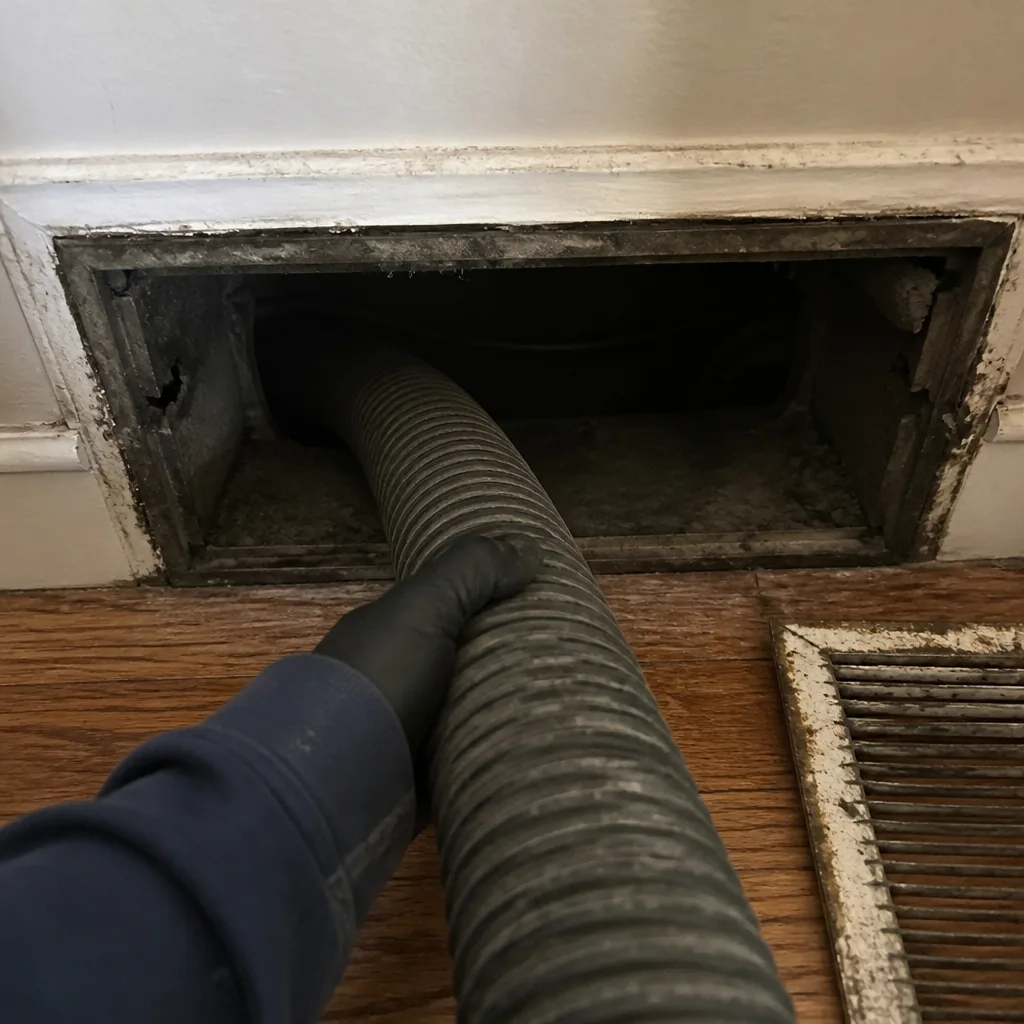 Before
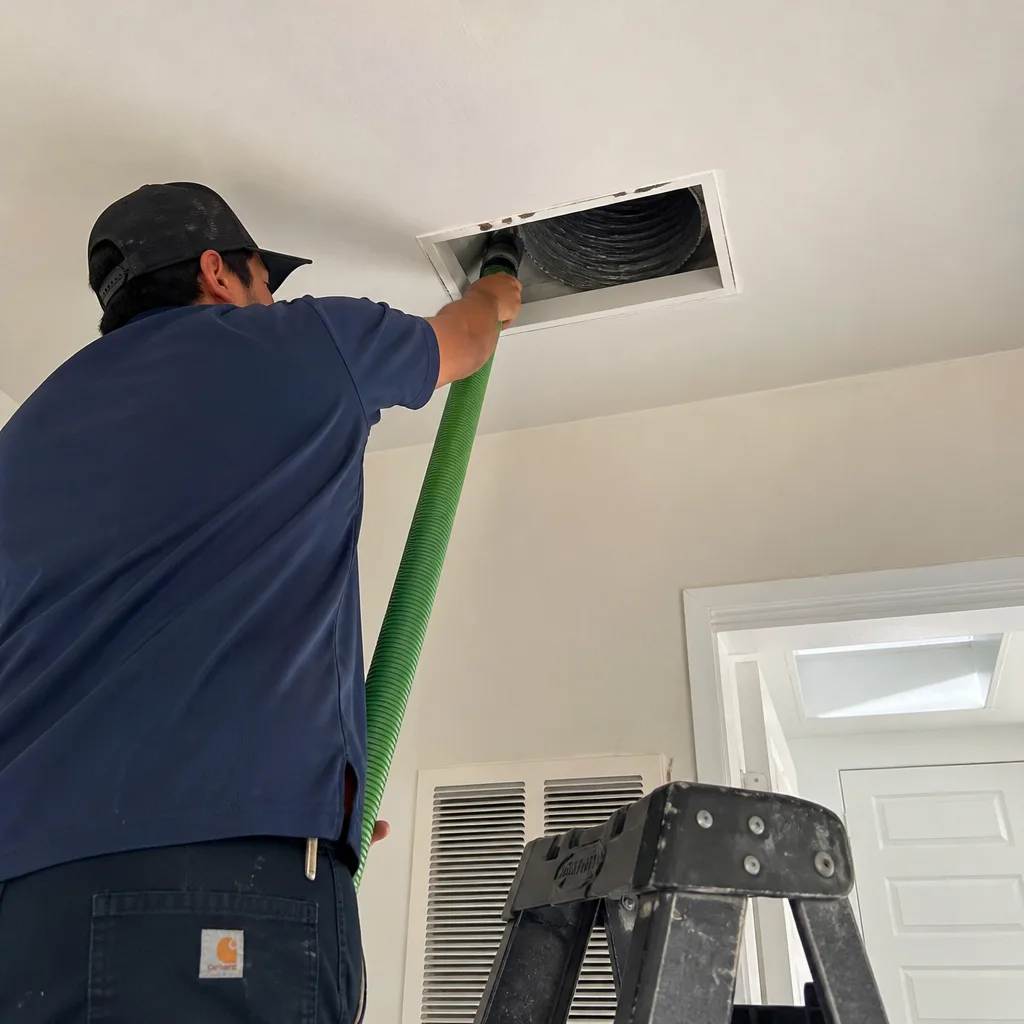 After
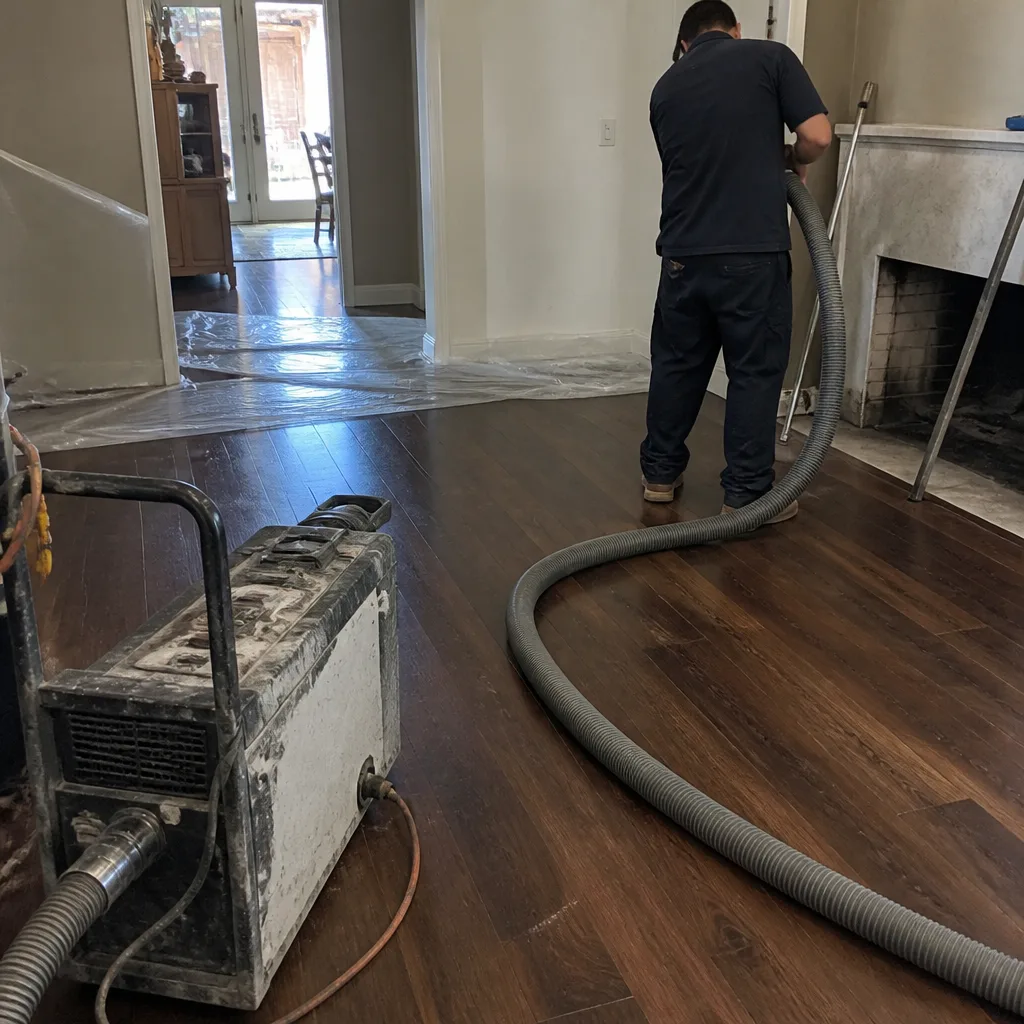 Before
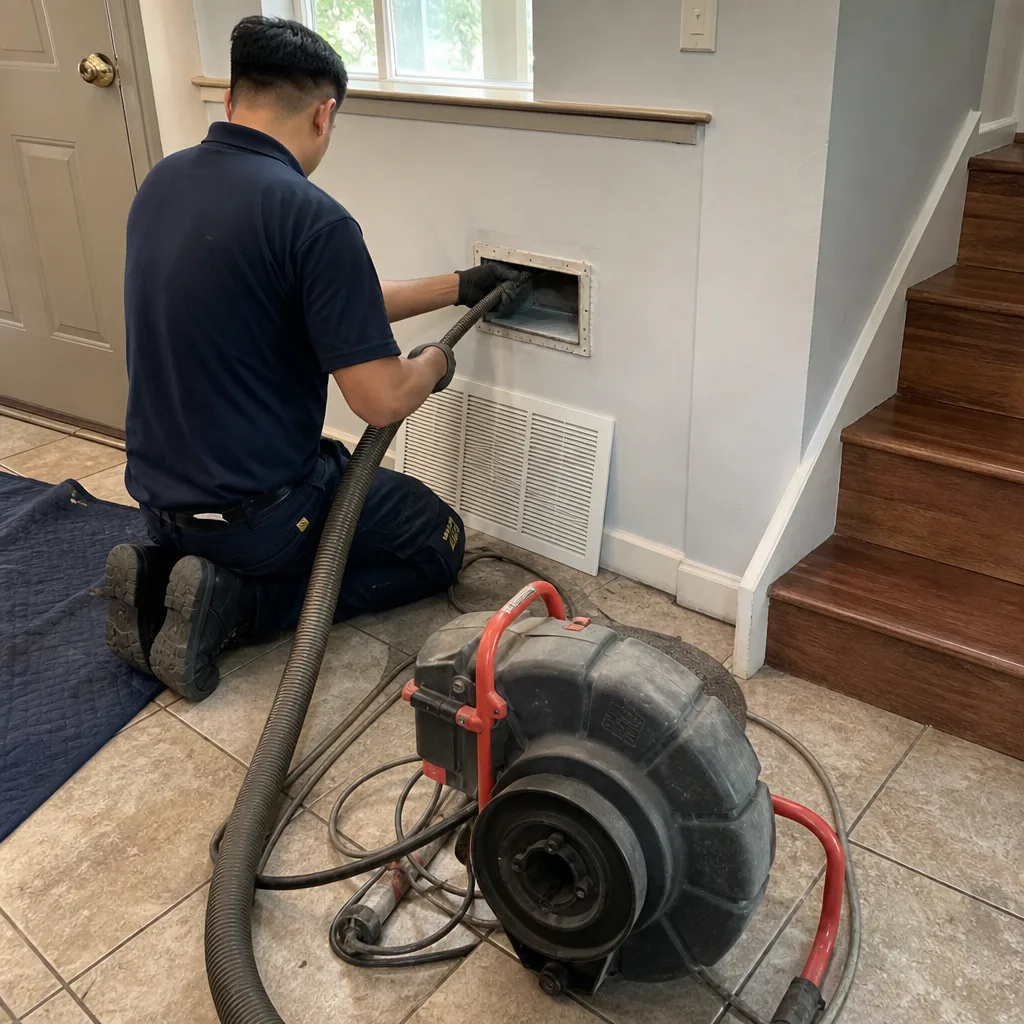 After
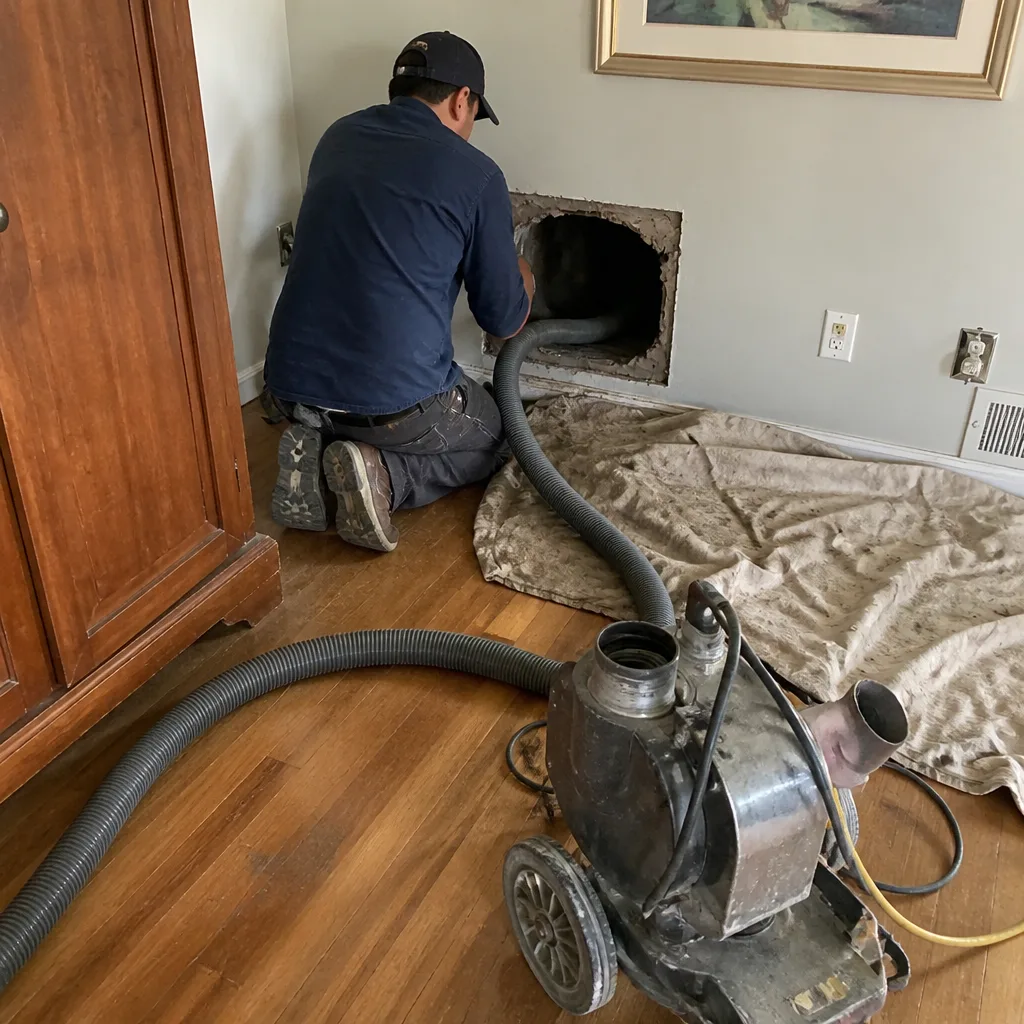 Before
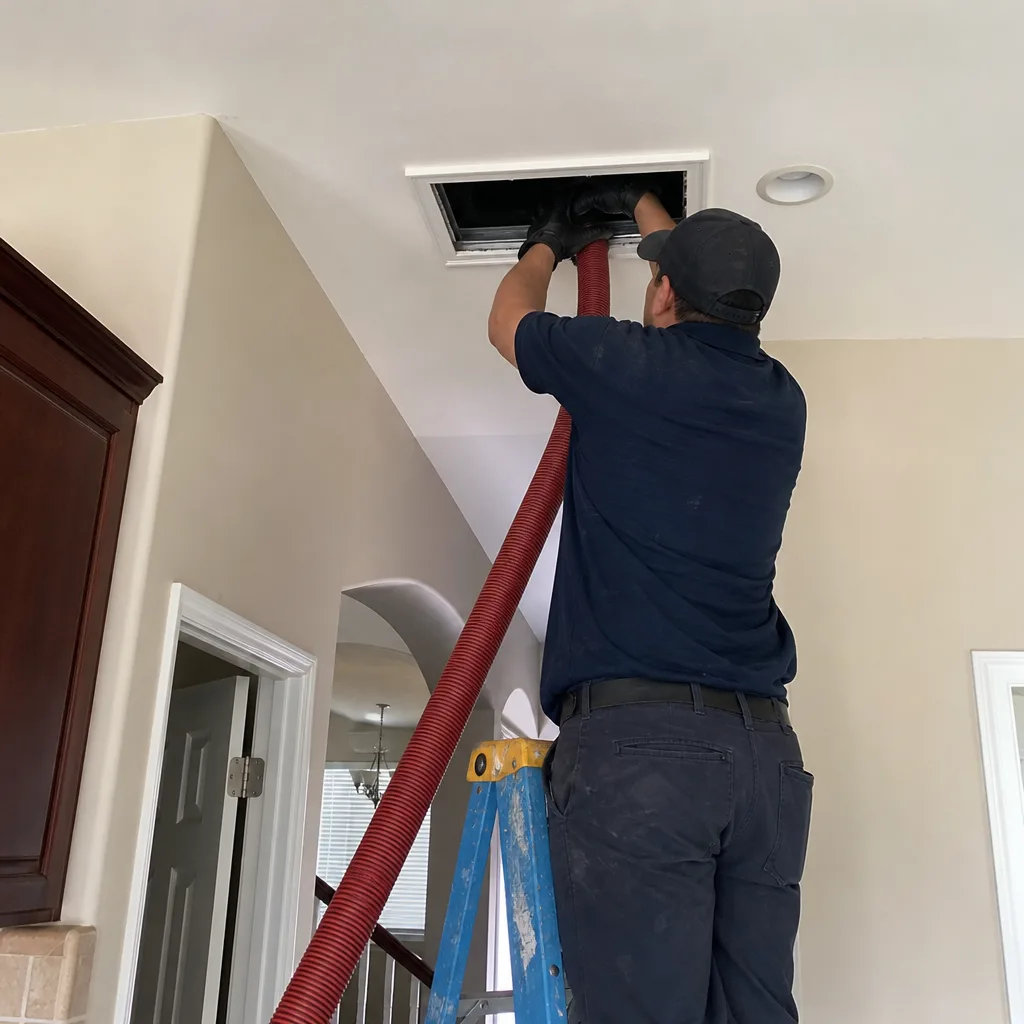 After
When to Call a Professional
If you’ve discovered visible mold on your vent covers or duct interiors that extends beyond surface-level staining, it’s time for a professional assessment. If your ducts have been damaged by rodents – a recurring issue in Cupertino neighborhoods adjacent to the foothills, where attic rodents are a known nuisance – repair work is likely needed before cleaning makes sense because a clean, disconnected duct is still a broken duct. If your system has never been cleaned and the home is ten or more years old, a professional-grade cleaning with a system like a Rotobrush or Nikro rig, combined with Abatement Technologies filtration, is the right starting point. And if a repair recommendation has been made during cleaning that crosses into permit territory, a licensed C-20 contractor’s assessment is necessary. Our team at Duct Cleaning Cupertino works throughout Cupertino and knows the local code environment well. We offer free estimates and are happy to walk you through what’s maintenance and what’s regulated. Call (877) 542-8668.
Frequently Asked Questions
No. Air duct cleaning itself is not regulated by the state of California. No permit is required, and no specific state license category exists for duct cleaning companies. The service falls under general maintenance, similar to carpet cleaning or pressure washing. The regulation begins when work moves beyond cleaning into repair, replacement, or modification of the duct system, at which point C-20 licensing and building permits come into play.
Whole-system air duct cleaning in Cupertino typically runs $400 – $900 for a standard single-family home, depending on the number of supply and return runs, accessibility, and the level of contamination. Homes with hard-to-reach crawlspace ducting, or attic configurations common in Monta Vista and the foothill neighborhoods, trend toward the higher end. So you can see the full pricing picture in one place, visit our air duct cleaning in Cupertino page with detailed service breakdowns, or call (877) 542-8668 for a direct quote.
Yes. Duct replacement, even a short section, is considered an alteration under the California Mechanical Code and requires a permit through the City of Cupertino. The work must be performed by a licensed C-20 HVAC contractor. If a company suggests replacing duct sections without a permit, stop the conversation and verify with the city’s Building Division.
Only if they hold a valid C-20 license. A cleaning company operating without a C-20 is legally permitted to clean but not to repair, replace, or alter duct systems. Before approving any repair, ask for the license number and verify the classification through the CSLB online database. The distinction protects you from unlicensed work and protects your recourse if something goes wrong.
Any company using professional-grade equipment should be able to provide visual proof: before-and-after photos of your duct interiors, taken through access points opened during the cleaning. Equipment like Rotobrush and Nikro systems with onboard cameras capture what the ducts look like before agitation and after extraction. If a company cannot show you this documentation, the burden of proof for a job completed sits unanswered. Our Duct Cleaning Cupertino home page describes the documentation we provide with every job, or call (877) 542-8668 to discuss what to expect.
Every 3 – 5 years is the standard interval for most Cupertino homes, though homes with pets, recent renovations, or residents with respiratory conditions may benefit from cleaning every 2 – 3 years. The local climate contributes: Cupertino’s dry summers generate fine dust that settles into ducts, while cool winters push systems to run more frequently, drawing in particulate matter. If you haven’t had your system inspected since moving in, consider an evaluation as part of a broader home maintenance baseline.
Duct cleaning addresses the HVAC system’s supply and return ductwork – the passages that move heated and cooled air through your home. Dryer vent cleaning addresses the dedicated exhaust line that carries lint, heat, and moisture from your clothes dryer to the exterior. The equipment, the methodology, and the safety concerns are different. Lint blockages are a leading cause of residential dryer fires, which is why dryer vent cleaning in Cupertino should be done annually and treated as a fire-safety service, not an add-on. If you’re unsure which service your situation calls for, call (877) 542-8668 and we’ll help you sort it out.
If your inspection reveals disconnected sections, crushed runs, rodent damage, or mold contamination that requires material removal, duct cleaning alone won’t solve the problem. The pathway is different: a licensed C-20 contractor performs the repair, often with a permit in Cupertino, and cleaning should follow the repair work to clear debris generated during the process. Our air duct repair in Cupertino page explains the typical repair scenarios we see in local homes and what to expect in terms of process and timeline.
The Bottom Line
Air Duct Cleaning services in Cupertino sit in a comfortable regulatory gray zone: unpermitted, unlicensed, and perfectly legal as long as the work remains genuinely limited to cleaning. The moment damage is discovered and repair or replacement is proposed, you’ve crossed into territory where California’s mechanical code, contractor licensing law, and Cupertino’s permitting process all apply. Know the line. Ask the classification question. Verify license numbers before approving work. And when the work is just cleaning, hire someone with professional-grade equipment that does the job without requiring a permit at all. The distinction isn’t complicated once you see it clearly, and now you do.
Written by the team at Duct Cleaning Cupertino, serving Cupertino since 2015. Explore more guides & resources on our blog.