
Last updated November 2, 2026
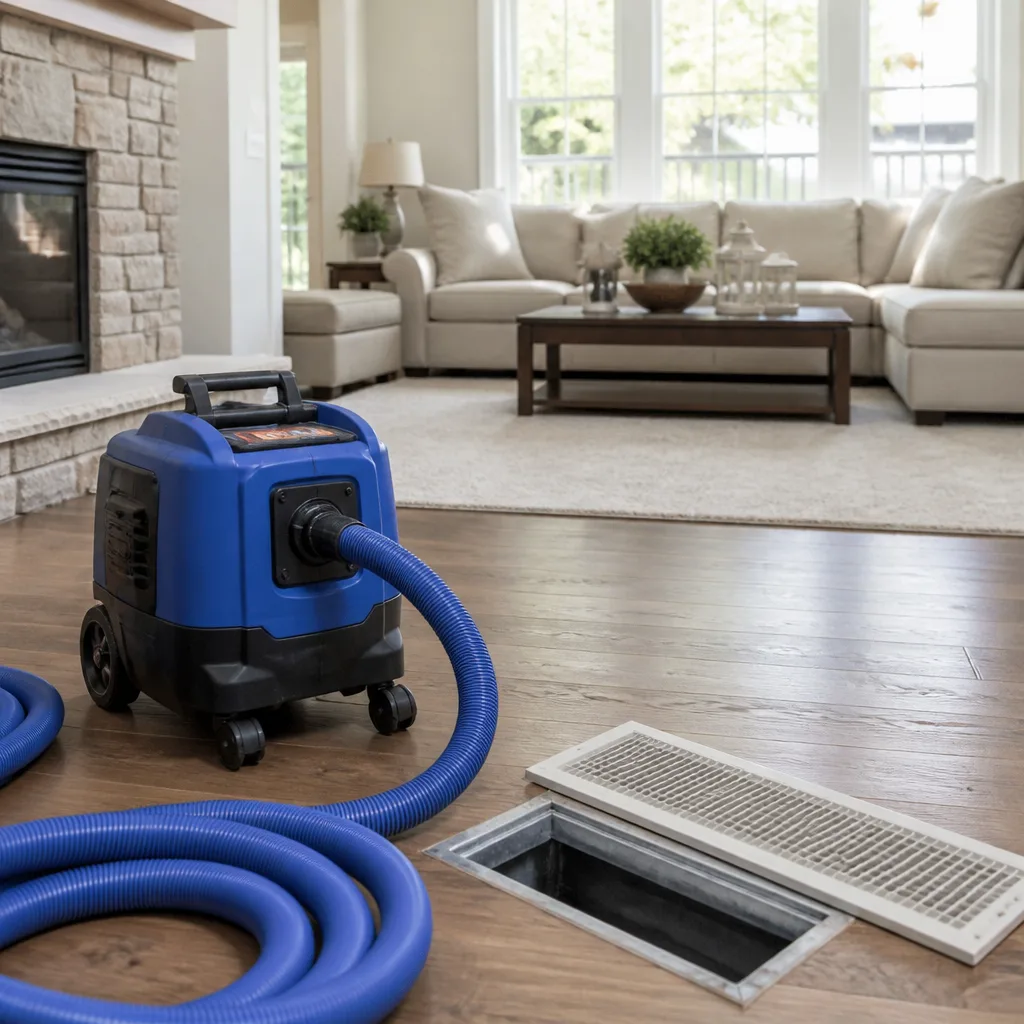 Whole-home duct cleaning
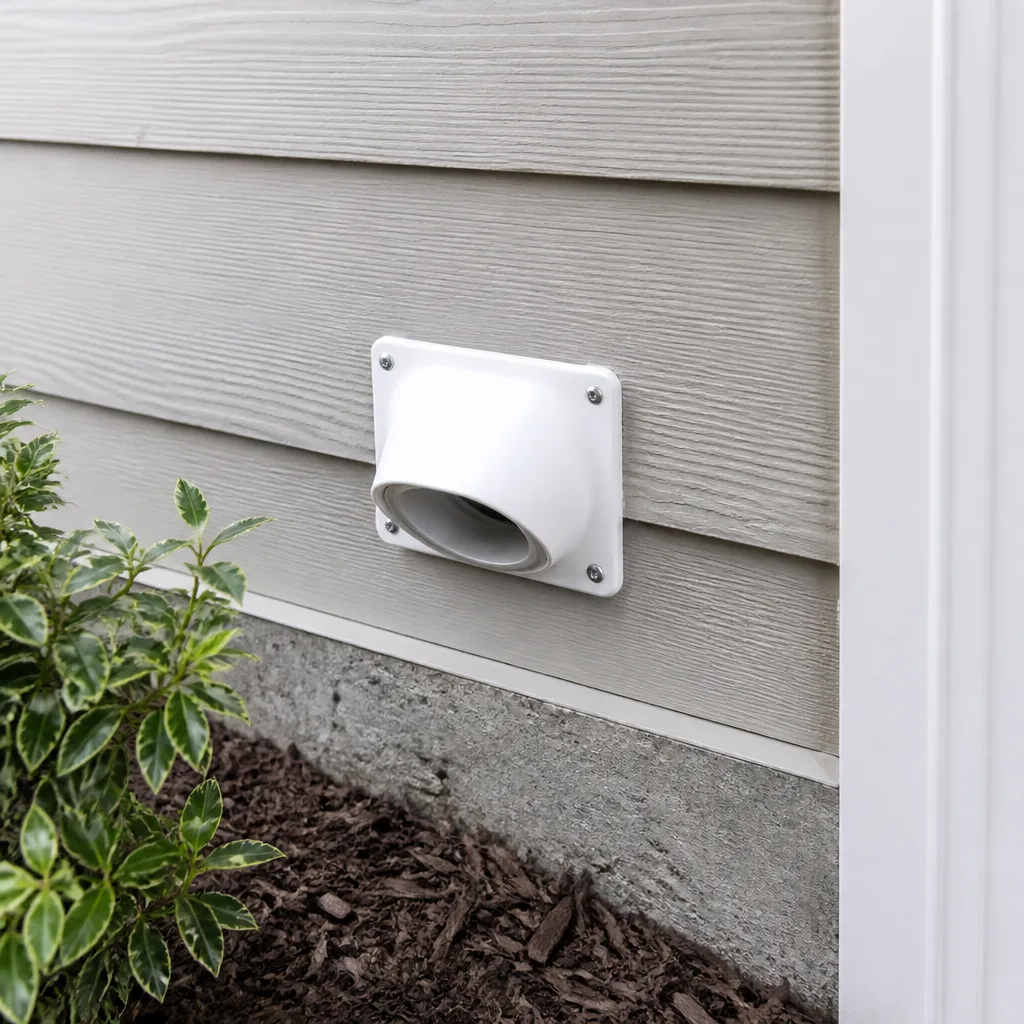 Dryer vent cleaning
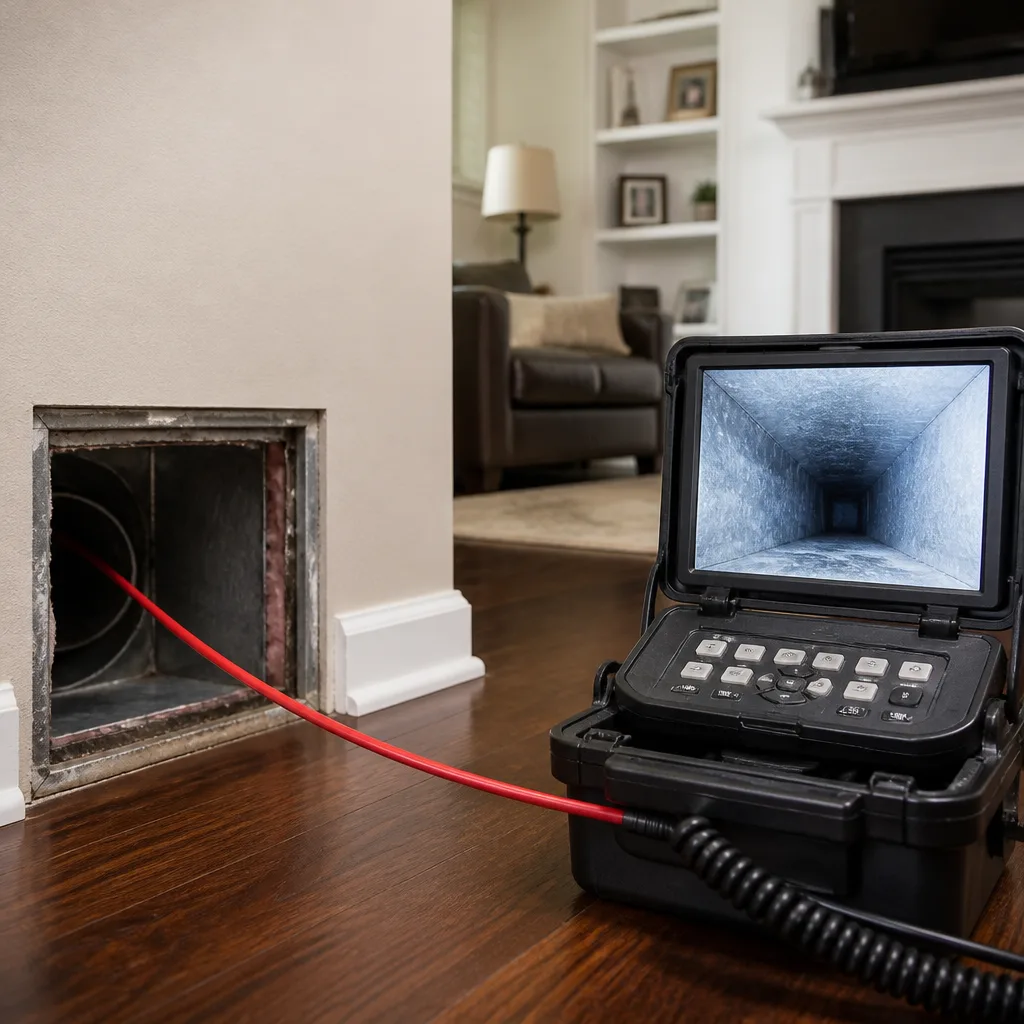 Camera inspection
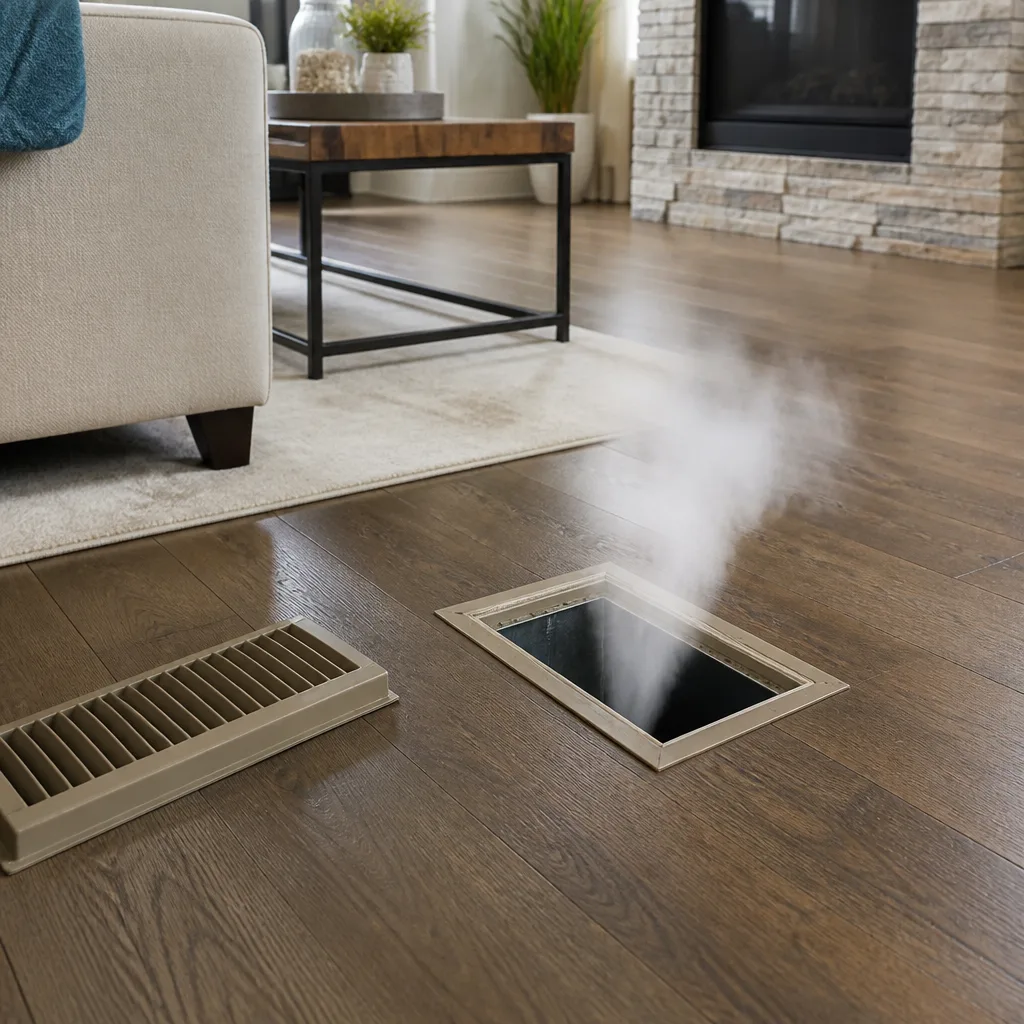 Sanitizing & deodorizing
Whole-system duct and dryer vent check with before-and-after photos - you see exactly what came out of your vents
That "$99 whole-house special" is a bait ad - the real number appears once they are in your hallway, or the "clean" is a shop-vac at the register. We photograph the inside of your ducts before and after instead.
Air Duct Cleaning Maintenance Checklist for Cupertino Homeowners
If your MERV-8 filter is clogged when the duct cleaner arrives, they’re pushing debris into a system that’s already under strain, and your ducts will look dirty again in half the time. That’s the problem with treating duct cleaning as a standalone fix. It’s one step in a maintenance sequence, and skipping the steps before and after it wastes most of the value. This checklist gives Cupertino homeowners the full sequence: what to do before the technician shows up, what to expect during the service, and what to do in the weeks and months after so the work actually holds. We’ve built this from years of working in Cupertino homes, where wildfire-smoke residue, construction dust, and older HVAC systems each create their own set of challenges.
Quick Answer
An effective air duct cleaning maintenance program in Cupertino has three phases: a pre-cleaning inspection that addresses filter condition, visible register buildup, and recent renovation or pest activity; a service-day checklist that clears access points and documents HVAC symptoms; and a post-cleaning routine that includes timely filter replacement, grille reinstallation checks, and first-run airflow observation. In Cupertino’s climate, we also recommend scheduling inspections after wildfire-smoke events and before the summer cooling season begins.
Styles & brands we work with
- Whole-home duct cleaning
- Dryer vent cleaning
- Camera inspection
- Sanitizing & deodorizing
Table of Contents
- Pre-Cleaning Checklist: What to Do Before Service Day
- The Day of Service: Your Step-by-Step Checklist
- Post-Cleaning Tasks: The First 72 Hours and Beyond
- Cupertino-Specific Calendar Triggers: When to Schedule Around Seasons
- Signs Maintenance Has Failed: When Re-Service Is Warranted Sooner
- Filter Replacement Schedule: The Foundation of Everything
- What You Can Safely Do Yourself, and What You Shouldn’t
- Common Mistakes to Avoid
- When to Call a Professional
- Frequently Asked Questions
- The Bottom Line
Pre-Cleaning Checklist: What to Do Before Service Day
Most of what determines whether a duct cleaning lasts six months or three years happens before the technician ever arrives. The condition of your system on service day directly affects how thoroughly the cleaning equipment can work. In Cupertino, where many homes run HVAC systems built in the 1980s and 1990s, pre-existing debris loads vary widely from one property to the next. A 40-year-old system that has never been cleaned presents a different starting point than a 10-year-old system with a diligent filter history.
1. Check and Replace Your Filter First
This is the single most important pre-cleaning step, and the one most often skipped. If your filter is loaded with dust when the technician arrives, the system is already operating under restricted airflow. The cleaning equipment will dislodge debris from the ducts, but a portion of it will be pulled back into the filter and the blower motor before removal. You want the technician working in a system that can breathe. A standard MERV-8 filter in a Cupertino home with moderate foot traffic should be replaced every 60 to 90 days. If you have pets, live near a busy arterial like Stevens Creek Boulevard, or kept windows open during wildfire season, plan on every 30 to 45 days. Replace the filter one to two days before your scheduled cleaning, not a month before and not the morning of. You want clean airflow during the service, but you also want the filter to have some runtime so you’re not introducing a manufacturing-dust variable into the equation.
2. Inspect Visible Register Buildup
Walk through every room and remove one or two vent covers. Look at the inside of the register boot, the metal or plastic transition piece that connects the duct to the grille. If you see a visible ring of gray or black dust caked around the edges, that’s a sign the ducts are carrying material that’s settling at exit points. Note which rooms show the heaviest buildup. This tells the technician where the problem areas are, and it helps you verify results after the cleaning. In Cupertino homes with forced-air heating and central air, the register boot is often the place where years of accumulated skin cells, pet dander, and textile fibers settle. A quarter-inch of buildup there means the main trunk lines likely hold far more.
3. Flag Recent Renovation or Pest Activity
If you’ve done any renovation work in the last two years, drywall dust, sawdust, and insulation particulate have almost certainly entered the return-air system. Cupertino’s steady stream of remodeled mid-century ranch homes means a lot of duct systems carry construction debris. The same goes for pest activity. Rodent or insect activity in an attic, crawlspace, or wall cavity often leaves droppings, nesting material, and pathways directly into ductwork. If you know or suspect either condition, tell the technician before work begins. This changes the cleaning approach. Contaminated material requires containment, not just removal, and the equipment used matters significantly. We use Abatement Technologies negative-pressure containment specifically because dislodged debris that escapes into living spaces creates more problems than it solves.
The Day of Service: Your Step-by-Step Checklist
Service day is not a spectator sport. A homeowner who prepares properly gets a more thorough cleaning and gives the technician the information needed to spot problems that are not on the work order. Here is the sequence we recommend for every Cupertino home.
- 1
Clear access to the furnace, air handler, and return grilles. The equipment closet or garage corner where your furnace lives should have at least three feet of clear space on all sides. Move stored boxes, bikes, seasonal gear, and anything leaning against the unit. In many Cupertino homes, the garage furnace shares space with Costco runs and holiday storage. Clear it the night before.
- 2
Remove fragile items from the work path. The technician will move a hose from the truck to your registers. Breakable decor, floor lamps, and loose rugs in that path should be moved. You don’t need to empty the house, just the corridor between the front door and the HVAC system, and around each register the technician will access.
- 3
Write down HVAC symptoms you’ve noticed. Uneven temperatures between rooms, a rattle when the system starts, musty smells that appear when the AC kicks on, dust that returns within days of cleaning surfaces. These are diagnostic clues. Writing them down means the technician can address them rather than guessing.
- 4
Plan for noise. Professional duct cleaning involves high-negative-air pressure and agitation tools. It’s not background noise. If you work from home, plan calls and meetings around the service window, or plan to be elsewhere.
- 5
Have your filter ready. The technician will likely recommend a fresh filter immediately after cleaning. Having a replacement on hand saves a trip to the hardware store and ensures the post-cleaning period starts with clean media. We work regularly with Honeywell and Aprilaire filtration systems, and the spec for your unit is printed on the filter frame itself.
Post-Cleaning Tasks: The First 72 Hours and Beyond
The 72 hours after a duct cleaning set the tone for everything that follows. You should notice a change immediately in how the system sounds and how the air feels. Here is what to do, and what to watch for, after the technician leaves.
First 24 Hours: Filter, Grilles, Airflow
Install the new filter if the technician didn’t already do it. This is non-negotiable: running a freshly cleaned system on an old filter reintroduces the exact debris you just paid to remove. Then, walk the house and check every vent grille. They should be seated flush, with no visible gaps. If any were removed for cleaning and reattached, make sure they’re not loose. Finally, run the system for at least 20 minutes. Listen for anything unusual, a new rattle, a whistle from a register, a vibration that wasn’t there before. Small adjustments are normal after ducts have been disturbed, but note anything persistent and report it to your technician.
First Week: Watch the Dust Pattern
For the first week, note how quickly surfaces accumulate dust. A properly cleaned duct system should deliver a noticeable reduction in dust fallout. You won’t stop dusting entirely, especially in Cupertino where warm, dry summers mean open windows. But if you’re seeing the same dust levels within seven days that you had before cleaning, something is off. It may mean the return air path is pulling dust from an attic or crawlspace, or that a filter is installed backwards, or that a duct seam has separated. Any of these warrants a call back to the service provider.
First 90 Days: Establish the Rhythm
Now that the ducts are clean, build the maintenance rhythm that keeps them that way. Set a recurring calendar reminder for filter inspection every 30 days. Mark the date 12 to 18 months out as a re-evaluation window for the next cleaning. And pay attention to any recurrence of the symptoms that triggered the cleaning in the first place. This is the difference between a one-time refresh and a system that stays clean for years.
Cupertino-Specific Calendar Triggers: When to Schedule Around Seasons
Cupertino’s climate is not like the rest of the Bay Area. The city sits in a weather band where warm, dry summer days can linger into October, and wildfire smoke from the Santa Cruz Mountains or the Diablo Range can blanket the valley for days or weeks at a time. That reality should drive your duct-cleaning calendar. Here is our recommended rhythm for Cupertino homeowners.
Post-Wildfire-Smoke Season Inspection
If wildfire smoke made its way into your home, even a fine layer of particulate has been pulled through the return air and deposited throughout the ductwork. That residue is not inert. It carries the same compounds you smelled when the sky was orange, and it recirculates every time the fan runs. We recommend a visual inspection of the ducts after any meaningful smoke event, even if you’re not due for a full cleaning. Pull a register grille, shine a light inside, and look for a film of gray or brown soot. If it’s there, a cleaning is warranted sooner than the calendar says. Homes near the Stevens Creek corridor and in the foothill-adjacent neighborhoods of Cupertino feel this more acutely during active fire seasons.
Pre-Summer Cooling Season Readiness
Before the first real warm week in May or June, think about what your AC has been doing all winter. In many Cupertino homes, the heating season is short and the AC sits unused from November to April. Dust settles in the ducts during that idle period. When the system kicks on for the first long cooling run of the year, it stirs that settled dust throughout the house. A pre-summer inspection, even just a filter check and a look at a few register boots, is a cheap insurance policy. Schedule full duct cleanings in late spring if you’re doing them on an annual or every-two-years schedule, so the system is at its cleanest right before the cooling season depends on it most.
Signs Maintenance Has Failed: When Re-Service Is Warranted Sooner
Sometimes a cleaning doesn’t hold. That’s not always the technician’s fault, and it’s not always the system’s. But there are specific signs that the maintenance interval between cleanings has broken down, and that a re-service is warranted before the calendar says so. Here is what we tell Cupertino homeowners to watch for.
- Dust returns to surfaces within days of cleaning. This is the clearest failure signal. If you can write your name on a bookshelf three days after dusting, something is pulling debris into the system faster than the system can handle. The cause is usually a leak in the return air path or a filter that’s the wrong size.
- Musty or stale odor returns within a month. A clean system that smells musty again quickly is telling you there’s a moisture source somewhere. In Cupertino, older homes with crawlspaces can develop condensation in duct runs during cool, damp mornings. The moisture feeds microbial growth that a cleaning can remove but only ventilation and sealing can prevent.
- Uneven temperatures between rooms persist after cleaning. Duct cleaning removes debris that blocks airflow. If one bedroom is still freezing in winter and hot in summer after the cleaning, the obstruction is structural, a crushed duct, a disconnected branch, a damper stuck closed. That’s an air duct repair in Cupertino issue, not a cleaning issue.
- You hear a rattle or vibration that wasn’t there before. A cleaning involves agitating the inside of ducts. If debris loosened but not fully extracted, or if a fitting was disturbed and not secured, the system will tell you. Noises that appear after a cleaning and don’t fade within a few days need a follow-up.
- Pest activity recurs in the attic or crawlspace. Any evidence of new rodent or insect activity near your ductwork is a reason to inspect. Pests will find their way back through the same gaps they used before. A cleaning will remove what they left behind, but the entry points need sealing to prevent recurrence.
If you’re seeing any of these signs, don’t wait for the next scheduled cleaning. The problem compounds. A call to a duct cleaning professional for a re-inspection is far cheaper than running a system that’s actively degrading your indoor air quality.
See the difference
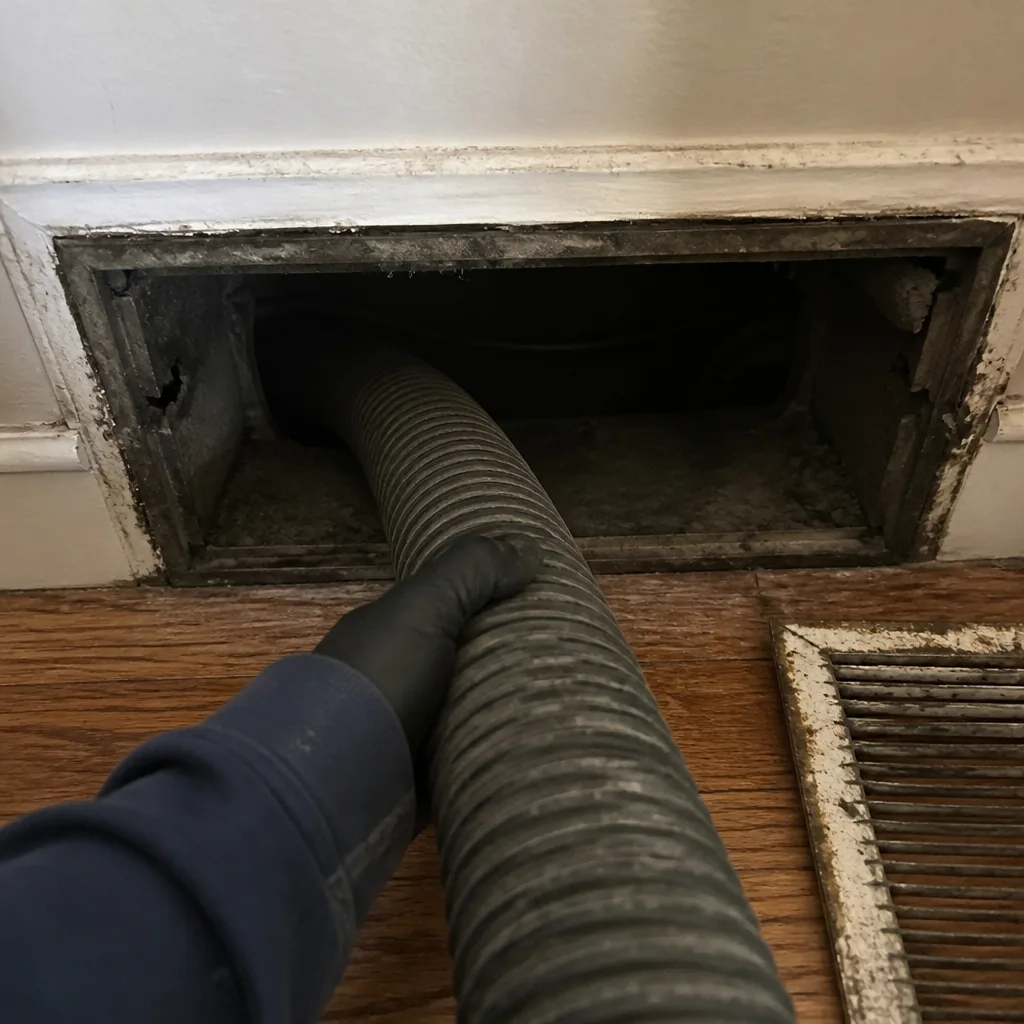 Before
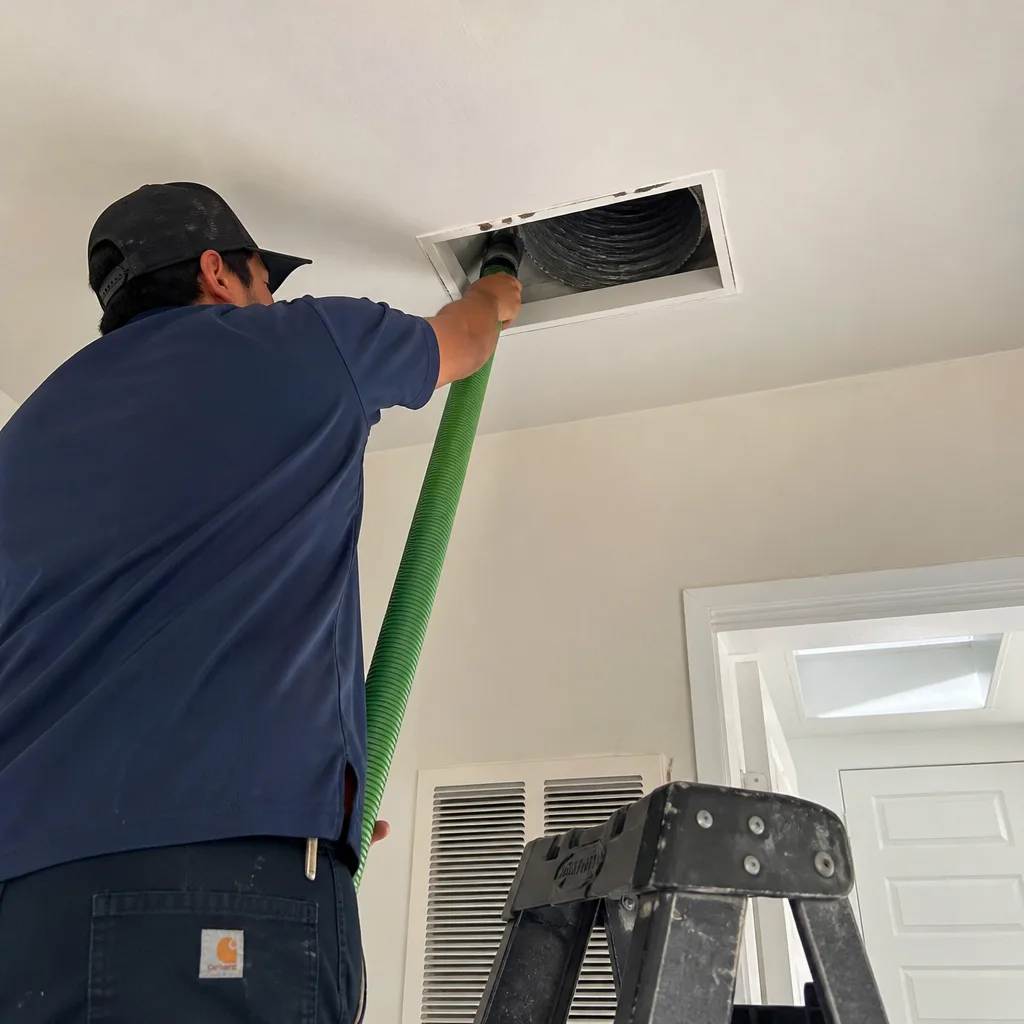 After
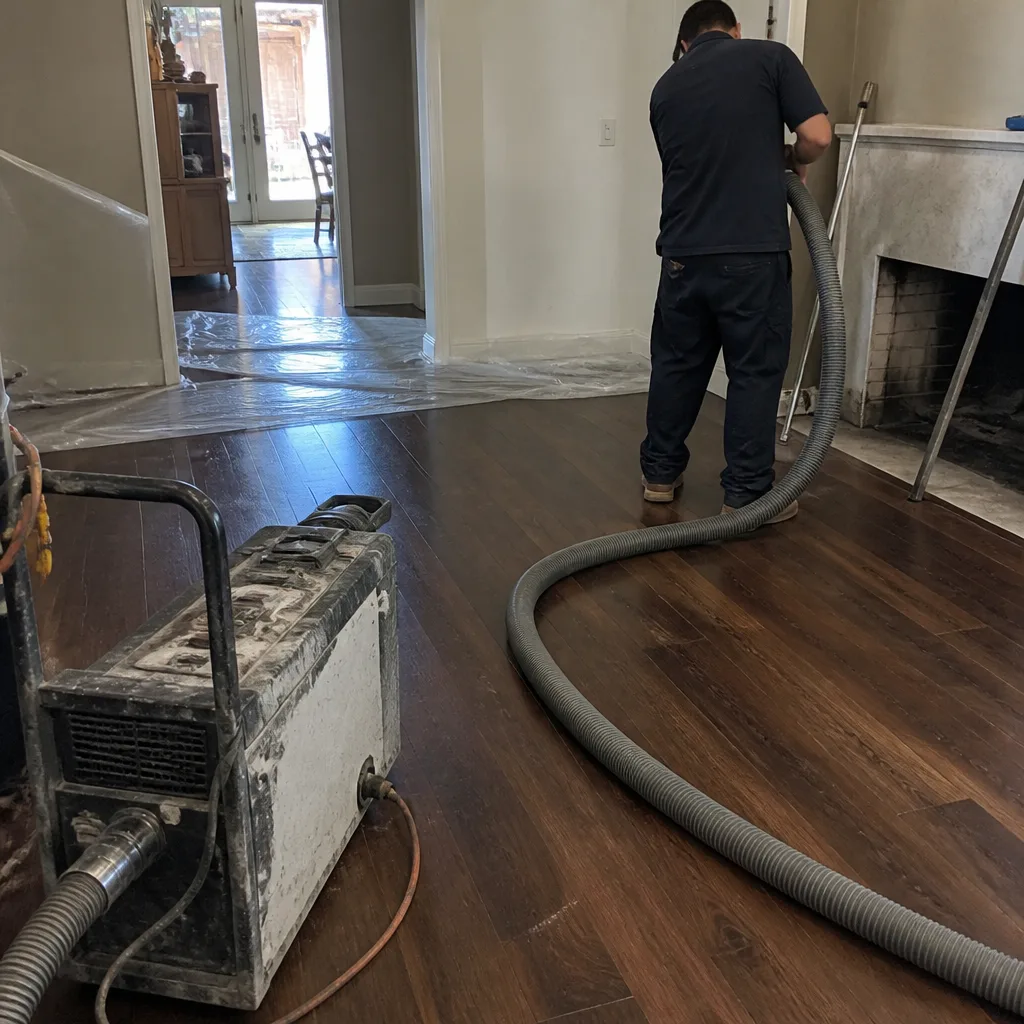 Before
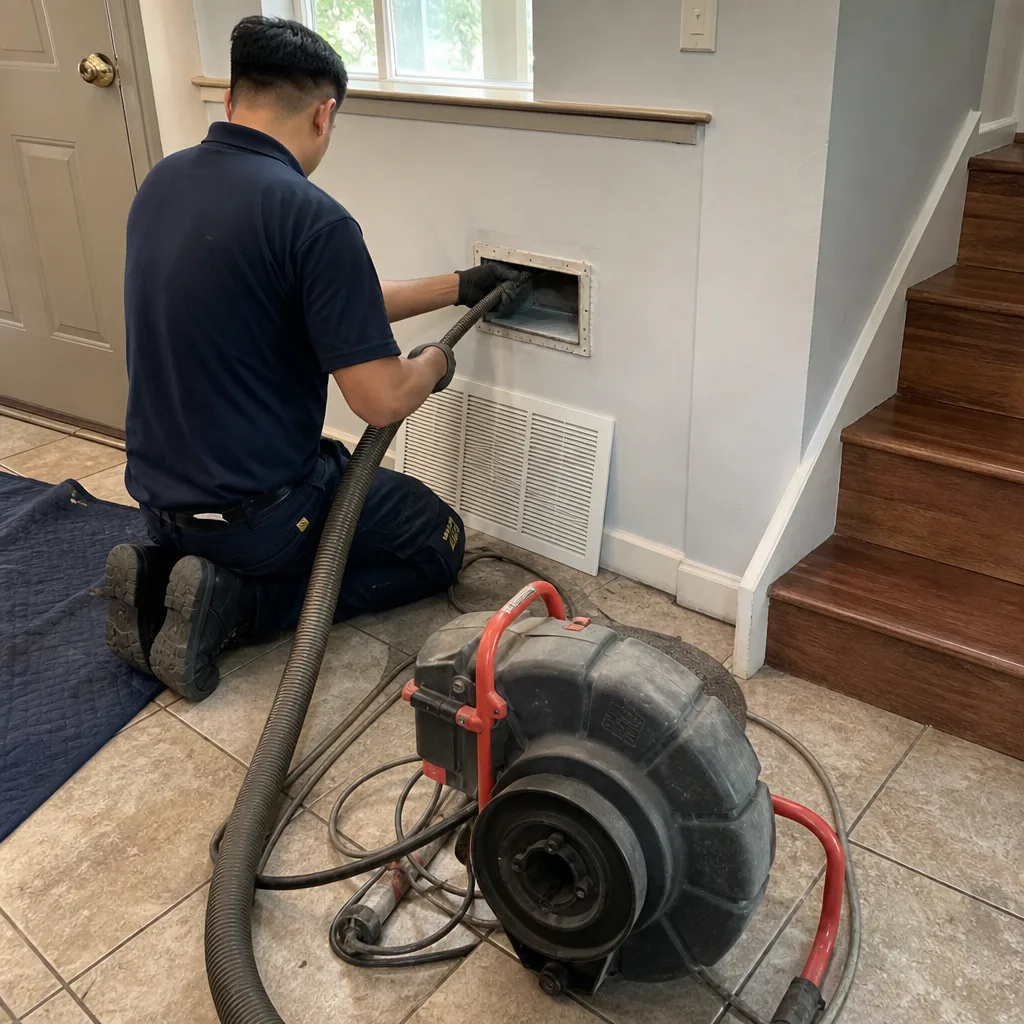 After
 Before
 After
Filter Replacement Schedule: The Foundation of Everything
Everything in this checklist depends on the filter. It’s the first line of defense, the thing that determines how fast your ducts get dirty again, and the single most neglected component in residential HVAC systems. Here is a structured schedule for Cupertino homeowners, adjusted for the realities of the local environment.
Baseline: Replace a standard MERV-8 filter every 60 to 90 days. Mark it on the calendar, set a phone reminder, tape a note to the furnace. Whatever works.
With pets: Replace every 30 to 45 days. Pet hair and dander load filters far faster than dust alone. If you have multiple pets or a shedding breed, lean toward the 30-day mark.
During wildfire season: Check the filter every two weeks. Replace when it shows visible gray or brown discoloration, regardless of time elapsed. Smoke particulate loads filters at an accelerated rate, and a clogged filter in a smoky home is doing nothing to protect your air.
After renovation or construction: If you’ve had work done in the home, expect to replace the filter within 30 days of project completion, and possibly again at 60 days. Drywall dust and sawdust are the fastest filter killers.
Homes near high-traffic corridors: If you live near Stevens Creek Boulevard, De Anza Boulevard, or Highway 85, ambient particulate from vehicle exhaust and road dust adds load. Consider the 45-day mark as your baseline.
Some Cupertino homes are equipped with Honeywell or Aprilaire whole-home filtration systems that use larger media filters rated for longer intervals, often 6 to 12 months. Follow the manufacturer’s guidance on those, but check the media monthly. A high-capacity filter can still clog early in smoky or dusty conditions.
What You Can Safely Do Yourself, and What You Shouldn’t
There’s a line between reasonable homeowner maintenance and work that requires professional equipment. Knowing where that line sits saves you money and protects you from doing counterproductive damage. Here’s the honest breakdown.
Safe to Do Yourself
- Replace filters on schedule. This is the easiest, highest-impact task in the whole system. No specialized tools, no risk, hours of benefit.
- Vacuum vent covers and register grilles. A brush attachment on a standard household vacuum removes surface dust from the grilles you can see. Do this monthly.
- Wipe down register exteriors. A damp cloth removes particles that will otherwise get pulled back into the airflow path.
- Visually inspect the duct interior at accessible points. With the system off, remove a grille and shine a flashlight into the register boot. If you can see significant buildup, that’s information. If you can’t see the duct interior clearly, get a professional with the right camera equipment.
Leave to a Professional
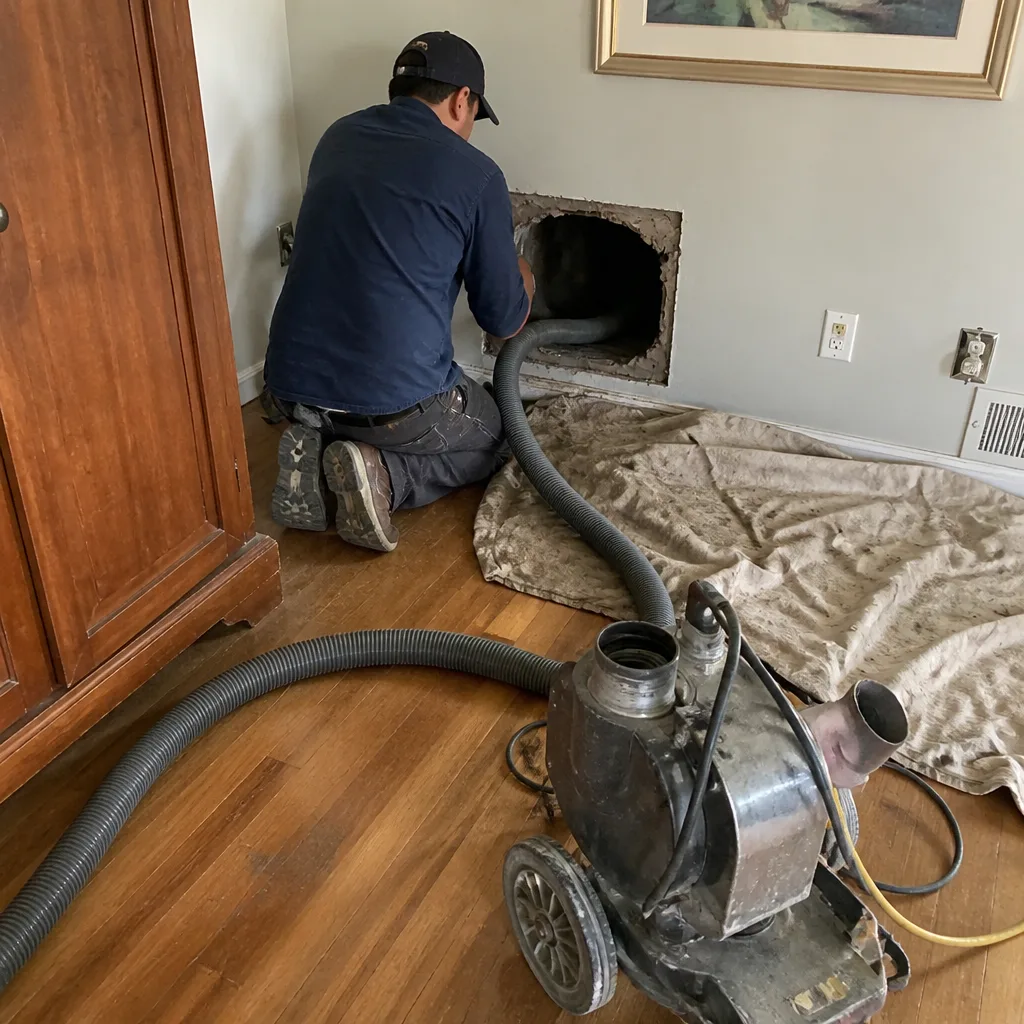
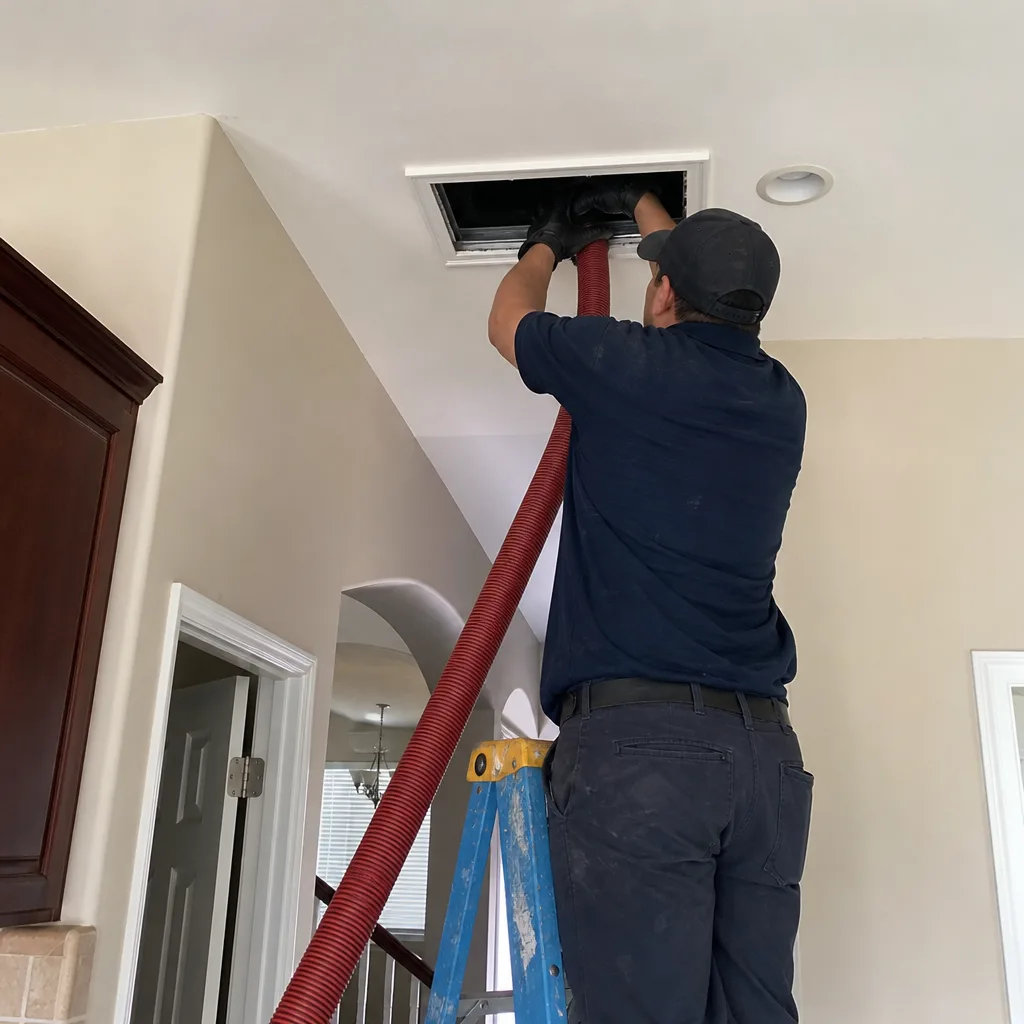
- Interior duct agitation and extraction. This requires negative-pressure equipment that pulls dislodged debris out of the system. Without proper containment, you’re simply scattering dust into the air and letting it resettle back into the ducts. We run Rotobrush and Nikro systems with Abatement Technologies containment specifically because the equipment is designed to capture what it loosens.
- Any work involving the furnace or air handler. The blower motor, evaporator coil, and heat exchanger are not where a homeowner should be poking around. Damage to these components costs more than a full duct cleaning.
- Duct sealing and repair. If you have leaks, disconnected branches, or crushed sections, that’s air duct repair work, not maintenance. It needs tools and materials a homeowner doesn’t have.
- Any cleaning inside the dryer exhaust vent. Lint buildup in a dryer vent is a fire hazard, and the tools for the job are purpose-built. Our dryer vent cleaning in Cupertino service uses equipment designed for the specific geometry and lint density of dryer exhaust runs, not improvised duct cleaning attachments.
Common Mistakes to Avoid
- Cleaning the ducts while the filter is old. As the hook at the top says, you’re pushing debris through a system that’s already congested. The cleaning loses effectiveness before it starts. Always start with a fresh filter.
- Treating duct cleaning as a cure-all for dust allergies. Cleaning removes accumulated debris, but if the source of your allergies is pollen entering through open windows or pet dander on surfaces, the ducts were never the main problem. Be realistic about what a cleaning can and cannot do.
- Skipping the post-cleaning filter swap. The filter installed before the cleaning has been through its useful life. Putting it back afterward reintroduces what you just removed. Some homeowners make this mistake because the filter looks fine. It’s not.
- Ignoring the dryer vent while cleaning the air ducts. The two systems are separate, but the principle is the same. A clogged dryer vent is a fire hazard that grows silently. Homes in Cupertino with long vertical dryer runs or multiple elbows are at elevated risk, and a full dryer vent cleaning in Cupertino should be part of your home maintenance calendar regardless of whether you’re also cleaning the HVAC ducts.
- Failing to document what was done. After any professional service, keep a record. The date, the technician’s notes, the filter spec, any unusual findings. This documentation helps you track intervals accurately and gives the next technician a baseline.
- Assuming one cleaning lasts forever. We’ve never seen a duct system that stayed clean permanently after one pass. The buildup process is continuous. Your maintenance calendar should reflect that.
- Choosing a provider on price before everything else. Duct cleaning is a service where the equipment determines the result. A technician with a truck-mounted or portable professional system from Rotobrush or Nikro is not the same thing as a handyman with a shop vac. In Cupertino’s real estate market, where homes routinely trade for seven figures, the cost of a proper professional cleaning is a rounding error against the cost of doing it badly.
When to Call a Professional
Some conditions call for a professional assessment regardless of where you are in the maintenance cycle. If you see visible mold growth at a register or inside the duct, if the system has been flooded or saturated by a water leak, if you find evidence of rodent or insect nesting in the ducts, or if you’re experiencing persistent respiratory symptoms that improve when you’re away from home, those are all triggers for professional attention. A visual inspection with the right camera equipment can identify whether the ducts are the source or just a symptom. Duct Cleaning Cupertino offers free estimates throughout Cupertino, call (877) 542-8668 to schedule an inspection.
Frequently Asked Questions
Every 3 to 5 years is the standard interval for most Cupertino homes, but the right answer depends on your specific conditions. Homes with pets, smokers, recent renovations, or recurring wildfire-smoke exposure may need cleaning every 2 to 3 years. Homes with excellent filtration and no aggravating factors can go 5 years between cleanings. The best indicator is a visual inspection of the register boots and return air path at least once a year. If you see visible dust accumulation or smell stale air when the system runs, it’s time. Call (877) 542-8668 for a professional assessment with the right inspection equipment.
Whole-home duct cleaning in Cupertino typically runs between $350 and $700, depending on the size of the home, the number of vents, the accessibility of the furnace and duct runs, and the amount of debris present. Larger homes with multiple HVAC systems, older homes with difficult access points, and systems that haven’t been cleaned in many years land at the higher end of that range. The best way to know your cost is a professional estimate. Duct Cleaning Cupertino provides free estimates, call (877) 542-8668 and we’ll assess your system and give you a precise number before any work begins.
No, and this is one place where the DIY instinct works against you. A household vacuum, even a powerful one, lacks the negative air pressure and agitation tools needed to dislodge and extract debris from the full length of a duct run. What a vacuum does reach is the first few inches of the register boot. The rest, the trunk lines, the branch runs, the return plenum, stays untouched. Worse, DIY attempts can push debris deeper into the system, making the eventual professional cleaning more involved. Professional equipment from Rotobrush and Nikro is built for the job, and the difference is measurable.
The range exists because providers use different equipment, different scope definitions, and different labor models. A quote from a company using truck-mounted negative-pressure systems, full containment, and professional agitation tools is not comparable to a quote from a handyman with a portable vacuum. The time it takes to do the job properly is also different. A 2,500-square-foot home with 15 vents and two systems takes hours with proper equipment. If someone quotes you $99 for the whole house, ask what they’re actually doing and with what equipment. The old knowledge applies: if the price seems too good to be true, the duct cleaning probably is too.
Three ways. First, the service should include before-and-after photos from inside the ducts, captured with inspection cameras. If your provider doesn’t offer this, ask why. Second, you should be able to see a visible difference at the register boots after the work: the metal interior should look dull gray or silver, not papered with dust. Third, the airflow from your registers should feel slightly stronger, and the dust fall on surfaces should reduce measurably within the first week. If none of those things are true, the cleaning wasn’t thorough, and you should follow up with the provider. Call (877) 542-8668 for a cleaning with documented before-and-after proof.
Duct cleaning can reduce the volume of particulate circulating through your system, which helps some allergy sufferers, but it’s not a standalone allergy treatment. The benefit comes from removing accumulated debris, primarily dust mite matter, pet dander, pollen, and textile fibers, that gets re-entrained into the air every time the system runs. The most significant reductions come when duct cleaning is paired with upgraded filtration. We work with Honeywell and Aprilaire whole-home filtration systems and recommend them to Cupertino homeowners whose allergy symptoms persist even after a thorough cleaning. The ducts are part of the system, not the whole answer.
The Bottom Line
Air duct cleaning is a maintenance sequence, not a one-time event. The homeowner’s job is to make sure the system is ready before the technician arrives, to be present and organized during the service, and to build a post-cleaning rhythm that keeps the results intact. In Cupertino, that rhythm needs to account for wildfire smoke, summer cooling loads, and the dust that settles during idle seasons. The filter is the foundation everything else sits on. Do the pre-work, do the post-work, and the cleaning itself becomes far more than a refresh. It becomes the start of a system that actually stays clean.
Written by the team at Duct Cleaning Cupertino, serving Cupertino since 2015.
Request a Free Estimate in Cupertino
Tell us what you need - Duct Cleaning Cupertino responds fast. No obligation.