
Last updated November 2, 2026
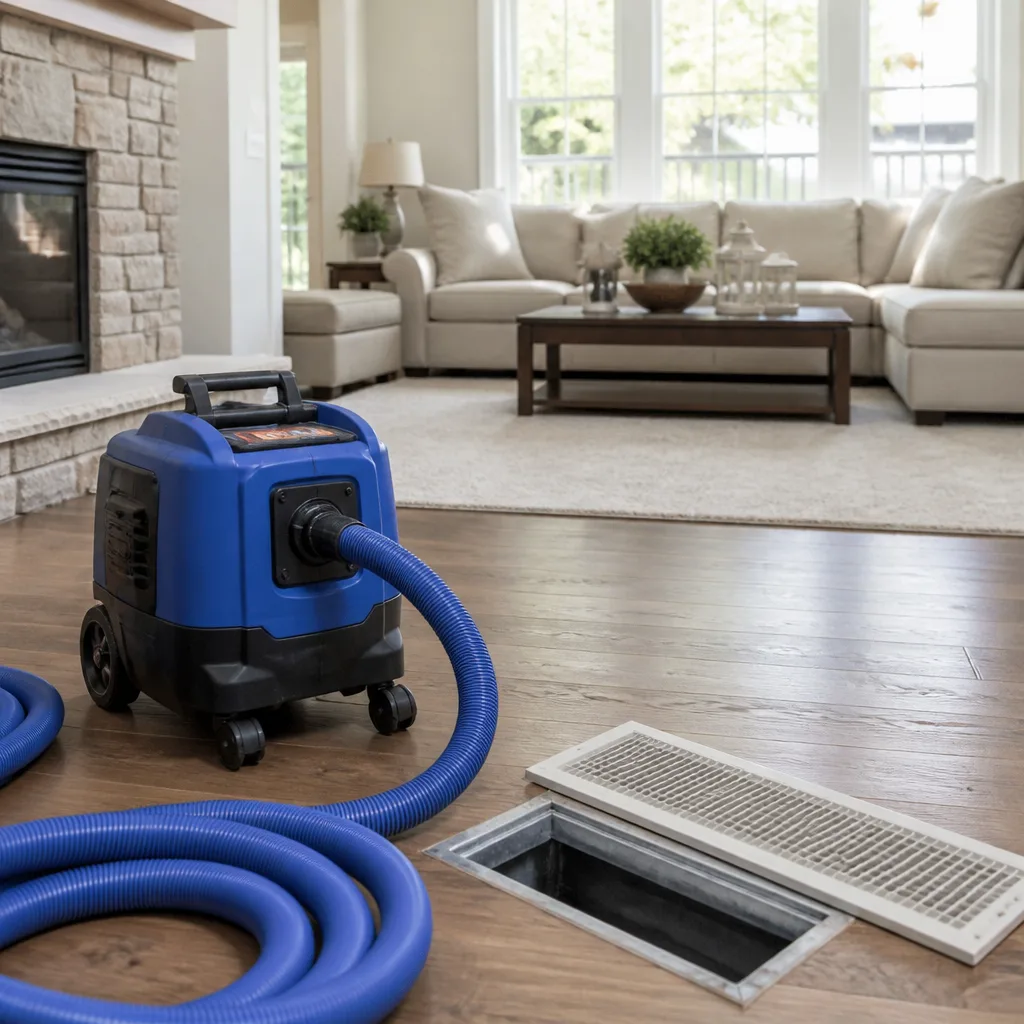 Whole-home duct cleaning
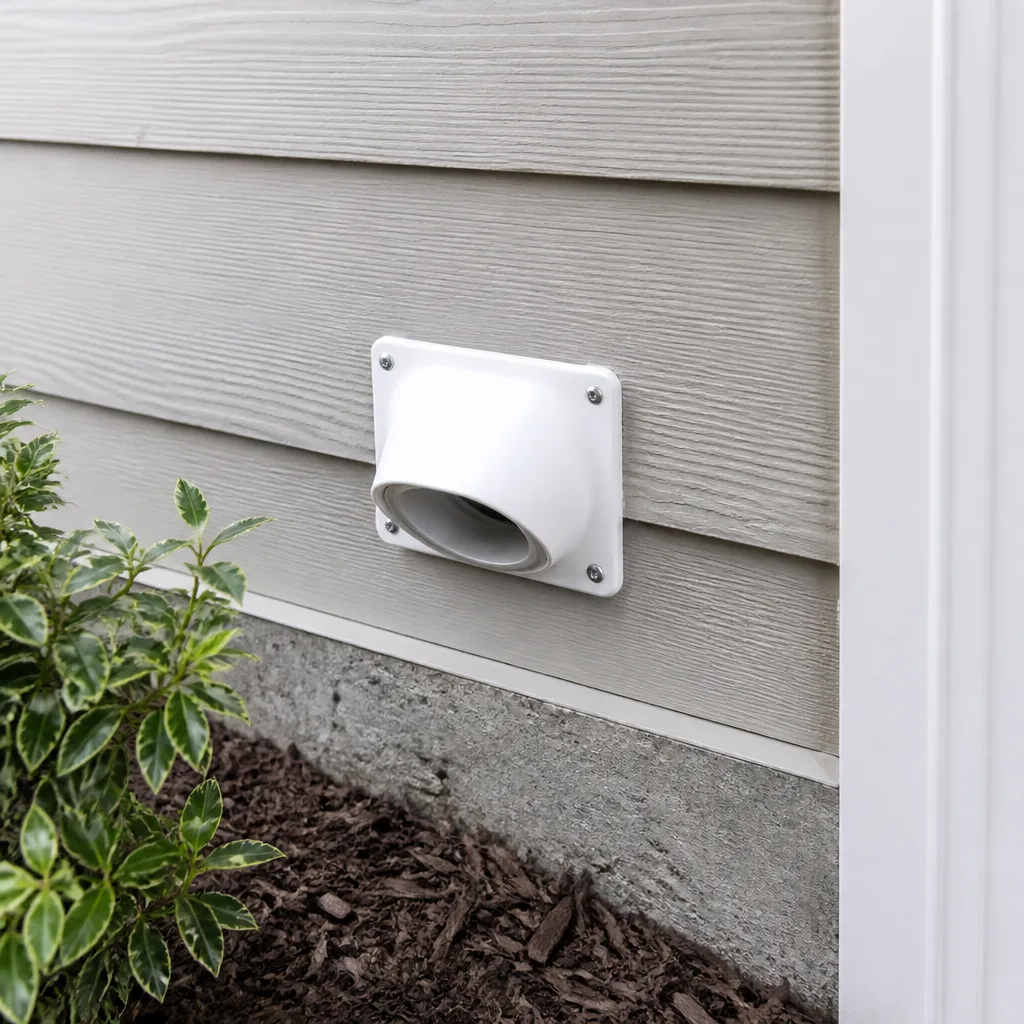 Dryer vent cleaning
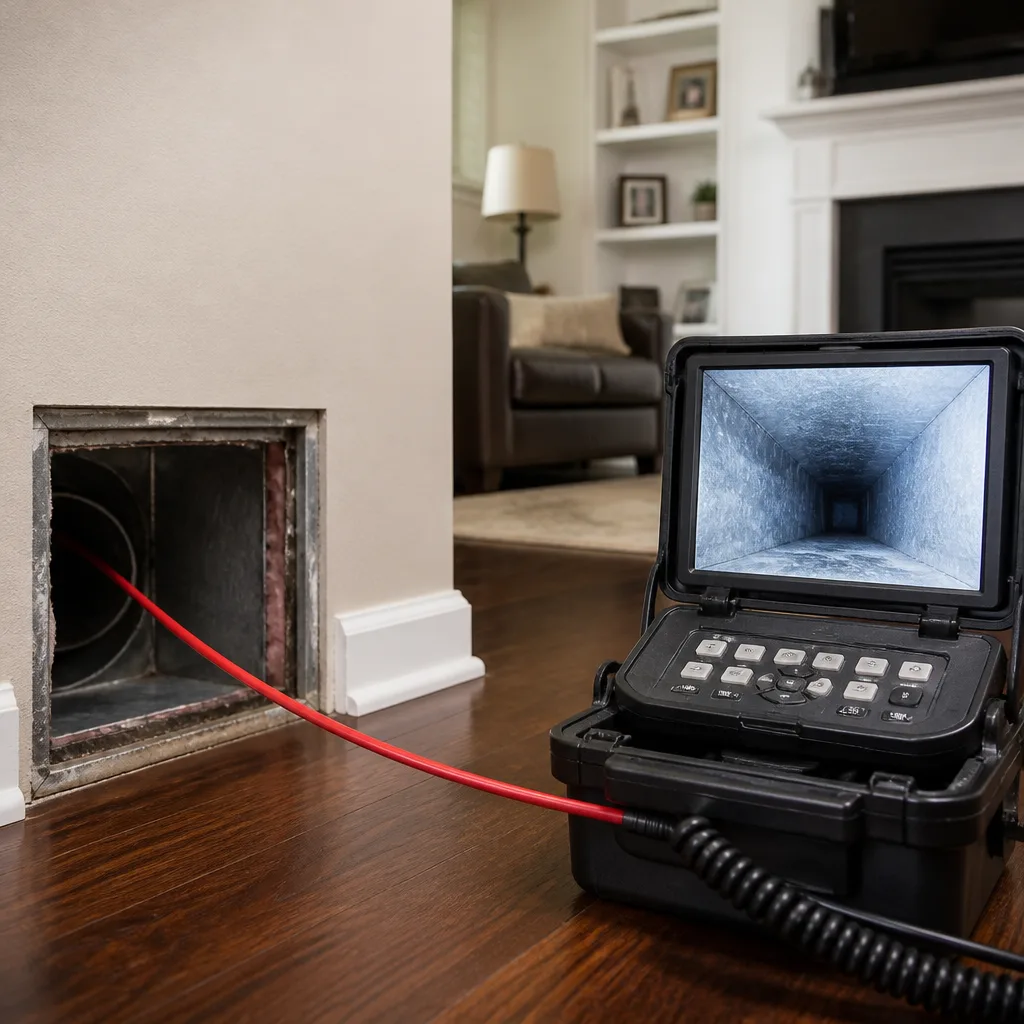 Camera inspection
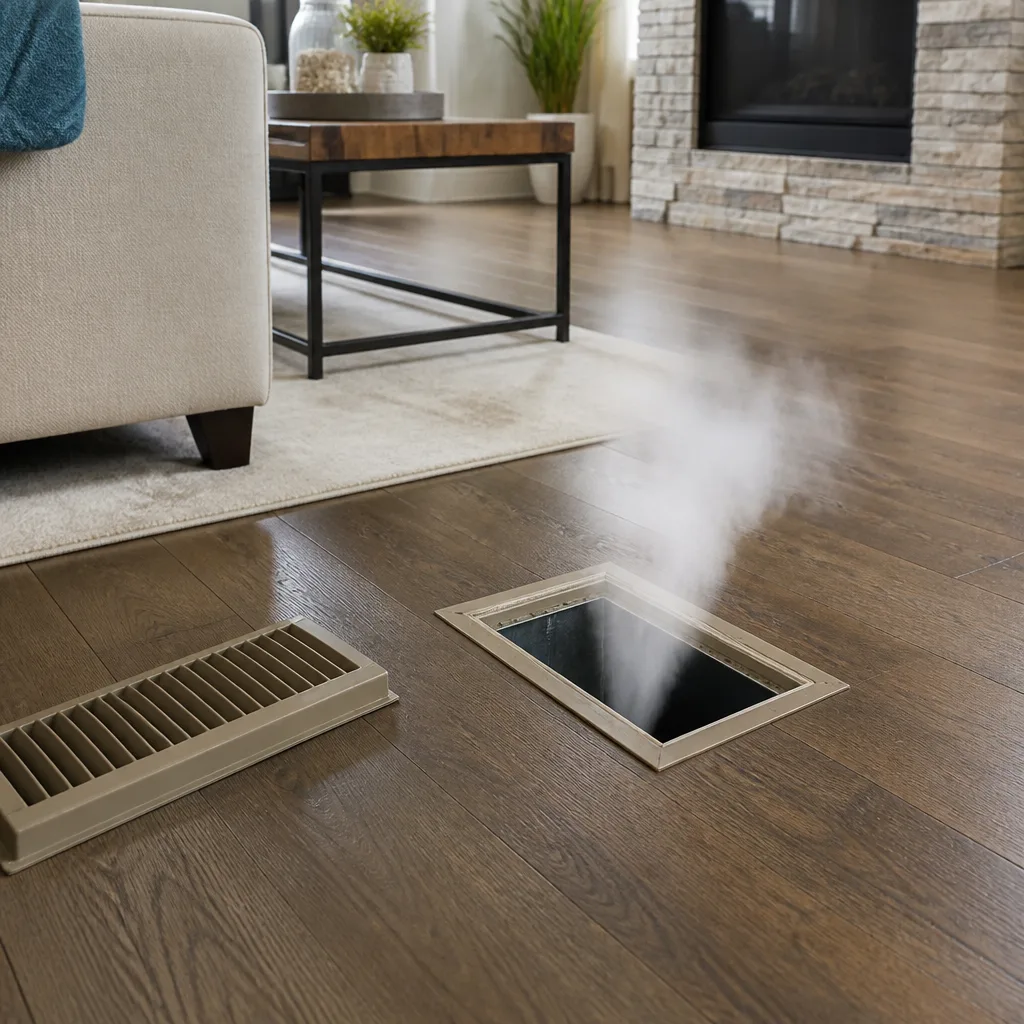 Sanitizing & deodorizing
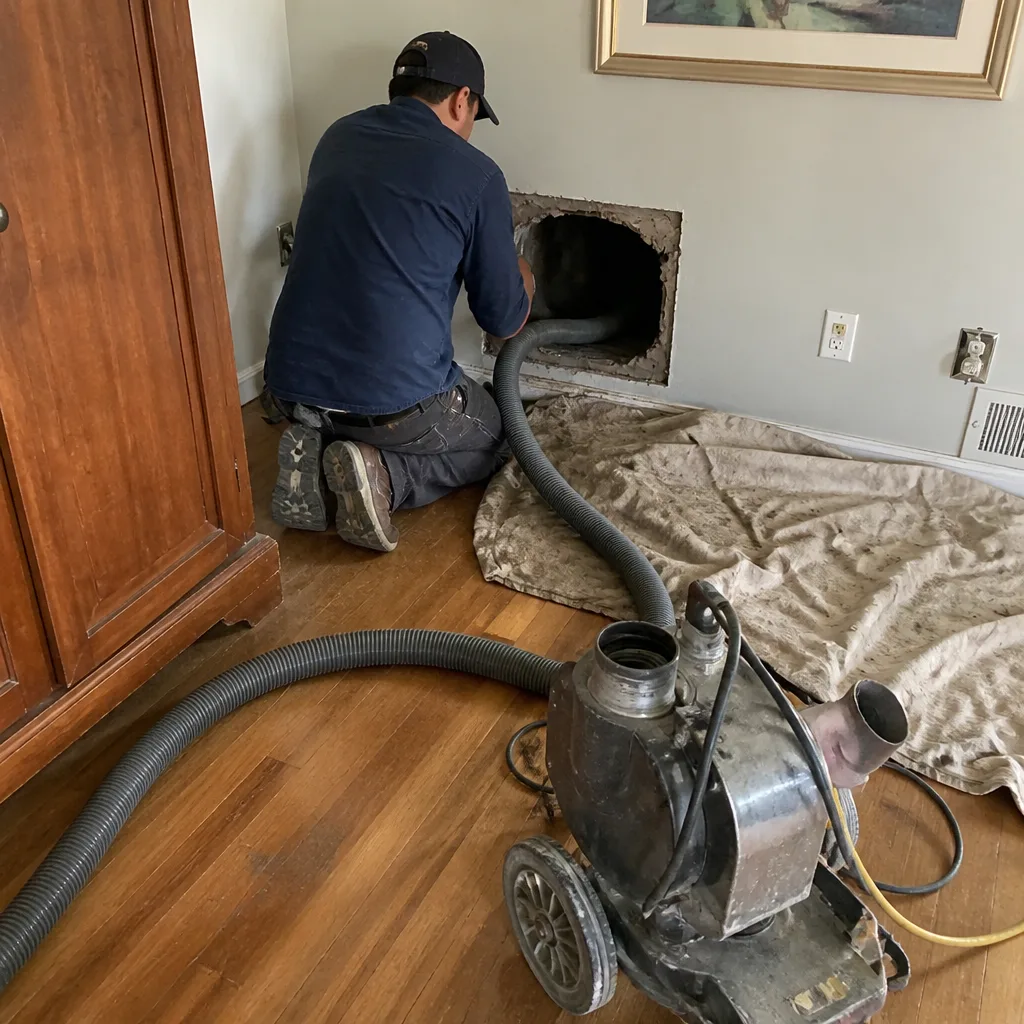
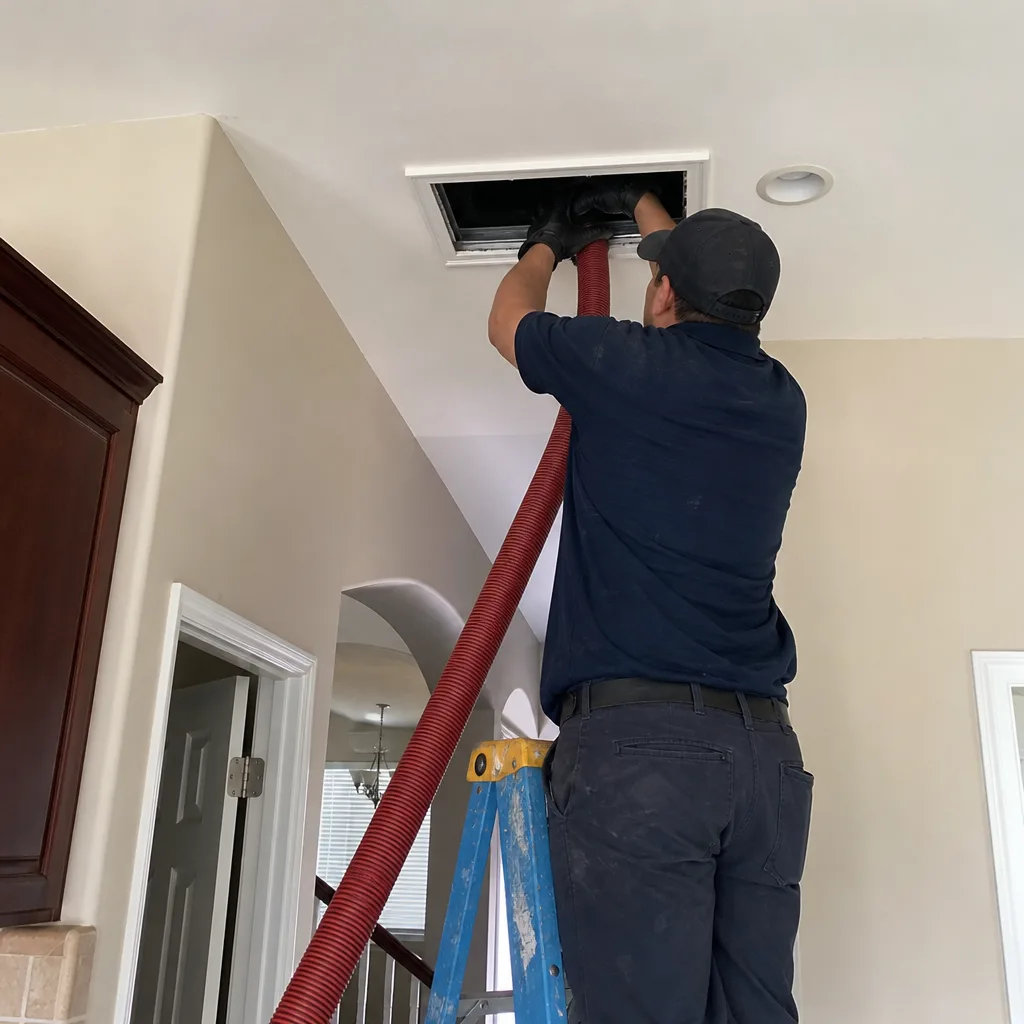
Whole-system duct and dryer vent check with before-and-after photos - you see exactly what came out of your vents
That "$99 whole-house special" is a bait ad - the real number appears once they are in your hallway, or the "clean" is a shop-vac at the register. We photograph the inside of your ducts before and after instead.
Air Duct Cleaning Troubleshooting: Common Problems and How to Fix Them
A duct cleaning that costs $400 won’t fix uneven room temperatures if the real cause is a disconnected flex duct behind the drywall, and a technician who skips the inspection step to sell the job won’t tell you that. In Cupertino, where homes range from 1960s ranchers to recent rebuilds, the ductwork tells wildly different stories depending on age, materials, and how many previous owners made shortcuts. This guide walks you through a structured elimination process: which symptoms genuinely point to duct contamination, which point to mechanical failures, and which mean you should put the phone down and call a different trade entirely. For a deeper look at when your ducts are actually the culprit, see our Air Duct Cleaning Warning Signs: A Cupertino Homeowner’s Reference Guide.
Styles & brands we work with
- Whole-home duct cleaning
- Dryer vent cleaning
- Camera inspection
- Sanitizing & deodorizing
Quick Answer
Air duct cleaning troubleshooting starts with matching your symptom to its most likely cause before paying for a cleaning. Dusty registers and visible debris point to duct contamination, while weak airflow and uneven temperatures usually indicate mechanical or sealing failures that cleaning won’t fix. A basic flashlight inspection of your registers can rule out or confirm duct contamination in about ten minutes.
Table of Contents
- Symptom-to-Cause Decision Tree: What Your Ducts Are Actually Telling You
- How to Inspect Your Registers with a Flashlight and Smartphone
- Why Is the House Dusty After Duct Cleaning?
- When Duct Cleaning Makes Contamination Worse
- When Duct Cleaning Won’t Help: The Correct Next Service Call
- Cupertino-Specific Duct Problems We See Every Month
- Common Mistakes to Avoid
- When to Call a Professional
- Frequently Asked Questions
- The Bottom Line
Symptom-to-Cause Decision Tree: What Your Ducts Are Actually Telling You
We see this pattern at least once a week in Cupertino: a homeowner calls about dirty ducts when the ducts are the only part of the system working fine. The problem is that duct contamination, mechanical failure, and sealing failure all produce overlapping symptoms. Here’s the decision tree we use before recommending anything.
Symptom: Visible dust or debris blowing out of registers. This is one of the few symptoms that genuinely points to duct contamination. If you see particles actively exiting the supply registers when the system runs, something inside the ducts is being picked up by the airstream. That something could be accumulated dust, construction debris from a renovation, pest activity, or deteriorating duct liner. This is a legitimate reason to pursue Air Duct Cleaning in Cupertino.
Symptom: Musty or stale odor when the system runs. This could be biological growth in the ducts, but it could also be a wet evaporator coil, a clogged condensate drain pan, or a dead rodent in the ductwork. Each requires a different response. If the odor persists only when the fan runs, and you notice visible moisture around the air handler, that’s an HVAC repair issue first, not a cleaning issue.
Symptom: Weak airflow from one or more rooms. Weak airflow is mechanical, not contamination. Dirt does not restrict airflow enough to be noticeable. A crushed flex duct, a damper that fell closed, a disconnected duct run, or a failing blower motor all produce this symptom. Cleaning will not fix any of them.
Symptom: Uneven temperatures between rooms. This points to duct design, duct sealing, or return air imbalance. Rooms at the end of long duct runs get less conditioned air. Rooms with no return path build pressure and resist supply air. Air leaks in unconditioned attics or crawlspaces bleed conditioned air before it reaches the room. Air Duct Repair in Cupertino addresses sealing and disconnects. Cleaning does not.
Symptom: Allergies that start or worsen after moving into a new home. If allergies began within weeks of moving in, and the home was renovated at any point, suspect construction dust in the ducts, especially drywall dust and fiberglass particles. New construction and remodels leave debris in ductwork when builders run the HVAC system during finish work. This is a strong candidate for duct cleaning because the contaminant is localized to the ducts themselves.
Symptom: Sudden dust accumulation on surfaces within days of cleaning. If you dust on Sunday and by Thursday every surface has a film, the source is either leaky ducts pulling attic or crawlspace air into the system, a missing or collapsed filter, or a return duct disconnected from the return grille. Duct cleaning cannot fix infiltration. Duct sealing can.
How to Inspect Your Registers with a Flashlight and Smartphone
You do not need a professional to do a preliminary register inspection. You need a flashlight, a smartphone camera, and ten minutes. Here is the step-by-step process we teach Cupertino homeowners who are not sure whether they have a duct problem or a filter problem. Note: you are inspecting, not repairing. Do not reach into a register or duct with your hand; metal edges inside ductwork are sharp enough to require stitches.
- Turn the HVAC fan to ON at the thermostat so air is moving while you inspect. Moving air reveals loose debris that settles when the system is off.
- Remove one supply register in a centrally located room. Most registers lift out or unscrew with two screws.
- Shine the flashlight into the duct opening at a low angle. Low-angle light casts shadows that reveal dust layers, fibers, and texture you cannot see with direct light.
- Point your smartphone camera down the duct run with the flash on. The camera sees into the first few feet of duct that your eyes miss.
- Inspect the first 2 to 3 feet of visible duct. This is where most accumulated debris concentrates because air velocity drops near the register boot.
- Take photos of anything that looks like black spots, fibrous growth, or thick gray dust. These photos help any contractor you call understand what you are seeing before they send a technician.
- Repeat at one register on the opposite side of the house and one near the air handler if accessible.
- Replace the register and repeat the process with the fan OFF to compare. Some debris only becomes visible when it is not being blown around.
What you are looking for falls into three categories that require three different responses.
Layered gray dust with visible texture, like dryer lint. This is typical household dust accumulation. It looks fibrous, not granular. If it is thicker than about a quarter inch or covers the entire duct surface, cleaning is reasonable. If it is a thin film, your system is normal for its age.
Dark spots, slimy patches, or growth that appears wet. This can be biological growth, which requires not just cleaning but addressing the moisture source feeding it. In Cupertino’s mild climate, condensation inside ducts is uncommon but not impossible when ducts run through unconditioned space and supply air is cooled below the dew point. If you see this, call a specialist. Do not attempt to scrape or treat it yourself.
Drywall dust, sawdust, paint chips, or construction debris. This is renovation residue. It appears granular, powdery, and white or tan. It tends to sit in drifts near the register boot. This is the cleanest diagnostic case for duct cleaning because the contaminant is specific and localized.
Why Is the House Dusty After Duct Cleaning?
We get this call more than any other after-service question: “You cleaned our ducts, and now the house is dustier than before.” It is the most common post-service complaint in the industry, and it has three distinct causes. Only one of them means the cleaning job failed.
Cause 1: The cleaning dislodged debris that was never fully extracted. Professional-grade systems like Rotobrush and Nikro units use negative pressure to capture debris as it is dislodged. If and only if the technician skipped proper containment or used an underpowered machine, loosened debris escapes into the living space instead of being drawn into the collection unit. The telltale sign is dust concentrated near the supply registers in the days immediately following service, often darker or grittier than normal household dust. If this happens, the cleaning was incomplete, and the contractor should return to finish the job at no charge. This is why equipment matters. The same systems trusted by restoration professionals, such as Nikro and Rotobrush rigs paired with Abatement Technologies negative air containment, are designed precisely to prevent this failure mode.
Cause 2: The filter is no longer catching what it caught before. Before cleaning, a thick layer of debris in the ducts acted as a crude filter, trapping particles before they reached the living space. After cleaning removes that debris, whatever bypasses or blows past the actual filter now reaches your rooms. If your filter is a basic fiberglass panel rated MERV 2 or 4, it catches almost nothing. Upgrade to a MERV 8 pleated filter or better, and consider whether a whole-home filtration system from Duct Cleaning Cupertino home specialists like Honeywell or Aprilaire fits your home. The dust after cleaning is not the cleaning’s fault; it is the filter’s weakness being exposed.
Cause 3: Cleaning exposed an infiltration problem that was always there. If your return ducts run through an attic or crawlspace and have open joints, gaps, or holes, those leaks pull unfiltered air from that space into your system. Before cleaning, the debris inside the ducts partially masked the problem by settling on the duct walls. After cleaning, the path is clear, and the leak now delivers attic dust, insulation fibers, and crawlspace particulates directly into your home. The fix is duct sealing, not a second cleaning. We regularly see this in Cupertino homes with original 1970s and 1980s ductwork that has never been sealed at the joints.
When Duct Cleaning Makes Contamination Worse
A properly executed duct cleaning removes more debris than it disturbs. A poorly executed one does the opposite. Here are the specific signs that your cleaning made the situation worse and what recourse you have.
Sign: You find debris in rooms that had no registers nearby before the cleaning. This means the extraction system was not maintaining negative pressure, and loosened particles were pushed through the duct system and out the nearest exit points. The debris also could have been blown out of the system through the air handler if the technician failed to seal off the return side during cleaning.
Sign: Family members who have never had allergies before develop symptoms within days of the service. This indicates biological material or fiberglass particles were mobilized into the living space. Fiberglass insulation fibers from deteriorating duct liner are small enough to cause respiratory irritation when airborne. If symptoms persist beyond a few days and you have a variable or multi-speed HVAC system, run the fan continuously at the lowest speed for 48 hours with a MERV 11 or better filter installed to recapture airborne particles.
Sign: Your registers are visibly coated with fine gray or black dust within a week of the cleaning. This is not new dust; it is the residual debris from inside the ducts that was loosened but not fully extracted. It coats the register grille first because the grille is the last surface the air passes over before entering the room.
Your recourse: Document everything with photos and a written timeline. Contact the cleaning company and describe the specific symptoms. A reputable company will return to re-clean the affected duct runs at no charge. If the company refuses, you can file a complaint with the California Contractors State License Board and dispute the charge with your credit card issuer. In our experience, prevention is better than recourse. Ask any duct cleaning company before booking what extraction system they use and whether it maintains negative pressure throughout the cleaning process. If they cannot answer clearly, that tells you what you need to know. Companies using professional-grade Rotobrush and Nikro systems with HEPA-level containment capability can answer this question in one sentence, because they have to know it to operate the equipment correctly.
When Duct Cleaning Won’t Help: The Correct Next Service Call
Here are five common complaints where duct cleaning is the wrong service, along with the service that will actually fix the problem.
- Weak airflow from every room, not just one. This is a blower motor, blower capacitor, or collapsed main trunk line problem. Call an HVAC service company. A duct cleaning will not increase airflow.
- Uneven temperatures between upstairs and downstairs. This is a duct design or zoning problem. In two-story Cupertino homes with a single system, the upper floor’s duct runs are longer, leakier, and under-insulated. Duct sealing and insulation fixes more than cleaning ever will.
- High utility bills with no comfort complaints. Leaky ducts are the likely culprit. According to Energy Star, typical duct systems lose 20% to 30% of conditioned air to leaks. Sealing returns a direct efficiency gain. Cleaning returns nothing measurable.
- Dust accumulation within 48 hours of cleaning any surface. This is infiltration through envelope leaks, unsealed recessed lighting, or a return duct drawing attic air. Call a home performance contractor or have your return ducts inspected and sealed. In Cupertino, the older housing stock near the Rancho Rinconada and Monta Vista neighborhoods frequently has original ductwork with open return cavities that pull attic air year-round.
- Mold smell that persists after cleaning. The mold is growing on the evaporator coil or in the drain pan, not in the ducts. The ducts may harbor spores, but the source is at the air handler. Call for HVAC service, not another duct cleaning.
We are a Dryer Vent Cleaning in Cupertino specialist too, and this same principle applies there. A dryer that takes two cycles to dry clothes could have a clogged vent, but it could also have a failing heating element, a worn drum seal, or a thermostat out of calibration. We inspect first and only clean the vent when the vent is actually the problem. That is how a specialist works, and it is why we keep our service menu to three things we have mastered.
Cupertino-Specific Duct Problems We See Every Month
Cupertino’s housing stock creates predictable duct problems. Understanding which category your home falls into saves time and money.
1960s to 1970s original construction. These homes, common in the Rancho Rinconada and Garden Gate areas, were built with metal ductwork that is now 50 to 60 years old. The metal itself is often fine; the joints and connections are not. Tape has failed, joints have opened, and the duct system leaks conditioned air into attics and crawlspaces. These systems need sealing before they need cleaning, and sometimes they are so leaky that cleaning is a waste of money until the leaks are fixed.
1980s to 1990s homes with flex duct. Flex duct from this era has a plastic inner liner that degrades over time. The liner becomes brittle, tears, and separates from the metal connector at the register boot. We see disconnected flex runs in roughly one out of every five homes we inspect in Cupertino, and the homeowner had no idea because the disconnected end was in an attic they never enter. A disconnected duct does not need cleaning; it needs reconnection. That is a repair call.
Recently renovated homes. Cupertino has a high renovation rate, and renovations put debris in ducts. Drywall dust, sawdust, paint chips, and occasionally larger debris like screws and nails end up in open duct runs during construction. If your home was renovated in the past two years and you never cleaned the ducts afterward, the debris is still there. This is one of the clearest justifications for duct cleaning, and the cleaning will visibly change what comes out of the registers.
Homes with original evaporator coils that predate good filtration. An older system with a dirty evaporator coil sheds moisture and biological material into the airstream. Cleaning the ducts without cleaning the coil is the equivalent of washing the pipes but not the source. We tell homeowners to ask their HVAC contractor to inspect the coil when the ducts are cleaned, or to schedule the two services together.
Common Mistakes to Avoid
- Calling a duct cleaner before checking the filter. A clogged filter restricts airflow and causes the blower to work harder, stirring up dust that settles on registers. Replace or clean the filter first, run the system for 48 hours, and then see if symptoms persist. This single step costs under $30 and rules out the most common mimic.
- Hiring a generalist HVAC company for duct cleaning because they are already doing the seasonal tune-up. Generalists bring basic equipment and treat duct cleaning as an add-on sale. A narrow specialist arrives with purpose-built systems and a defined process. The price difference is usually small, and the outcome difference is large.
- Paying for duct cleaning without an inspection of the duct connections. In Cupertino, where aging flex duct and failed tape joints are common, cleaning an unsealed system is an incomplete job. Ask whether the company inspects for disconnects and leaks before cleaning. They should be able to tell you what they found.
- Assuming a dusty house after cleaning means the company failed. As covered above, the dust may be exposing a filter problem or an infiltration leak. Investigate before accusing. At the same time, do not accept a contractor who dismisses the complaint without inspecting.
- Using duct cleaning as a substitute for fixing a mechanical problem. If a room gets no airflow, cleaning the ducts will not create airflow. The repair is mechanical. Paying to clean ducts that do not deliver air is paying for the wrong service.
- Snapping photos of the inside of the ducts without also photographing the register location. When you document an inspection or a problem, include a wide shot showing which room and which register, then the close-up. This gives any contractor you call a complete picture before they arrive.
When to Call a Professional
Call a duct specialist when you see visible debris actively blowing from registers, when you find construction debris in the ductwork during your flashlight inspection, when allergies began after a move or renovation, or when a previous cleaning left the house dustier than it started. Do not attempt to clean ductwork yourself. Consumer vacuums cannot reach beyond the first foot of duct, and any improvised tool inserted into a duct can tear the liner or disconnect a joint. Professional-grade equipment from Rotobrush and Nikro exists because this job requires mechanical agitation paired with strong negative pressure, and that combination is not something a homeowner can improvise. Duct Cleaning Cupertino offers free estimates in Cupertino and can tell you honestly whether cleaning will solve your problem, or whether you need a different service. Call (877) 542-8668.
Frequently Asked Questions
Your ducts need cleaning if you see visible debris blowing from supply registers when the system runs, find construction debris during a register inspection, smell a musty odor that persists only when the fan runs, or develop allergy symptoms that started after a move or renovation. Thin dust film on duct walls is normal accumulation and does not require cleaning.
Post-cleaning dust has three causes: incomplete extraction by the cleaning equipment, a weak filter that was previously masked by debris in the ducts, or an infiltration leak exposed by the cleaning that had been partially blocked by accumulated debris. Upgrading to a MERV 8 or better filter resolves the second cause. Duct sealing resolves the third.
No. Dirt and dust accumulation inside ducts does not restrict airflow enough to cause measurable temperature differences. Uneven temperatures come from duct design, duct leaks, disconnected runs, closed dampers, or return air imbalances. Each of these requires inspection and repair, not cleaning.
Air Duct Cleaning in Cupertino typically ranges from $400 to $700 for a single-system home, depending on the number of duct runs, system accessibility, and whether the home has multiple HVAC systems. Prices vary by square footage and the condition of the ductwork. Call (877) 542-8668 for an exact quote, and expect a specialist to provide one flat price per system upfront rather than a per-vent rate that changes after the technician arrives.
Cheaper quotes usually come from companies using portable vacuum units that lack the negative pressure of professional-grade systems, or from companies that price per vent and then upsell once they have the van in the driveway. Companies using Rotobrush or Nikro systems with proper containment charge more because their equipment costs more and their process takes longer. For help evaluating providers, read our Choosing the Right Air Duct Cleaning Brand: A Buyer’s Guide for Cupertino. A whole-system flat price prevents the classic bait-and-switch where a low per-vent coupon becomes a far larger invoice.
Every 3 to 5 years for most Cupertino homes, but only if the system is sealed and the filter is brought up to at least MERV 8. Homes with pets, recent renovations, or family members with significant allergies may benefit from shorter intervals. Homes with chronically leaky ducts need sealing before cleaning, not more frequent cleaning.
The Bottom Line
Air duct problems are diagnostic puzzles, not one-size-fits-all cleaning situations. Visible debris at registers points to contamination. Weak airflow points to mechanical failure. Uneven temperatures point to sealing and design. Dust after cleaning points to incomplete extraction, weak filtration, or infiltration, in that order. Before you pay for a duct cleaning, spend ten minutes with a flashlight and a smartphone to document what you are actually dealing with. Then call a specialist who will tell you if cleaning is the right service or if you need sealing, repair, or a filter upgrade instead. For more guides & resources on maintaining your home’s air quality, explore our blog. In Cupertino, where homes span six decades of construction practices, knowing the difference saves money and fixes the problem the first time.
Written by the team at Duct Cleaning Cupertino, serving Cupertino since 2015.
See the difference
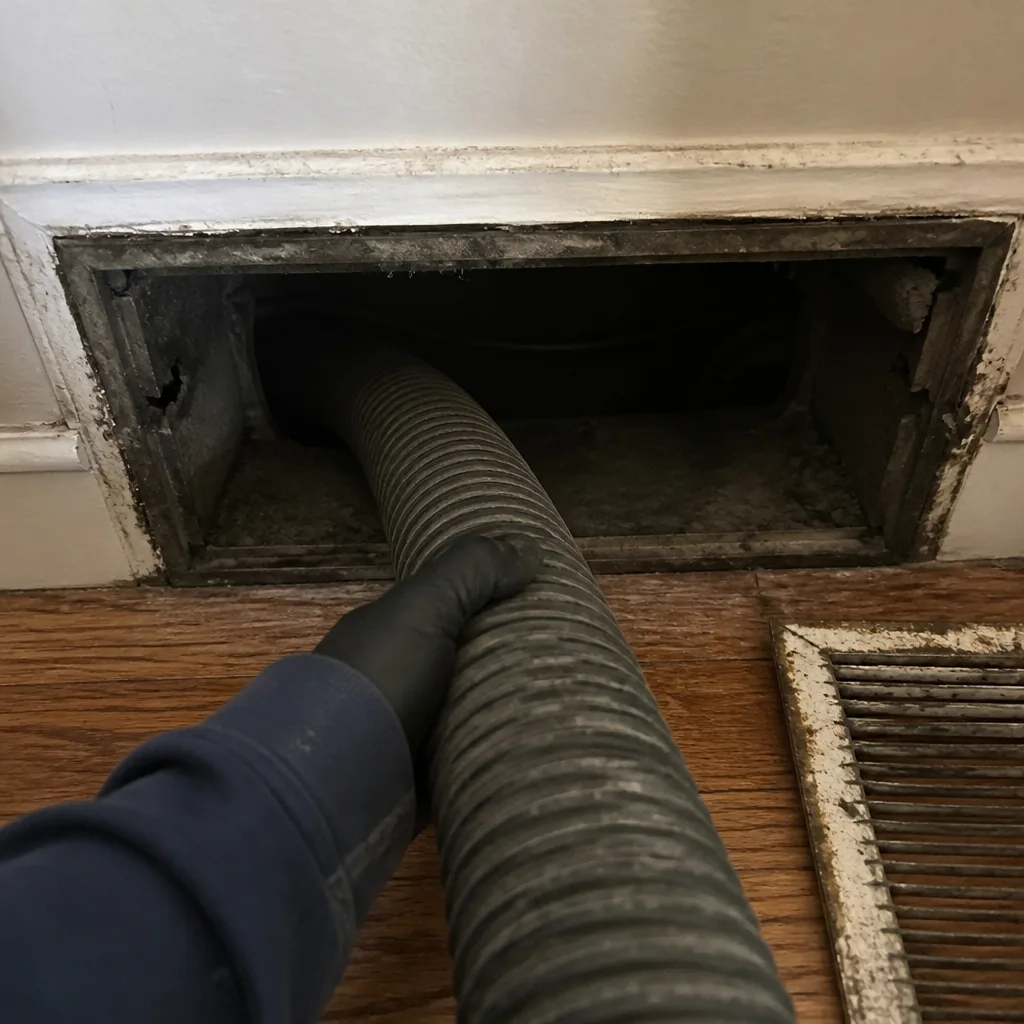 Before
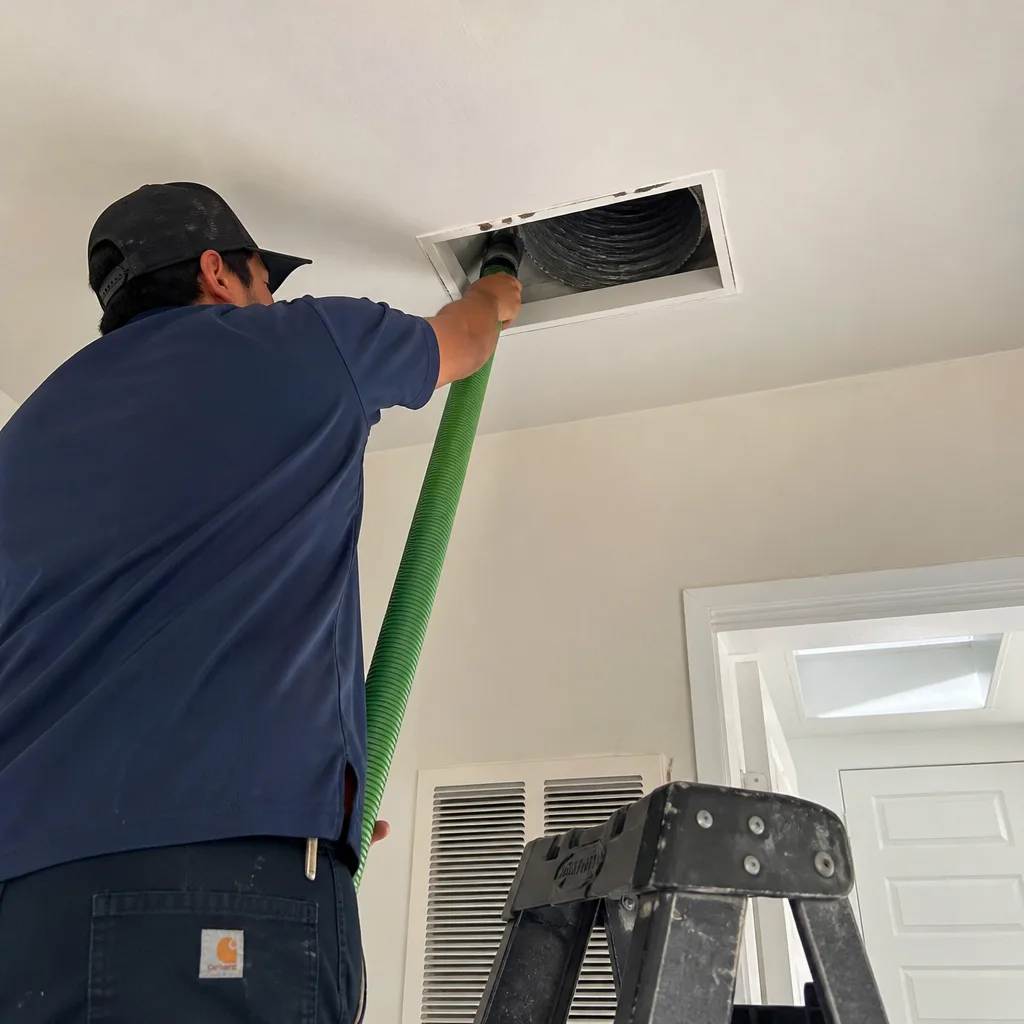 After
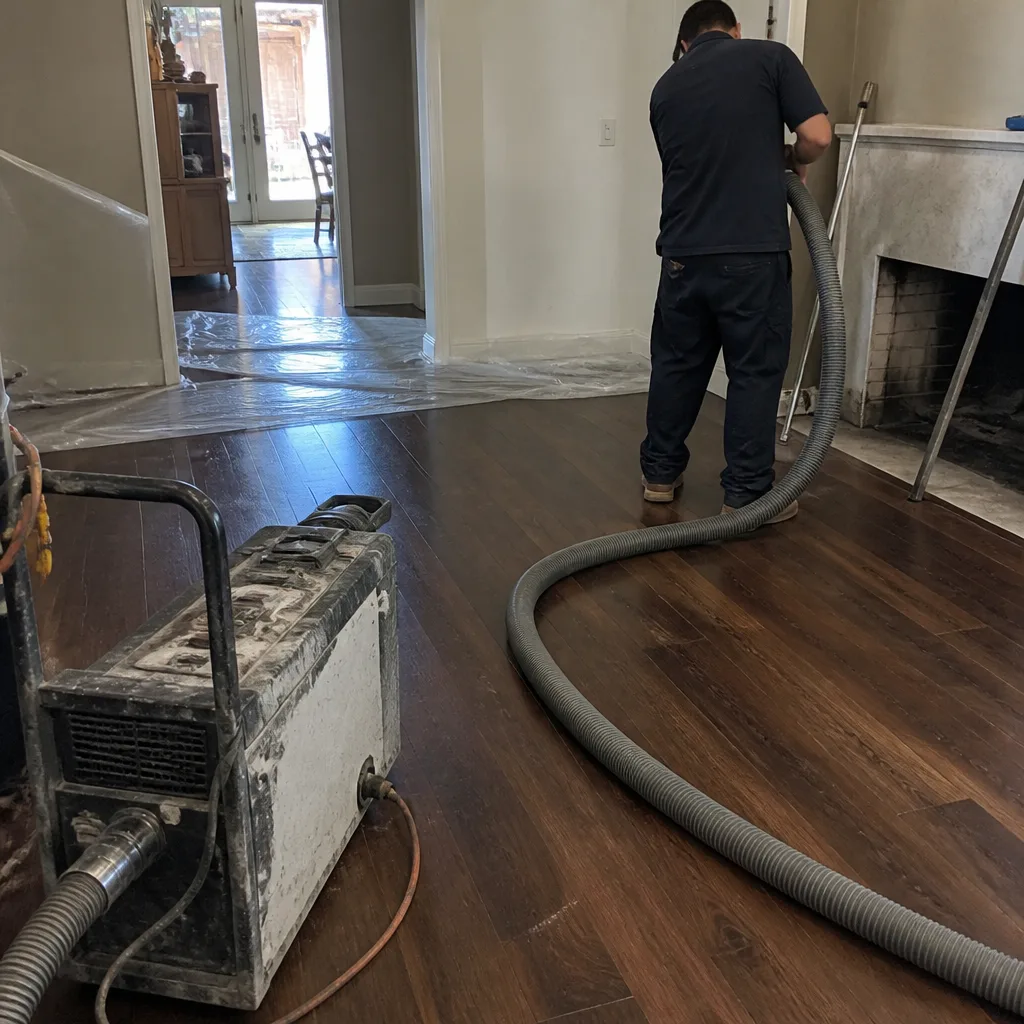 Before
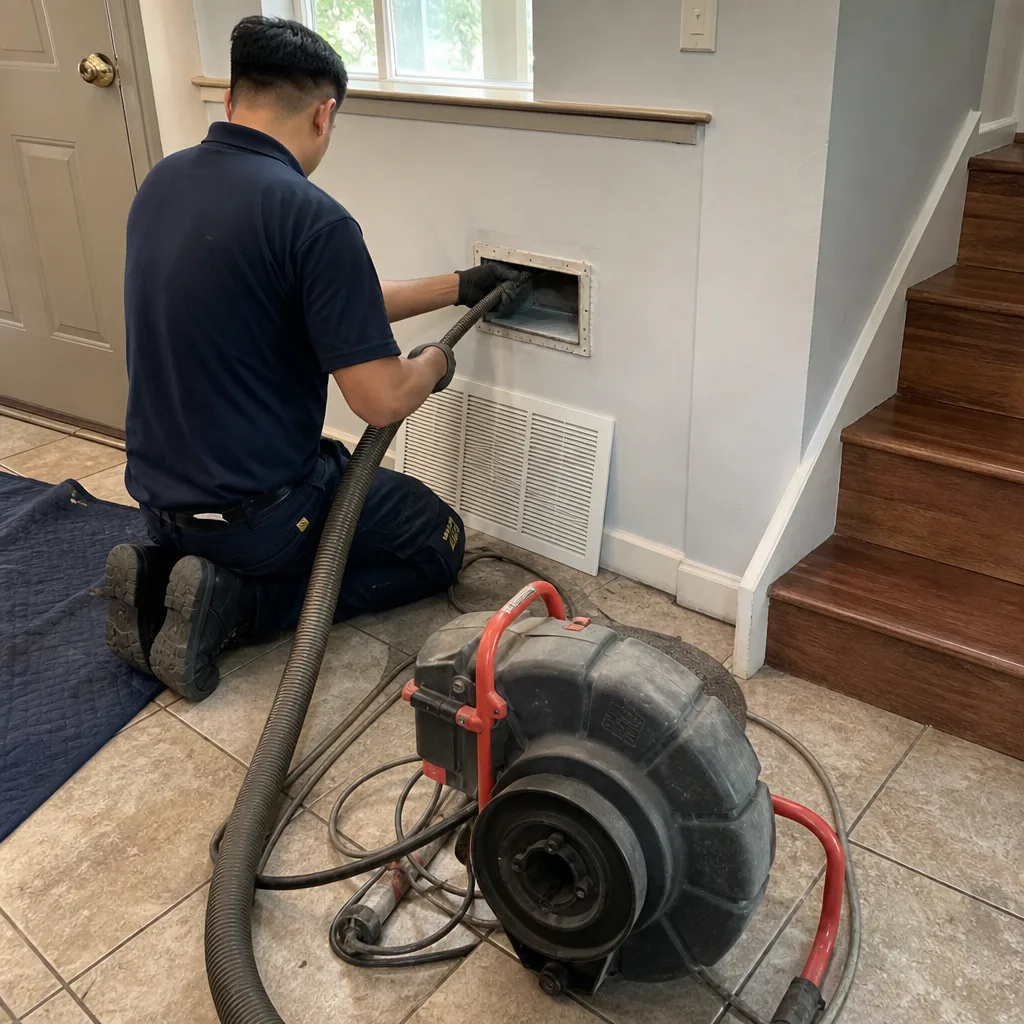 After
 Before
 After